


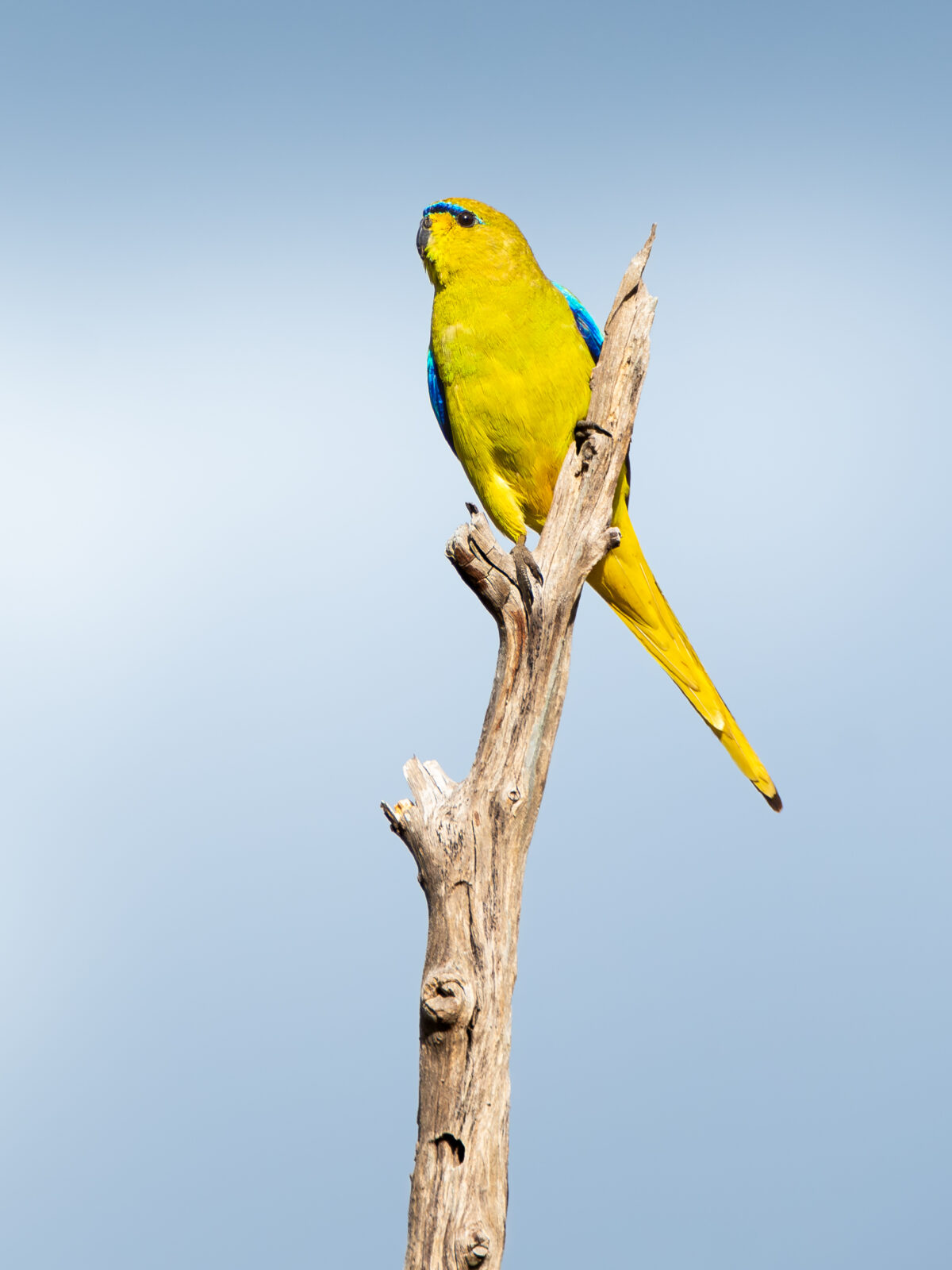
ELEGANT PARROT
Neophema elegans
DESCRIPTION
Elegant Parrot (Neophema elegans) is also known as the Elegant Grass Parakeet and is a small, colorful parrot native to Australia. This species exhibits a vibrant green plumage with a distinctive blue crown and a yellow patch on the nape, making it visually striking. They are social birds often found in pairs or small groups, foraging in grasslands and open woodlands, where they exhibit a playful and active demeanor.
FUN FACTS
- Elegant Parrots are known for their acrobatic flying skills, often performing aerial displays during courtship
- They are also popular in aviculture due to their charming personalities and vibrant colors
QUICK INFO
Lifespan10-15 years in the wild, up to 20 years in captivi
Average Weight50-70 g
Average Length24-26 cm
Diet TypeHerbivore
Social StructureThey are typically found in pairs or small groups, showcasing a social structure that promotes interaction and bonding.
Activity PatternDiurnal
Breeding SeasonSpring to early summer (September to January)
- Habitat
- Elegant Parrots inhabit open grasslands, woodlands, and scrublands, often near water sources. They prefer areas with abundant grass cover for foraging.
- Biomes
- Grassland, Woodland
- Native Range
- They are native to southeastern Australia, particularly in regions such as New South Wales and Victoria.
- Continent
- Australia
- Countries
- Australia
- Diet
- They primarily feed on seeds, particularly from grasses, as well as fruits and flowers. Their diet is supplemented with various plant materials.
- Diet Type
- Herbivore
- Favorite Food
- grass seeds, fruits
- Social Structure
- They are typically found in pairs or small groups, showcasing a social structure that promotes interaction and bonding.
- Activity Pattern
- Diurnal
- Group Size
- 2-10
- Territorial
- 0
 LC
LC
50-70 g
Weight
24-26 cm
Length
- Coloration
- Predominantly green with blue and yellow accents.
- Sexual Dimorphism
- Males and females are similar in appearance, but males tend to have slightly brighter coloration.
- Lifespan
- 10-15 years in the wild, up to 20 years in captivi
- Offspring per Birth
- 3-6
- Sexual Maturity
- 1-2 years
- Breeding Season
- Spring to early summer (September to January)
LC
Least Concern
IUCN Red List Status
- Population Status
- The population is currently stable, but habitat loss poses a potential threat.
- Wild Population Estimate
- Unknown
- Population Trend
- Stable
- Endangered
- 0
- Threats
- Main threats include habitat destruction due to agriculture and urban development. Additionally, competition with invasive species can impact their populations.
- Predators
- Natural predators include birds of prey and snakes, which can pose a threat to their nests and young.
- Defense Mechanisms
- They rely on their ability to fly quickly and maneuver through vegetation to evade predators.
- Compatible Animals
- Other small parrots, finches, canaries
- Found in Zoos
- Uncommon