


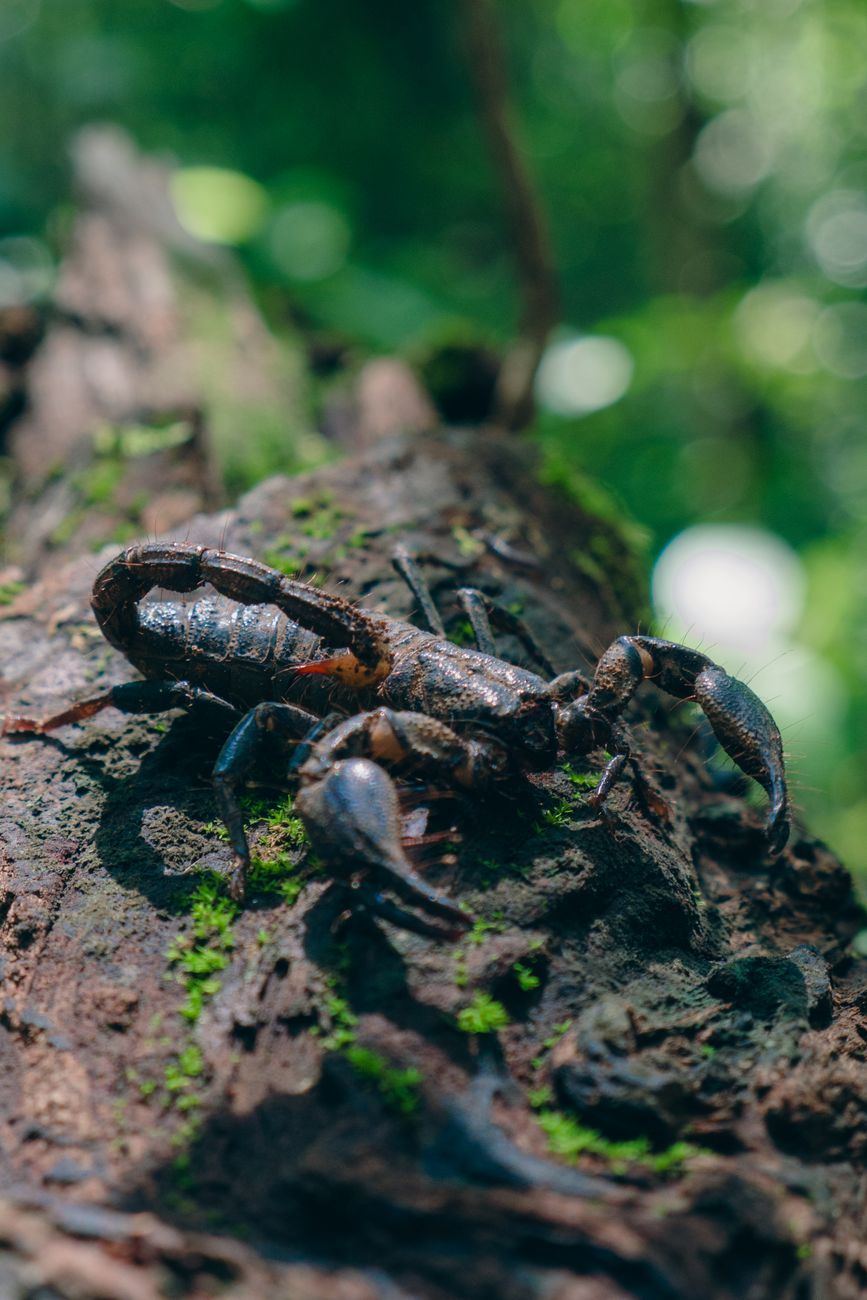
EMPEROR SCORPION
DESCRIPTION
Also called the African Scorpion, the Emperor Scorpion is one of the largest scorpion species, reaching lengths of up to 8 inches. It has a glossy black exoskeleton and large pincers, which it uses for both defense and capturing prey. This species is primarily nocturnal, often hiding under rocks or in burrows during the day, and is known for its relatively docile nature compared to other scorpions.
FUN FACTS
- Emperor Scorpions are known for their bioluminescence; under ultraviolet light, they glow a bright blue-green, which is thought to help them communicate with each other
- | Despite their intimidating appearance, Emperor Scorpions are often kept as pets due to their relatively docile nature and ease of care, making them popular among exotic pet enthusiasts
QUICK INFO
Lifespan6-8 years in the wild, up to 10 years in captivity
Average Weight30-50 grams
Average Length20-25 cm
Diet TypeCarnivore
Social Structuresolitary, though they may be found in pairs during mating
Activity PatternNocturnal
Breeding SeasonSpring (March-May)
- Habitat
- Emperor Scorpions inhabit tropical and subtropical regions, often found in rainforests and savannas. They prefer moist environments where they can burrow into the ground or hide under debris.
- Biomes
- Tropical Rainforest, Savanna
- Native Range
- Native to West Africa, particularly in countries like Cameroon, Nigeria, and the Democratic Republic of the Congo.
- Continent
- Africa
- Countries
- Cameroon, Nigeria, Democratic Republic of the Congo, Ghana
- Diet
- Emperor Scorpions are carnivorous, primarily feeding on insects and other small invertebrates. They use their pincers to grasp prey and inject venom to subdue it.
- Diet Type
- Carnivore
- Favorite Food
- crickets, roaches, and other insects
- Social Structure
- solitary, though they may be found in pairs during mating
- Activity Pattern
- Nocturnal
- Group Size
- 1-2
- Territorial
- 0
 VU
VU

30-50 grams
Weight
20-25 cm
Length
- Coloration
- glossy black exoskeleton
- Sexual Dimorphism
- males are generally smaller than females
- Lifespan
- 6-8 years in the wild, up to 10 years in captivity
- Gestation Period
- 6-8 months
- Offspring per Birth
- 20-30
- Sexual Maturity
- 2-3 years
- Breeding Season
- Spring (March-May)
LC
Least Concern
IUCN Red List Status
- Population Status
- The population is currently stable, but habitat destruction poses a potential threat.
- Wild Population Estimate
- unknown
- Population Trend
- Stable
- Endangered
- 0
- Threats
- Main threats include habitat loss due to deforestation and human encroachment. Additionally, they are sometimes collected for the pet trade.
- Predators
- birds, mammals, and larger reptiles
- Defense Mechanisms
- Emperor Scorpions can deliver a painful sting, but their venom is not lethal to humans. They also rely on their size and coloration for camouflage.
- Found in Zoos
- Common