


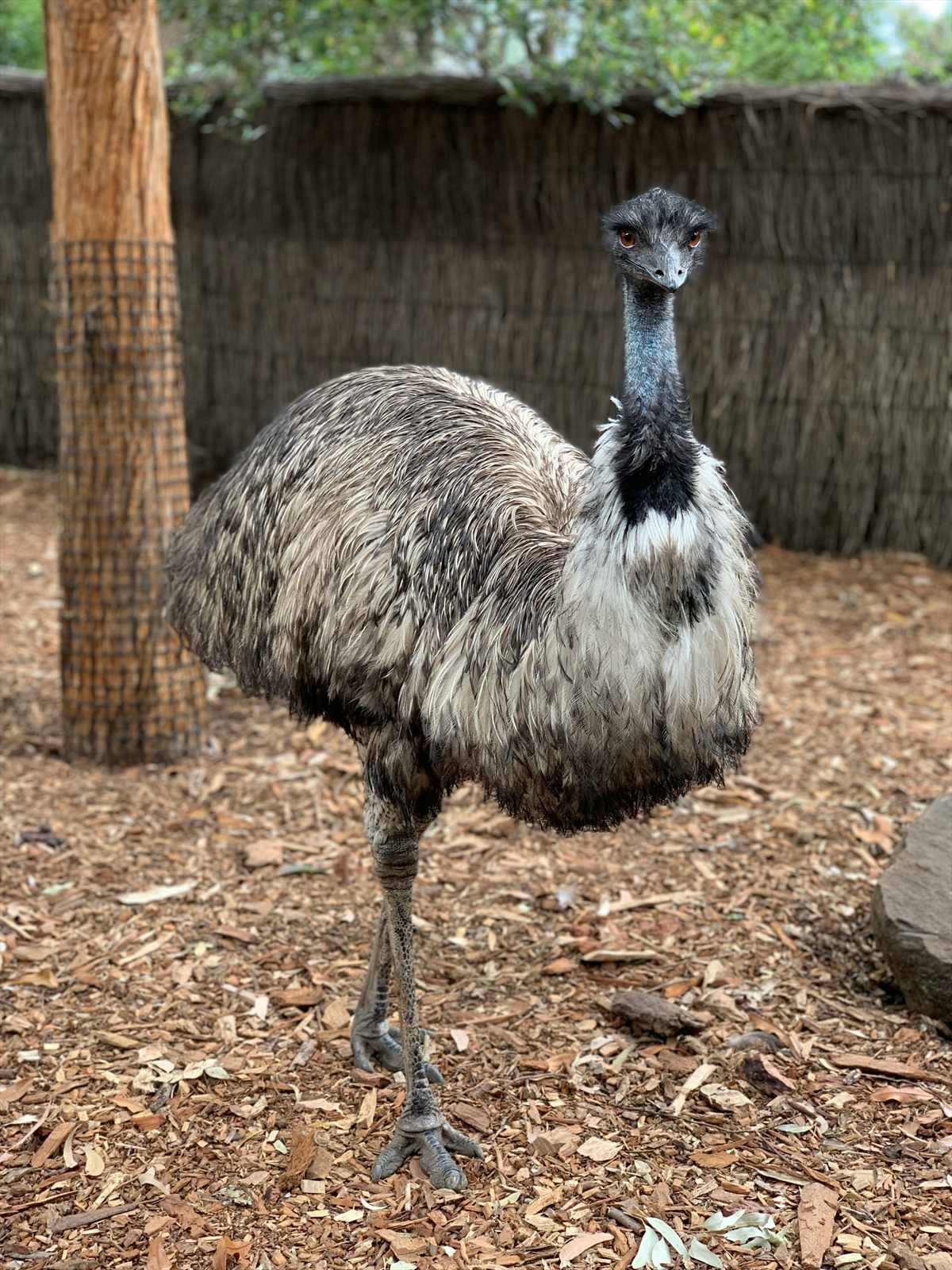
EMU
Dromaius novaehollandiae
DESCRIPTION
The emu is a large, flightless bird native to Australia, characterized by its long neck and legs, and a body covered in shaggy, brown feathers. Emus can reach heights of up to 1.9 meters and weigh between 18 to 60 kg. They are known for their curious and social behavior, often seen foraging in groups and communicating with a range of vocalizations.
FUN FACTS
- Emus have a unique way of communicating, using a variety of sounds including booming calls that can be heard over long distances
- They also have a special adaptation in their legs that allows them to run at high speeds, making them one of the fastest birds on land
- | Unlike many birds, emus do not have a crop, which means they digest their food more quickly
- This adaptation allows them to efficiently process the large amounts of plant material they consume in their natural habitat
QUICK INFO
Lifespan10-20 years in the wild, up to 30 years in captivi
Average Weight18-60 kg
Average Length1.5-1.9 m
Diet TypeOmnivore
Social Structuregroup — they often form loose flocks, especially when foraging or during migration.
Activity PatternDiurnal
Breeding SeasonSpring (September-November)
- Habitat
- Emus inhabit a range of environments, including open grasslands, savannas, and forest edges. They prefer areas with access to water and abundant vegetation for foraging.
- Biomes
- Savanna, Grassland, Forest
- Native Range
- Emus are native to Australia, found across most of the continent except for the dense forests of Tasmania.
- Continent
- Australia
- Countries
- Australia
- Diet
- Emus are primarily herbivores, feeding on a variety of plant materials, seeds, fruits, and flowers. They may also consume insects and small animals occasionally.
- Diet Type
- Omnivore
- Favorite Food
- seeds, fruits, and flowers
- Social Structure
- group — they often form loose flocks, especially when foraging or during migration.
- Activity Pattern
- Diurnal
- Group Size
- 5-20
- Territorial
- 0
 LC
LC
 LC
LC

18-60 kg
Weight
1.5-1.9 m
Length
- Coloration
- brown and gray plumage with a shaggy appearance
- Sexual Dimorphism
- males are generally smaller than females
- Lifespan
- 10-20 years in the wild, up to 30 years in captivi
- Offspring per Birth
- 5-15
- Sexual Maturity
- 1-2 years
- Breeding Season
- Spring (September-November)
LC
Least Concern
IUCN Red List Status
- Population Status
- The emu population is currently stable, with no immediate threats to their survival.
- Wild Population Estimate
- 600,000-700,000
- Population Trend
- Stable
- Endangered
- 0
- Threats
- Main threats include habitat loss due to agriculture and urban development, as well as vehicle collisions. However, they are not currently considered endangered.
- Predators
- dingoes, eagles, and large reptiles
- Defense Mechanisms
- Emus rely on their speed and agility to escape predators, and they can also use their strong legs to deliver powerful kicks if threatened.
- Compatible Animals
- kangaroos, wallabies, and various bird species
- Found in Zoos
- Common