


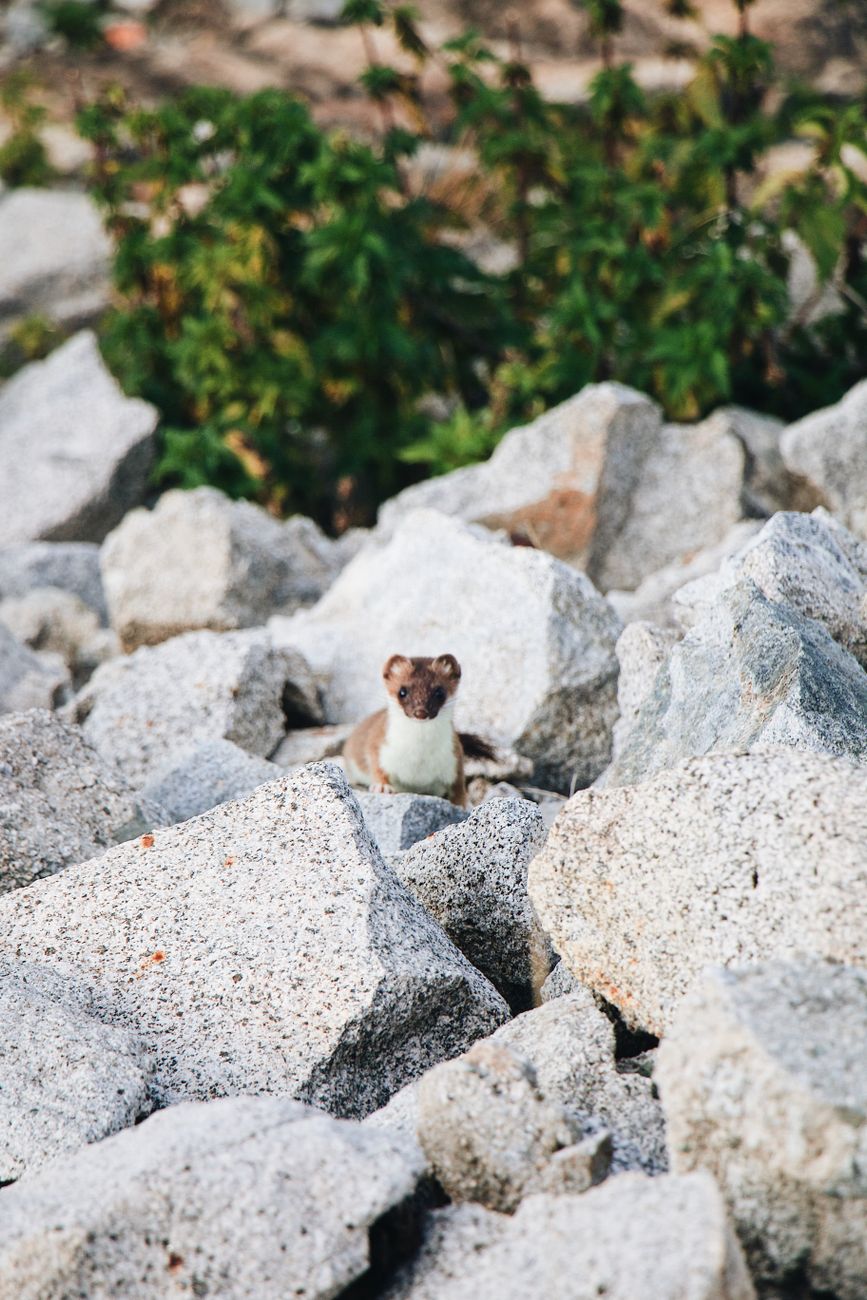
ERMINE
Mustela erminea
DESCRIPTION
Ermine (Mustela erminea) is commonly known as the stoat or short-tailed weasel. This small mammal is characterized by its slender body, short legs, and long neck, which allow it to be agile and swift in its movements. In winter, its fur turns white, providing excellent camouflage in snowy environments, while in summer, it is brown with a lighter underbelly, adapting to its surroundings throughout the seasons.
FUN FACTS
- Ermine are known for their remarkable ability to adapt their fur color to the seasons, which not only helps them blend into their environment but also plays a crucial role in their hunting strategy
- In some cultures, the white winter fur of the Ermine has been historically associated with royalty and nobility, leading to its use in ceremonial robes and garments
- | Despite their small size, Ermine are fierce hunters and can take down prey much larger than themselves, showcasing their tenacity and skill in the wild
QUICK INFO
Lifespan3-7 years in the wild, up to 10 years in captivity
Average Weight0.5-1 kg
Average Length30-40 cm
Diet TypeCarnivore
Social Structuresolitary, with individuals marking and defending their territories
Activity PatternDiurnal
Breeding SeasonSpring (March-May)
- Habitat
- Ermine inhabit a variety of environments, including forests, grasslands, and tundra. They prefer areas with ample cover for hunting and denning.
- Biomes
- Temperate Forest, Tundra, Grassland
- Native Range
- Ermine are found across North America, Europe, and parts of Asia.
- Continent
- North America, Europe, Asia
- Countries
- Canada, United States, United Kingdom, Norway, Russia
- Diet
- Ermine primarily feeds on small mammals, birds, and insects, showcasing its predatory nature. It is known for its hunting skills, often taking down prey larger than itself.
- Diet Type
- Carnivore
- Favorite Food
- small rodents, birds
- Social Structure
- solitary, with individuals marking and defending their territories
- Activity Pattern
- Diurnal
- Group Size
- 1
- Territorial
- 1

 VU
VU
0.5-1 kg
Weight
30-40 cm
Length
- Coloration
- brown in summer, white in winter
- Sexual Dimorphism
- females are generally smaller than males
- Lifespan
- 3-7 years in the wild, up to 10 years in captivity
- Gestation Period
- 30-35 days
- Offspring per Birth
- 4-6
- Sexual Maturity
- 6-12 months
- Breeding Season
- Spring (March-May)
LC
Least Concern
IUCN Red List Status
- Population Status
- The population of Ermine is generally stable, though local declines may occur due to habitat loss.
- Wild Population Estimate
- unknown
- Population Trend
- Stable
- Endangered
- 0
- Threats
- Main threats include habitat destruction and climate change, which can affect their hunting grounds and prey availability. Additionally, they are sometimes hunted for their fur.
- Predators
- foxes, birds of prey, larger mammals
- Defense Mechanisms
- Ermine use their agility and speed to escape predators, often employing quick turns and hiding in burrows or dense vegetation.
- Found in Zoos
- Uncommon