


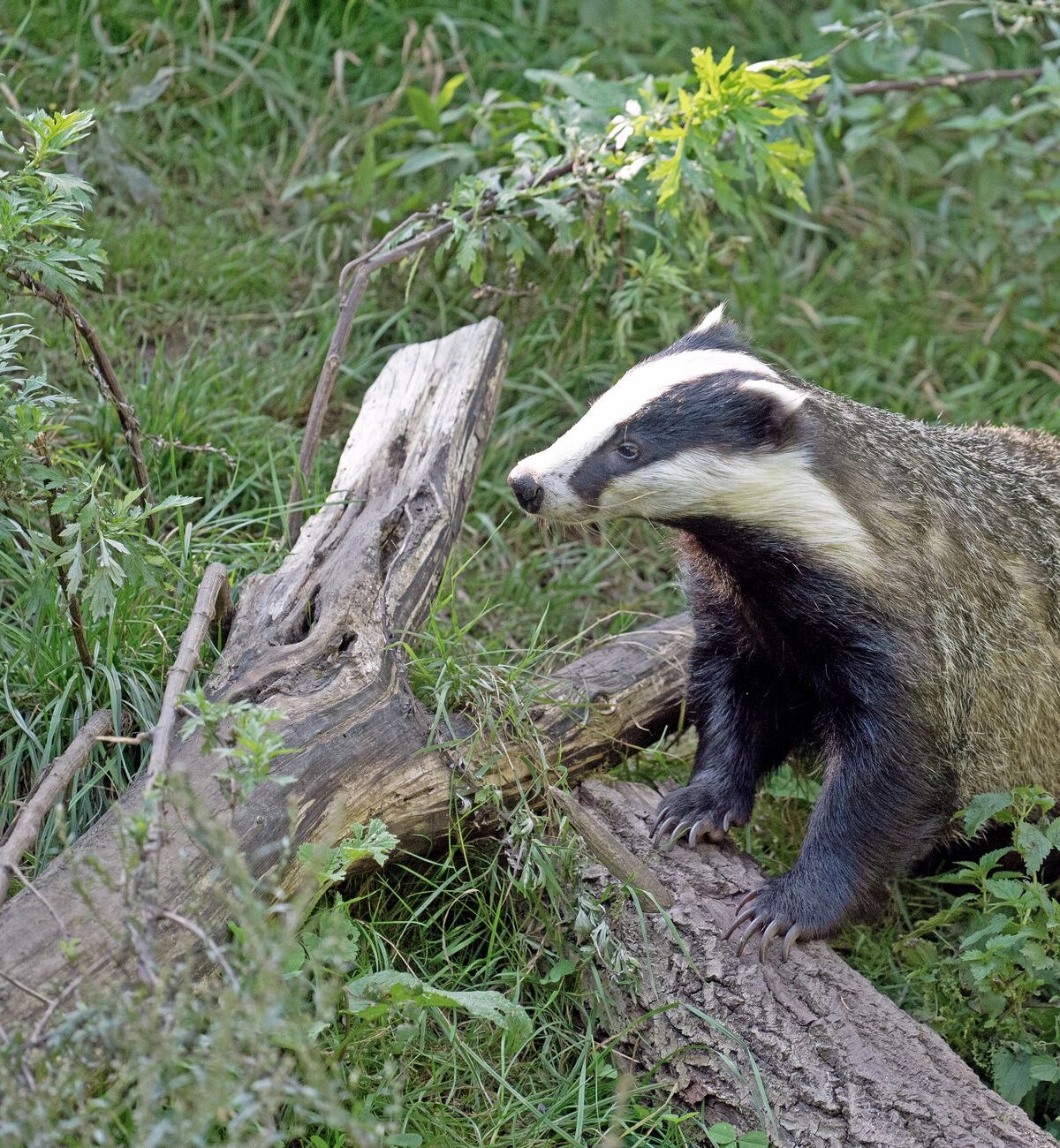
EURASIAN BADGER
Meles meles
DESCRIPTION
Eurasian Badger (Meles meles), also known as the European Badger, is a robust, stocky mammal characterized by its distinctive black and white facial markings and a grizzled gray body. They are primarily nocturnal and are known for their burrowing behavior, creating extensive networks of tunnels called setts. These badgers play a crucial role in their ecosystem by aerating the soil and controlling insect populations.
FUN FACTS
- Eurasian Badgers have a unique social structure where they often share their burrows with family members, creating a communal living space
- They are also known for their impressive digging abilities, capable of creating extensive tunnel systems that can be several meters deep and span large areas.| These badgers have a keen sense of smell, which they use to locate food and communicate with other badgers through scent marking
- Their nocturnal lifestyle allows them to avoid many predators and human disturbances, making them well-adapted to their environments
QUICK INFO
Lifespan10-14 years in the wild, up to 20 in captivity
Average Weight7-12 kg
Average Length60-90 cm
Diet TypeOmnivore
Social Structuresolitary, but may form small family groups; they often share setts with relatives.
Activity PatternNocturnal
Breeding SeasonLate winter to early spring (January-April)
- Habitat
- Eurasian Badgers inhabit a range of environments, including woodlands, grasslands, and agricultural areas. They prefer areas with ample cover for their setts and access to food sources.
- Biomes
- Temperate Forest, Grassland, Agricultural
- Native Range
- The native range of the Eurasian Badger extends across much of Europe and parts of Asia, from the British Isles to the Ural Mountains.
- Continent
- Europe, Asia
- Countries
- United Kingdom, Germany, France, Poland, Russia
- Diet
- Eurasian Badgers are omnivorous, feeding on a varied diet that includes earthworms, insects, fruits, and small mammals. They are opportunistic feeders and will adapt their diet based on seasonal availability.
- Diet Type
- Omnivore
- Favorite Food
- earthworms, insects, fruits
- Social Structure
- solitary, but may form small family groups; they often share setts with relatives.
- Activity Pattern
- Nocturnal
- Group Size
- 1-6
- Territorial
- 1
 LC
LC
7-12 kg
Weight
60-90 cm
Length
- Coloration
- grizzled gray with black and white facial markings
- Sexual Dimorphism
- males are generally larger than females
- Lifespan
- 10-14 years in the wild, up to 20 in captivity
- Gestation Period
- 7-8 weeks
- Offspring per Birth
- 1-5
- Sexual Maturity
- 1-2 years
- Breeding Season
- Late winter to early spring (January-April)
LC
Least Concern
IUCN Red List Status
- Population Status
- The population of Eurasian Badgers is generally stable, although local declines may occur due to habitat loss and hunting.
- Wild Population Estimate
- 1 million+
- Population Trend
- Stable
- Endangered
- 0
- Threats
- Main threats include habitat destruction, road mortality, and hunting. In some areas, they are also affected by diseases such as bovine tuberculosis.
- Predators
- humans, large carnivores such as wolves and lynxes, and domestic dogs
- Defense Mechanisms
- Eurasian Badgers have strong claws for digging and can be aggressive when threatened, using their powerful jaws to defend themselves.
- Found in Zoos
- Common