


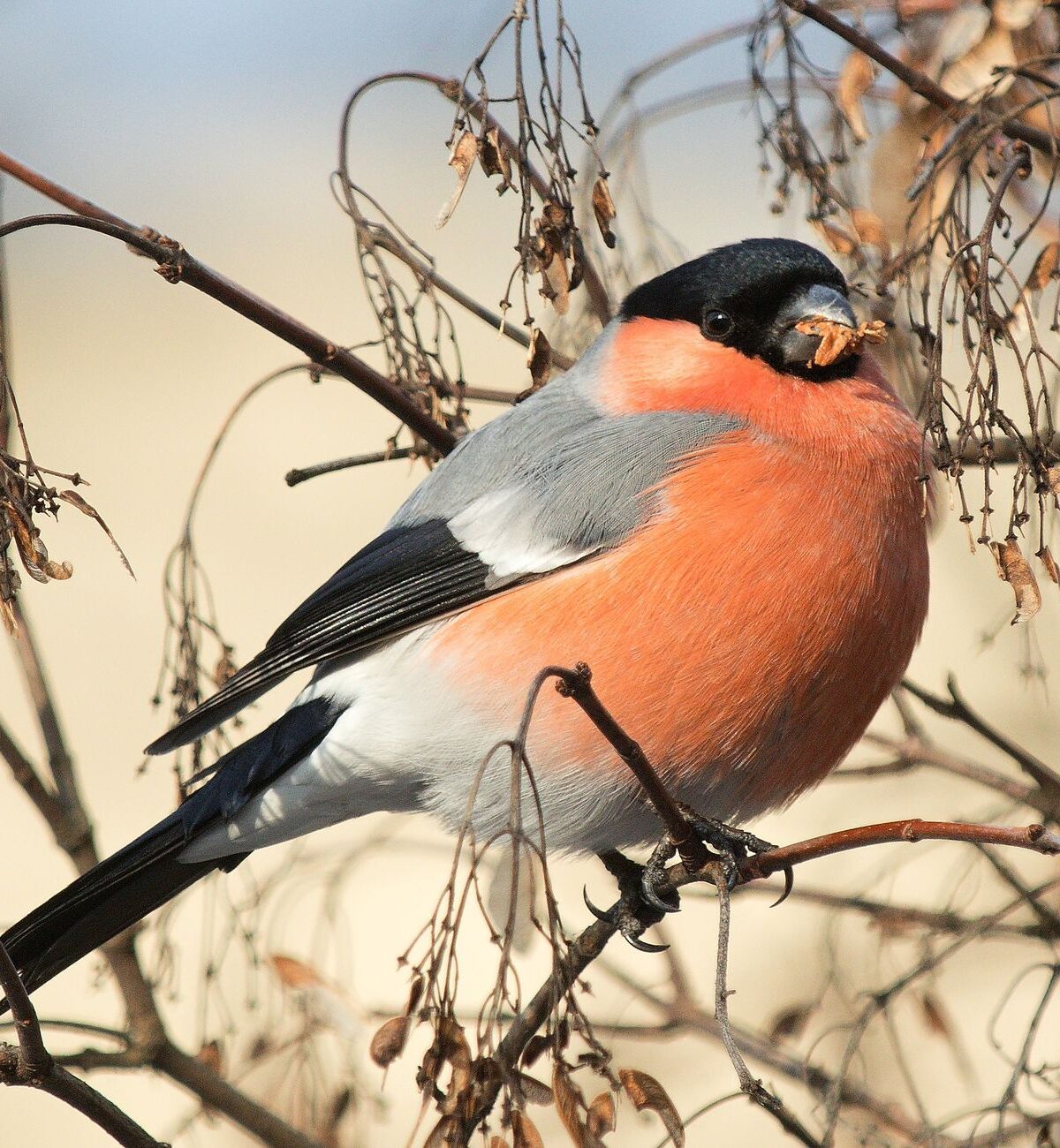
EURASIAN BULLFINCH
Pyrrhula pyrrhula
DESCRIPTION
Eurasian Bullfinch (Pyrrhula pyrrhula) is commonly known as the Bullfinch. This small bird is characterized by its stout body, short neck, and thick bill, which is well-adapted for cracking seeds. Males are particularly striking with their bright pinkish-red underparts and black cap, while females are more subdued in color, featuring brownish tones. They are known for their melodious song and are often found in woodlands, gardens, and hedgerows.
FUN FACTS
- Eurasian Bullfinches are known for their unique feeding behavior, where they can often be seen hanging upside down to reach buds and seeds
- They have a distinctive flight pattern, characterized by a series of rapid wingbeats followed by a short glide, making them easily recognizable in the air.|These birds are also known for their ability to mimic sounds, including the calls of other birds, which can sometimes lead to confusion among birdwatchers
- Their striking appearance and gentle song make them a favorite among bird enthusiasts
QUICK INFO
Lifespan3-5 years in the wild, up to 10 years in captivity
Average Weight18-25 g
Average Length14-16 cm
Diet TypeHerbivore
Social Structurepair
Activity PatternDiurnal
Breeding SeasonSpring (April-June)
- Habitat
- Eurasian Bullfinches inhabit a variety of environments, including deciduous and mixed woodlands, gardens, and parks. They prefer areas with dense shrubbery for nesting and foraging.
- Biomes
- Temperate Forest, Grassland
- Native Range
- The native range of the Eurasian Bullfinch extends across Europe and parts of Asia, from the British Isles to Siberia.
- Continent
- Europe, Asia
- Countries
- United Kingdom, France, Germany, Russia, Sweden, Norway
- Diet
- Eurasian Bullfinches primarily feed on seeds, fruits, and buds, showing a particular fondness for the buds of fruit trees. They are known to forage in flocks during the non-breeding season.
- Diet Type
- Herbivore
- Favorite Food
- seeds, fruits, buds
- Social Structure
- pair
- Activity Pattern
- Diurnal
- Group Size
- 2-10
- Territorial
- 0
 CR
CR
18-25 g
Weight
14-16 cm
Length
- Coloration
- Males have bright pinkish-red underparts and a black cap, while females are brownish with a more muted palette.
- Sexual Dimorphism
- Males are more brightly colored than females.
- Lifespan
- 3-5 years in the wild, up to 10 years in captivity
- Offspring per Birth
- 2-5
- Sexual Maturity
- 1 year
- Breeding Season
- Spring (April-June)
LC
Least Concern
IUCN Red List Status
- Population Status
- The population of Eurasian Bullfinches is currently stable, though they can be affected by habitat loss.
- Wild Population Estimate
- 1,000,000-2,000,000
- Population Trend
- Stable
- Endangered
- 0
- Threats
- Main threats include habitat destruction due to urbanization and agricultural practices. They are also vulnerable to harsh winters which can affect their food supply.
- Predators
- Common predators include domestic cats, hawks, and various birds of prey.
- Defense Mechanisms
- Eurasian Bullfinches rely on their elusive nature and camouflage to avoid predators.
- Found in Zoos
- Uncommon