


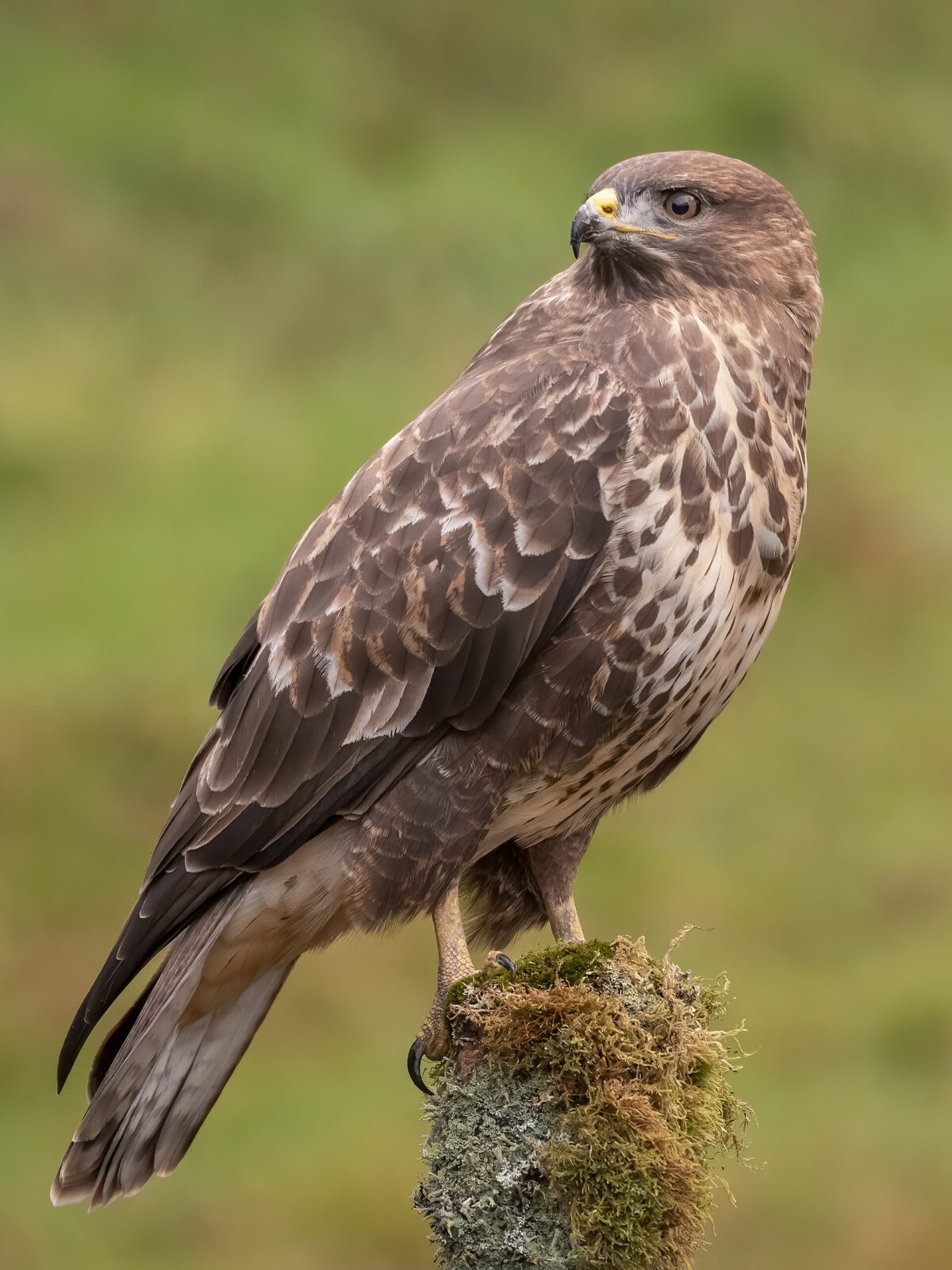
EURASIAN BUZZARD
Buteo buteo
DESCRIPTION
The Eurasian Buzzard (Buteo buteo) is a medium to large bird of prey characterized by its broad wings and short tail. It exhibits a range of plumage variations, typically featuring a mix of brown, white, and black, which helps it blend into its surroundings. This species is known for its soaring flight and can often be seen gliding effortlessly on thermal updrafts while searching for prey.
FUN FACTS
- Eurasian Buzzards are known for their impressive hunting skills, often using a technique called 'stooping' where they dive at high speeds to catch their prey
- They can also adapt their hunting strategies based on the availability of food, showcasing their intelligence and flexibility in different environments.|These birds are often seen in pairs during the breeding season, where they perform elaborate courtship displays that include aerial acrobatics and vocalizations
- Their nests are typically built in tall trees or cliffs, and they return to the same nesting sites year after year
QUICK INFO
Lifespan10-15 years in the wild, up to 25 in captivity
Average Weight0.8-1.5 kg
Average Length0.5-0.6 m
Diet TypeCarnivore
Social Structuresolitary or pair, typically seen alone or with a mate during breeding
Activity PatternDiurnal
Breeding SeasonSpring (March-May)
- Habitat
- Eurasian Buzzards inhabit a variety of environments, including woodlands, farmlands, and open countryside. They prefer areas with a mix of open spaces for hunting and trees for nesting.
- Biomes
- Temperate Forest, Grassland, Agricultural
- Native Range
- The Eurasian Buzzard is found across Europe, parts of Asia, and into North Africa.
- Continent
- Europe, Asia, Africa
- Countries
- United Kingdom, Germany, France, Russia, Spain, Italy
- Diet
- Eurasian Buzzards primarily feed on small mammals, birds, and reptiles. They are opportunistic hunters and will also scavenge when necessary.
- Diet Type
- Carnivore
- Favorite Food
- small mammals, birds
- Social Structure
- solitary or pair, typically seen alone or with a mate during breeding
- Activity Pattern
- Diurnal
- Group Size
- 1-2
- Territorial
- 1
 LC
LC
0.8-1.5 kg
Weight
0.5-0.6 m
Length
- Coloration
- brown with variations of white and black
- Sexual Dimorphism
- females are generally larger than males
- Lifespan
- 10-15 years in the wild, up to 25 in captivity
- Offspring per Birth
- 2-4
- Sexual Maturity
- 2-3 years
- Breeding Season
- Spring (March-May)
LC
Least Concern
IUCN Red List Status
- Population Status
- The population of Eurasian Buzzards is generally stable across their range.
- Wild Population Estimate
- 1,000,000-2,000,000
- Population Trend
- Stable
- Endangered
- 0
- Threats
- Main threats include habitat loss due to agricultural expansion and human encroachment. They are also vulnerable to poisoning and collisions with vehicles.
- Predators
- eagles, larger hawks, and occasionally humans
- Defense Mechanisms
- Eurasian Buzzards rely on their ability to fly and their keen eyesight to evade predators, often using high perches to survey their surroundings.
- Found in Zoos
- Uncommon