


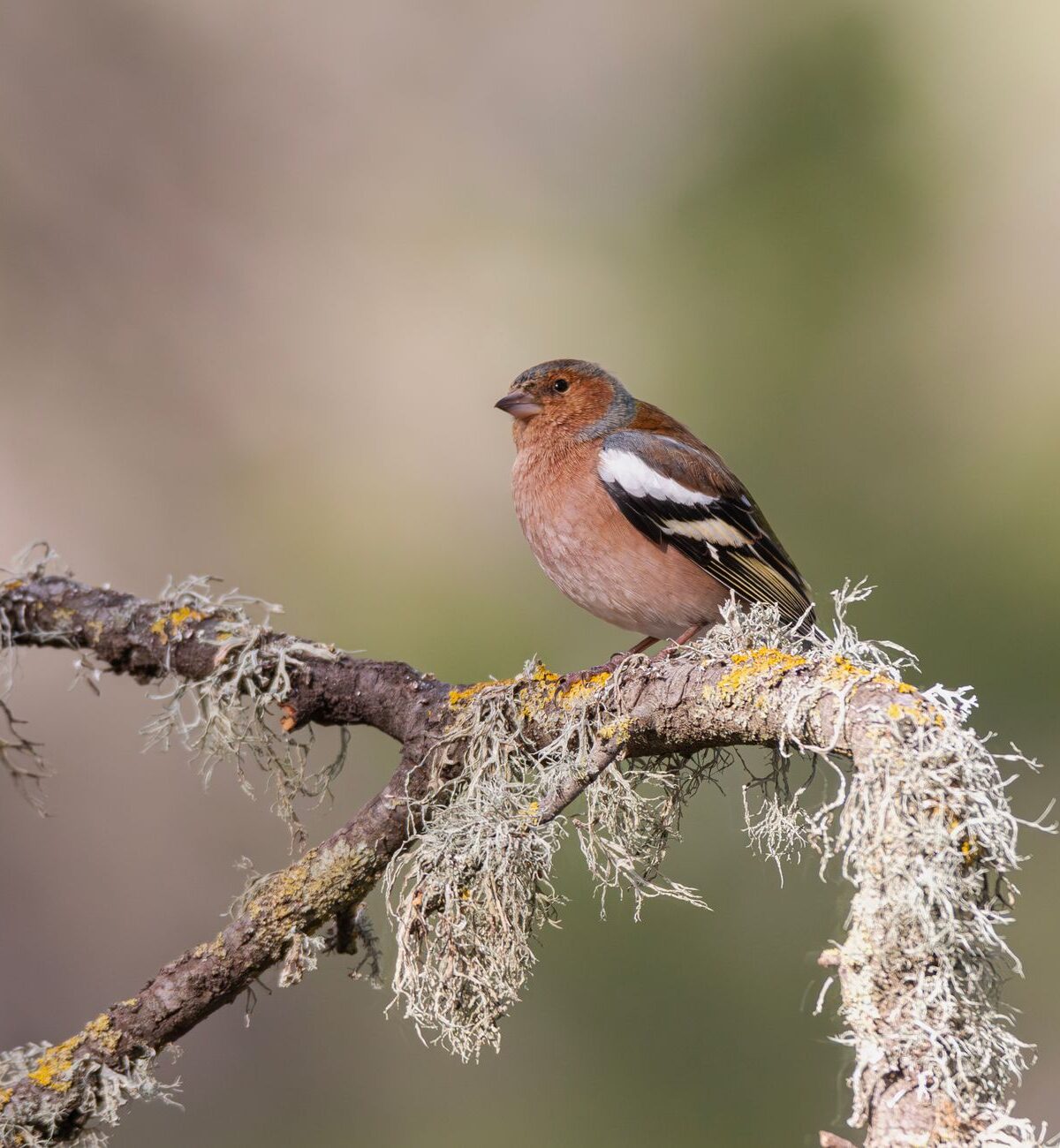
EURASIAN CHAFFINCH
Fringilla coelebs
DESCRIPTION
Eurasian Chaffinch (Fringilla coelebs) is commonly known as the Chaffinch. This small bird exhibits sexual dimorphism, with males displaying a vibrant blue-grey cap, rust-colored underparts, and a distinctive white wing bar, while females are more subdued in color with brown and grey tones. They are known for their melodious song, which is often heard during the breeding season, and they inhabit a variety of environments, including woodlands, gardens, and parks.
FUN FACTS
- Eurasian Chaffinches are known for their impressive vocal abilities, with males capable of mimicking the calls of other bird species
- They also exhibit a unique behavior called 'anting,' where they rub ants on their feathers to help remove parasites and maintain feather health.| In some cultures, the song of the Eurasian Chaffinch is associated with the arrival of spring, making it a symbol of renewal and joy in various folklore
QUICK INFO
Lifespan3-5 years in the wild, up to 10 years in captivity
Average Weight18-25 g
Average Length14-16 cm
Diet TypeOmnivore
Social StructureThey are typically found in pairs during the breeding season but can be seen in larger groups outside of this time.
Activity PatternDiurnal
Breeding SeasonSpring (March-June)
- Habitat
- Eurasian Chaffinches thrive in a range of habitats, including deciduous forests, mixed woodlands, and urban areas with sufficient greenery. They prefer areas with dense foliage for nesting and foraging.
- Biomes
- Temperate Forest, Grassland, Urban
- Native Range
- The Eurasian Chaffinch is native to Europe, parts of North Africa, and western and central Asia.
- Continent
- Europe, Asia, Africa
- Countries
- United Kingdom, France, Germany, Spain, Italy, Russia
- Diet
- Eurasian Chaffinches primarily feed on seeds, particularly those of grasses and herbs, but they also consume insects and berries during the breeding season.
- Diet Type
- Omnivore
- Favorite Food
- seeds, insects
- Social Structure
- They are typically found in pairs during the breeding season but can be seen in larger groups outside of this time.
- Activity Pattern
- Diurnal
- Group Size
- 5-30
- Territorial
- 1
 VU
VU
18-25 g
Weight
14-16 cm
Length
- Coloration
- Males have a blue-grey cap, rust-colored underparts, and white wing bars; females are brown and grey.
- Sexual Dimorphism
- Males are more colorful than females.
- Lifespan
- 3-5 years in the wild, up to 10 years in captivity
- Offspring per Birth
- 3-6
- Sexual Maturity
- 1 year
- Breeding Season
- Spring (March-June)
LC
Least Concern
IUCN Red List Status
- Population Status
- The population of Eurasian Chaffinches is generally stable, with large numbers across their range.
- Wild Population Estimate
- 50 million
- Population Trend
- Stable
- Endangered
- 0
- Threats
- Main threats include habitat loss due to urbanization and agricultural expansion, as well as climate change affecting their food sources.
- Predators
- Common predators include domestic cats, birds of prey, and various mammals such as foxes.
- Defense Mechanisms
- Eurasian Chaffinches rely on their agility and speed to evade predators, often taking flight at the first sign of danger.
- Found in Zoos
- Uncommon