


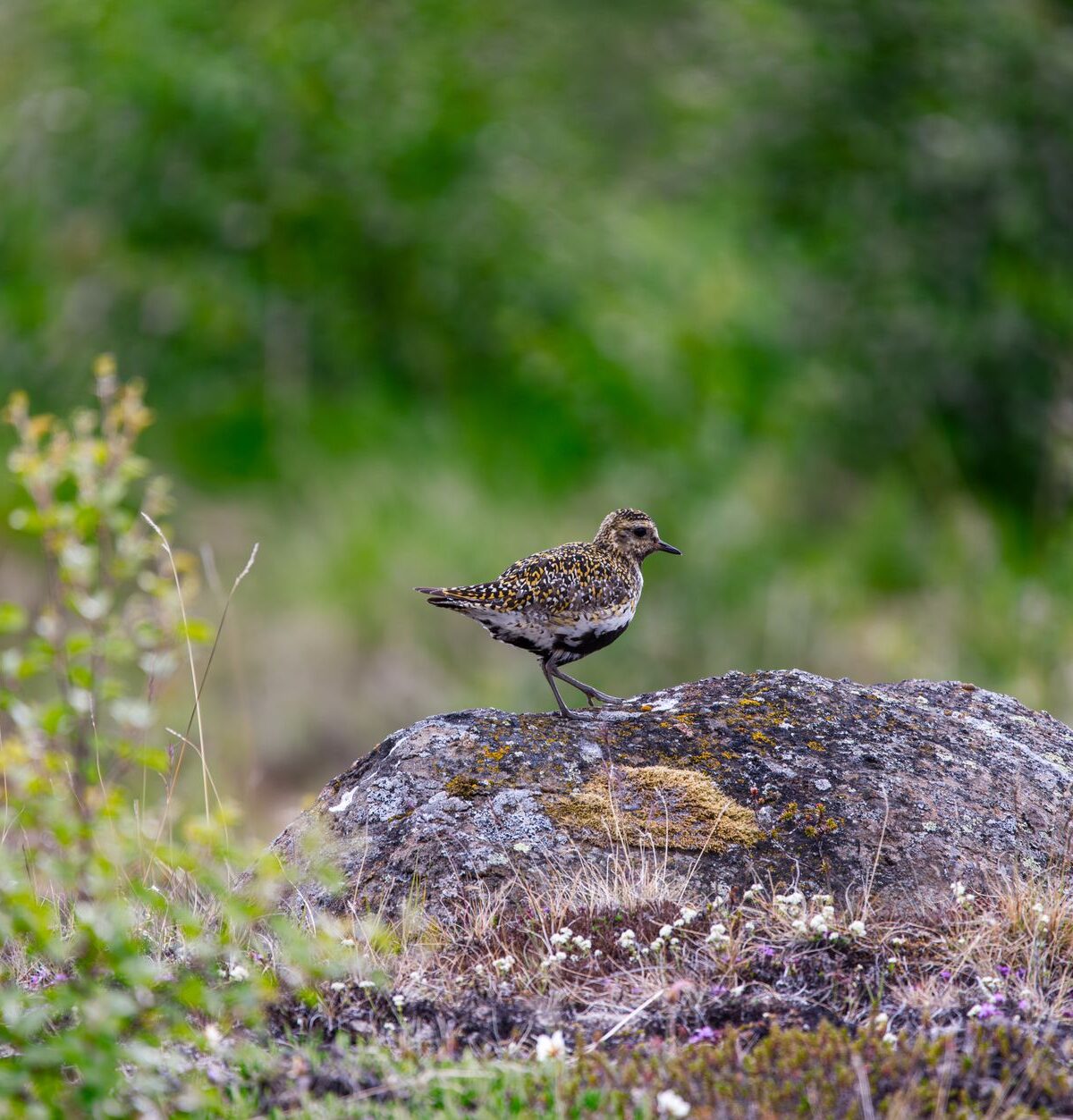
EURASIAN GOLDEN PLOVER
Pluvialis apricaria
DESCRIPTION
Eurasian Golden Plover (Pluvialis apricaria) is also known as the European Golden Plover. This medium-sized shorebird is characterized by its striking golden-brown plumage, which is speckled with black and white, particularly during the breeding season. It exhibits a distinctive black face and belly, contrasting with its lighter underparts, and is known for its graceful flight and melodious calls, often heard during its breeding displays.
FUN FACTS
- Eurasian Golden Plovers are known for their impressive migratory journeys, traveling thousands of kilometers between their breeding and wintering grounds
- During migration, they can fly at altitudes of up to 6,000 feet, showcasing their remarkable endurance and navigational skills.| These birds are also famous for their beautiful calls, which are often described as melodious and haunting
- Their vocalizations play a crucial role in communication during the breeding season, helping to establish territory and attract mates
QUICK INFO
Lifespan5-10 years in the wild
Average Weight150-250 g
Average Length25-30 cm
Diet TypeOmnivore
Social StructureThey are typically found in groups outside of the breeding season, but are more solitary or in pairs during breeding.
Activity PatternDiurnal
Breeding SeasonSpring (April-June)
- Habitat
- This species inhabits open grasslands, tundra, and coastal areas, often favoring wet meadows and fields during the breeding season. It migrates to warmer regions during winter, where it can be found in agricultural fields and coastal habitats.
- Biomes
- Grassland, Tundra, Coastal
- Native Range
- The Eurasian Golden Plover breeds across the Arctic and subarctic regions of Europe and Asia, migrating to southern Europe and North Africa for the winter.
- Continent
- Europe, Asia, Africa
- Countries
- United Kingdom, Norway, Sweden, Finland, Russia, Iceland, Ireland
- Diet
- The Eurasian Golden Plover primarily feeds on insects, earthworms, and other invertebrates, foraging on the ground or in shallow water. It may also consume seeds and plant material, especially during migration.
- Diet Type
- Omnivore
- Favorite Food
- insects, earthworms
- Social Structure
- They are typically found in groups outside of the breeding season, but are more solitary or in pairs during breeding.
- Activity Pattern
- Diurnal
- Group Size
- 5-50
- Territorial
- 1

 VU
VU
150-250 g
Weight
25-30 cm
Length
- Coloration
- golden-brown with black and white speckling
- Sexual Dimorphism
- Males and females are similar in appearance, but males are generally slightly larger.
- Lifespan
- 5-10 years in the wild
- Offspring per Birth
- 4
- Sexual Maturity
- 1-2 years
- Breeding Season
- Spring (April-June)
LC
Least Concern
IUCN Red List Status
- Population Status
- The population of Eurasian Golden Plovers is currently stable, although some local declines have been noted due to habitat loss.
- Wild Population Estimate
- 1,000,000-2,000,000
- Population Trend
- Stable
- Endangered
- 0
- Threats
- Main threats include habitat destruction due to agricultural expansion and urban development, as well as climate change affecting their breeding grounds. Additionally, hunting in some regions poses a risk to their populations.
- Predators
- Foxes, birds of prey, and domestic cats are known predators of the Eurasian Golden Plover, particularly during the nesting season.
- Defense Mechanisms
- They often rely on camouflage to avoid detection and may perform distraction displays to lead predators away from their nests.
- Found in Zoos
- Rare