


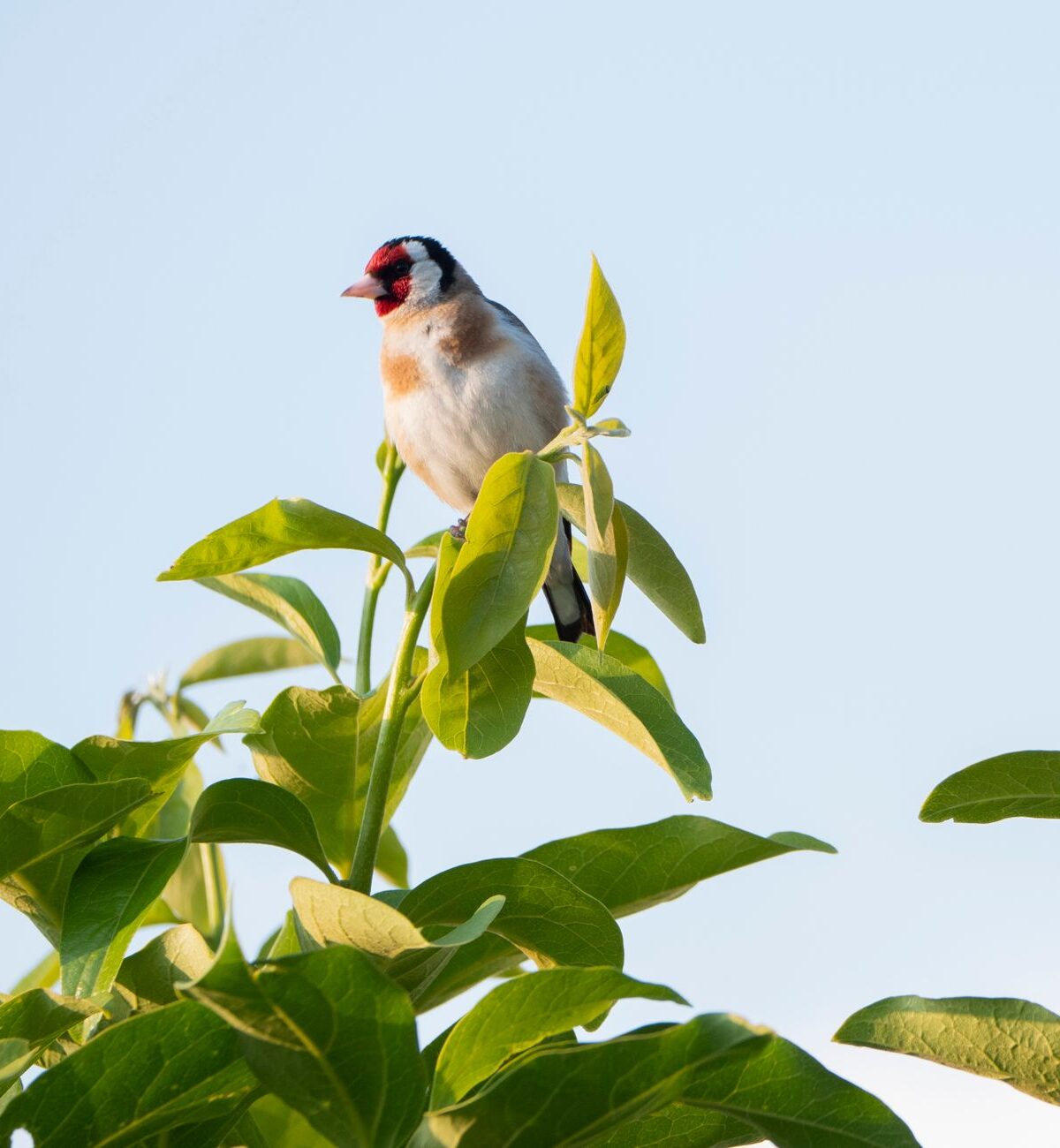
EURASIAN GOLDFINCH
Carduelis carduelis
DESCRIPTION
Eurasian Goldfinch (Carduelis carduelis) is commonly known as Goldfinch and European Goldfinch. This small bird is easily recognizable by its striking yellow and black plumage, with a distinctive red face and white wing bars. They are social birds often seen in flocks, and are known for their melodious songs and acrobatic flight patterns, which they use to navigate through their habitats.
FUN FACTS
- Eurasian Goldfinches have a unique ability to extract seeds from thistle heads using their specialized beaks, which are adapted for this purpose
- They are also known for their beautiful songs, which they use to communicate with each other and attract mates.| In many cultures, the Eurasian Goldfinch is associated with good luck and is often depicted in art and literature
- Their striking appearance and cheerful song have made them a favorite among bird watchers and nature enthusiasts
QUICK INFO
Lifespan3-5 years in the wild, up to 10 years in captivity
Average Weight12-19 g
Average Length12-13 cm
Diet TypeHerbivore
Social StructureThey are often found in small groups, especially outside the breeding season, but can also be seen in pairs during nesting.
Activity PatternDiurnal
Breeding SeasonSpring (April-June)
- Habitat
- Eurasian Goldfinches inhabit a variety of environments, including gardens, parks, and open woodlands. They prefer areas with abundant seed sources and shrubs for nesting.
- Biomes
- Temperate Forest, Grassland, Urban
- Native Range
- The species is native to Europe, North Africa, and parts of Asia.
- Continent
- Europe, Asia, Africa
- Countries
- United Kingdom, France, Germany, Italy, Spain, Greece
- Diet
- Eurasian Goldfinches primarily feed on seeds, particularly those of thistles and dandelions. They are also known to consume insects and berries during the breeding season.
- Diet Type
- Herbivore
- Favorite Food
- Thistle seeds
- Social Structure
- They are often found in small groups, especially outside the breeding season, but can also be seen in pairs during nesting.
- Activity Pattern
- Diurnal
- Group Size
- 5-30
- Territorial
- 0
 VU
VU
12-19 g
Weight
12-13 cm
Length
- Coloration
- Bright yellow body with black wings and a red face.
- Sexual Dimorphism
- Males are generally brighter in color than females.
- Lifespan
- 3-5 years in the wild, up to 10 years in captivity
- Offspring per Birth
- 3-6
- Sexual Maturity
- 1 year
- Breeding Season
- Spring (April-June)
LC
Least Concern
IUCN Red List Status
- Population Status
- The population of Eurasian Goldfinches is currently stable in many areas, although some local declines have been noted.
- Wild Population Estimate
- 1,000,000-2,000,000
- Population Trend
- Stable
- Endangered
- 0
- Threats
- Main threats include habitat loss due to urbanization and agricultural practices. Additionally, they face competition for food from other bird species.
- Predators
- Common predators include domestic cats, birds of prey, and larger birds such as crows.
- Defense Mechanisms
- They rely on their agility and speed to evade predators, often using quick flight maneuvers.
- Compatible Animals
- Canaries, other small finches
- Found in Zoos
- Common