


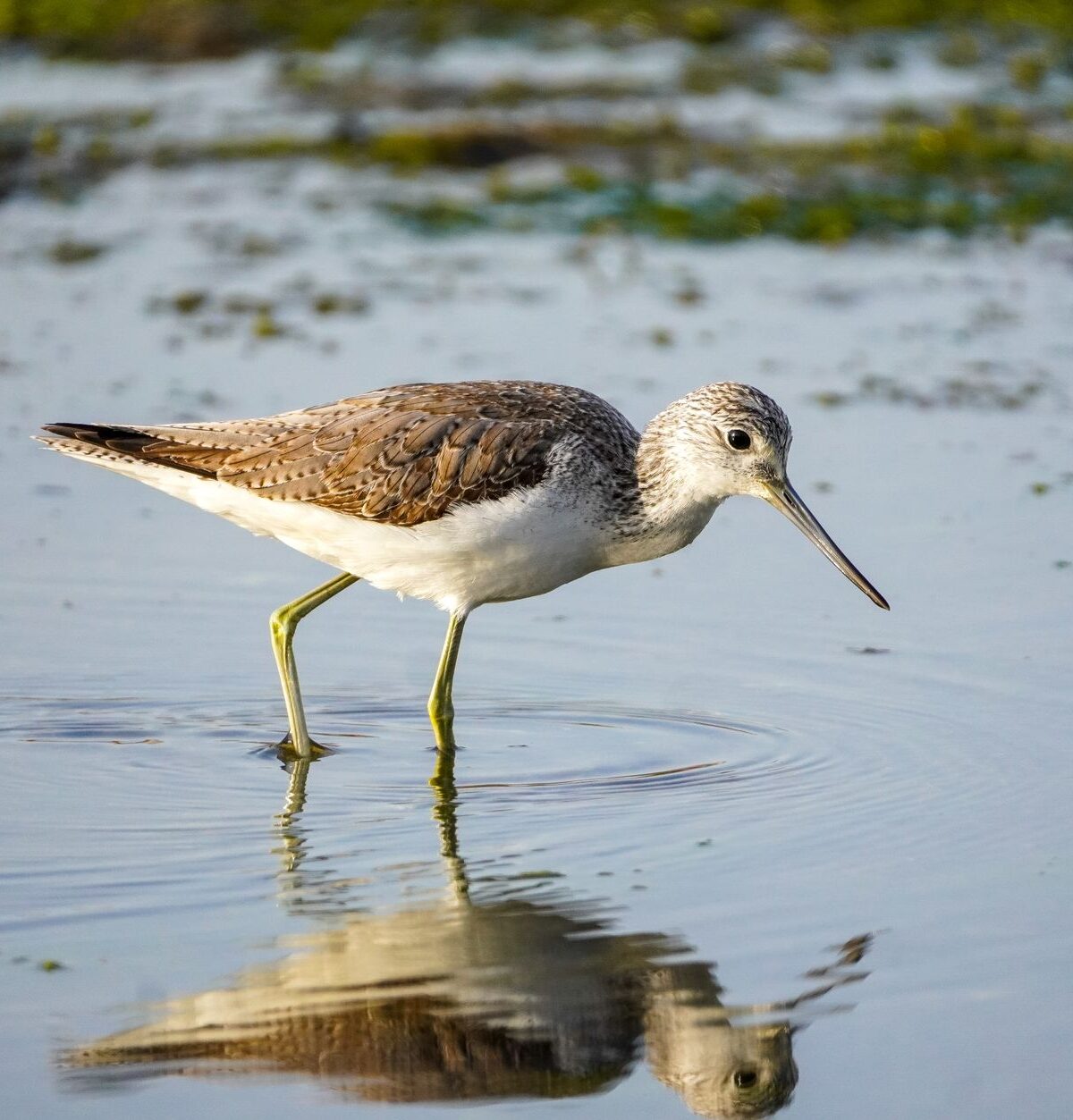
EURASIAN GREENSHANK
Tringa nebularia
DESCRIPTION
Eurasian Greenshank (Tringa nebularia) is a large wader known for its long legs and distinctive greenish-grey plumage. This species exhibits a slender body with a long, straight bill, which it uses to probe mud and shallow waters for food. Typically found in wetlands and coastal areas, the Eurasian Greenshank is known for its graceful flight and characteristic call, often heard during breeding season.
FUN FACTS
- Eurasian Greenshanks are known for their unique feeding behavior, where they often use their long bills to probe into the mud for food, showcasing a remarkable adaptability to different feeding techniques
- Additionally, during migration, these birds can travel thousands of kilometers, demonstrating impressive endurance and navigation skills, often flying at night to avoid predators and conserve energy
QUICK INFO
Lifespan10-15 years in the wild
Average Weight150-300 g
Average Length28-32 cm
Diet TypeOmnivore
Social Structuresolitary or in small groups, often seen foraging alone
Activity PatternDiurnal
Breeding SeasonSpring (April-June)
- Habitat
- This species inhabits a variety of wetland environments, including estuaries, marshes, and mudflats. It prefers areas with shallow water where it can easily forage for food.
- Biomes
- Wetlands, Coastal
- Native Range
- Eurasian Greenshank breeds in northern Europe and Asia, migrating to southern Europe and Africa for the winter.
- Continent
- Europe, Asia, Africa
- Countries
- Norway, Sweden, Finland, Russia, United Kingdom, France, Spain, Portugal, Morocco
- Diet
- Eurasian Greenshank primarily feeds on invertebrates, small fish, and plant material found in mudflats and shallow waters.
- Diet Type
- Omnivore
- Favorite Food
- invertebrates, small fish
- Social Structure
- solitary or in small groups, often seen foraging alone
- Activity Pattern
- Diurnal
- Group Size
- 1-10
- Territorial
- 0
 DD
DD
 LC
LC
150-300 g
Weight
28-32 cm
Length
- Coloration
- The plumage is predominantly grey with white underparts and a distinctive greenish hue on the legs.
- Sexual Dimorphism
- Males and females are similar in appearance, though females may be slightly larger.
- Lifespan
- 10-15 years in the wild
- Offspring per Birth
- 3-4
- Sexual Maturity
- 2-3 years
- Breeding Season
- Spring (April-June)
LC
Least Concern
IUCN Red List Status
- Population Status
- The population of Eurasian Greenshank is currently stable, though it faces habitat loss in some areas.
- Wild Population Estimate
- 50,000-100,000
- Population Trend
- Stable
- Endangered
- 0
- Threats
- Main threats include habitat destruction due to land reclamation and pollution. Climate change also poses a risk by altering wetland ecosystems.
- Predators
- Raptors, foxes, and larger predatory birds pose threats to Eurasian Greenshank, especially to their eggs and chicks.
- Defense Mechanisms
- Eurasian Greenshanks rely on their agility and speed to evade predators, often taking flight at the first sign of danger.
- Found in Zoos
- Rare