


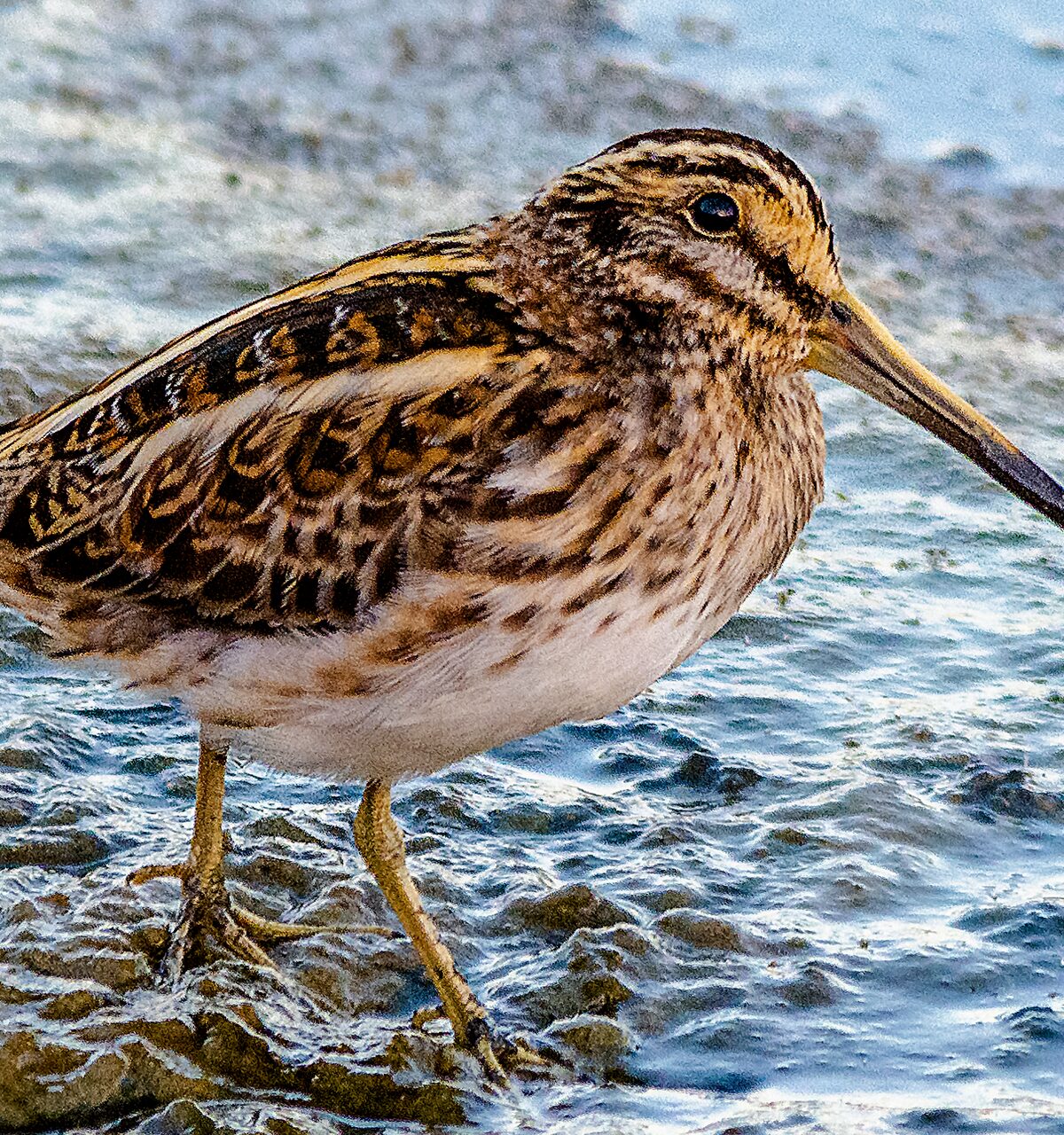
EURASIAN JACK SNIPE
Lymnocryptes minimus
DESCRIPTION
Eurasian Jack Snipe (Lymnocryptes minimus) is also known as the Jack Snipe, a small wading bird characterized by its cryptic plumage that provides excellent camouflage in its wetland habitat. This species has a distinctive short, stout bill and a compact body, with mottled brown and buff feathers that blend seamlessly with the reeds and grasses of its environment. Behaviorally, the Eurasian Jack Snipe is known for its secretive nature, often remaining motionless and relying on its camouflage to avoid detection, and it is more active during twilight hours, making it a crepuscular species.
FUN FACTS
- Eurasian Jack Snipe are known for their unique display flight during the breeding season, where males perform a series of aerial acrobatics to attract females
- This species is also notable for its ability to remain motionless for long periods, making it difficult for both predators and observers to spot them in their natural habitat
QUICK INFO
Lifespan3-5 years in the wild
Average Weight70-100 g
Average Length20-25 cm
Diet TypeInsectivore
Social Structuresolitary, occasionally seen in pairs during breeding season
Activity PatternCrepuscular
Breeding SeasonSpring (April-June)
- Habitat
- This species inhabits marshes, wet meadows, and other damp areas where dense vegetation is present. It prefers habitats with soft, muddy ground that allows for easy foraging.
- Biomes
- Wetlands, Grasslands
- Native Range
- The Eurasian Jack Snipe is found across Europe and parts of Asia, migrating to southern regions during the winter months.
- Continent
- Europe, Asia
- Countries
- United Kingdom, France, Germany, Russia, Sweden
- Diet
- The Eurasian Jack Snipe primarily feeds on invertebrates, including insects and worms, which it probes for in soft mud and wet soil. It may also consume some plant material occasionally.
- Diet Type
- Insectivore
- Favorite Food
- insects, worms
- Social Structure
- solitary, occasionally seen in pairs during breeding season
- Activity Pattern
- Crepuscular
- Group Size
- 1-2
- Territorial
- 0

 VU
VU
70-100 g
Weight
20-25 cm
Length
- Coloration
- mottled brown and buff with a short, stout bill
- Lifespan
- 3-5 years in the wild
- Offspring per Birth
- 4
- Sexual Maturity
- 1 year
- Breeding Season
- Spring (April-June)
LC
Least Concern
IUCN Red List Status
- Population Status
- The population of Eurasian Jack Snipe is currently stable, although habitat loss poses a potential threat.
- Wild Population Estimate
- 100,000-200,000
- Population Trend
- Stable
- Endangered
- 0
- Threats
- Main threats include habitat destruction due to agricultural expansion and drainage of wetlands. Climate change also poses a risk by altering their breeding and feeding habitats.
- Predators
- Foxes, birds of prey, and larger wading birds are known predators of the Eurasian Jack Snipe.
- Defense Mechanisms
- The primary defense mechanism of the Eurasian Jack Snipe is its exceptional camouflage, allowing it to blend into its surroundings and avoid detection.
- Found in Zoos
- Rare