


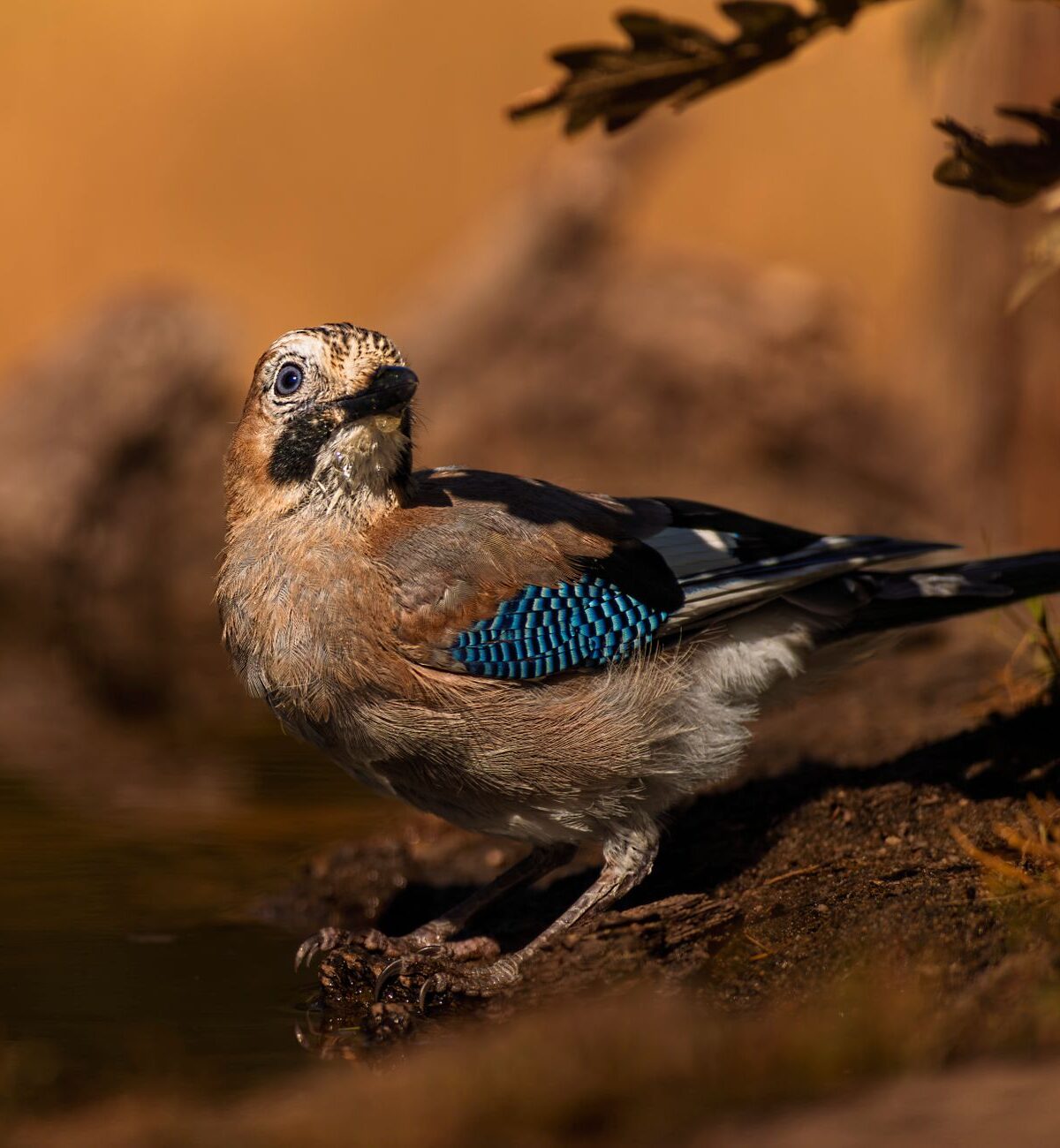
EURASIAN JAY
Garrulus glandarius
DESCRIPTION
Eurasian Jay (Garrulus glandarius) is commonly known as the Jay. This medium-sized bird is characterized by its striking plumage, which features a mix of pinkish-brown, black, and white, along with a distinctive blue patch on its wings. Known for its intelligence and adaptability, the Eurasian Jay often mimics the calls of other birds and is a key player in forest ecosystems, helping to disperse acorns and other seeds.
FUN FACTS
- Eurasian Jays are known for their remarkable memory, which allows them to locate thousands of acorns that they bury each autumn
- They can remember the locations of their caches for several months, showcasing their impressive cognitive abilities
- | These birds are also skilled mimics, capable of imitating the calls of other bird species and even human sounds
- This mimicry is thought to play a role in their social interactions and territorial displays
QUICK INFO
LifespanUp to 15 years in the wild.
Average Weight120-190 g
Average Length32-35 cm
Diet TypeOmnivore
Social StructureThey are often seen in pairs or small family groups, especially during the breeding season.
Activity PatternDiurnal
Breeding SeasonSpring (March-May)
- Habitat
- Eurasian Jays inhabit a range of wooded environments, including deciduous and mixed forests, as well as parks and gardens. They prefer areas with plenty of trees for nesting and foraging.
- Biomes
- Temperate Forest, Mediterranean Forest
- Native Range
- The Eurasian Jay is native to Europe, parts of Asia, and North Africa.
- Continent
- Europe, Asia, Africa
- Countries
- United Kingdom, France, Germany, Russia, Spain, Italy
- Diet
- Eurasian Jays are omnivorous, feeding on a variety of foods including insects, seeds, nuts, and fruits. They are particularly fond of acorns, which they cache for later consumption.
- Diet Type
- Omnivore
- Favorite Food
- Acorns, seeds, insects
- Social Structure
- They are often seen in pairs or small family groups, especially during the breeding season.
- Activity Pattern
- Diurnal
- Group Size
- 2-10
- Territorial
- 1

120-190 g
Weight
32-35 cm
Length
- Coloration
- Pinkish-brown body with a blue wing patch and black and white markings.
- Lifespan
- Up to 15 years in the wild.
- Offspring per Birth
- 3-7
- Sexual Maturity
- 1 year
- Breeding Season
- Spring (March-May)
LC
Least Concern
IUCN Red List Status
- Population Status
- The population of Eurasian Jays is generally stable, with a wide distribution across their native range.
- Wild Population Estimate
- 1,000,000-2,000,000
- Population Trend
- Stable
- Endangered
- 0
- Threats
- Main threats include habitat loss due to deforestation and urbanization. Additionally, they can be affected by changes in food availability and climate change.
- Predators
- Common predators include birds of prey such as hawks and owls, as well as domestic cats.
- Defense Mechanisms
- Eurasian Jays use a variety of vocalizations to warn of danger and can also rely on their camouflage to avoid detection.
- Compatible Animals
- Other corvids, small mammals
- Found in Zoos
- Common