


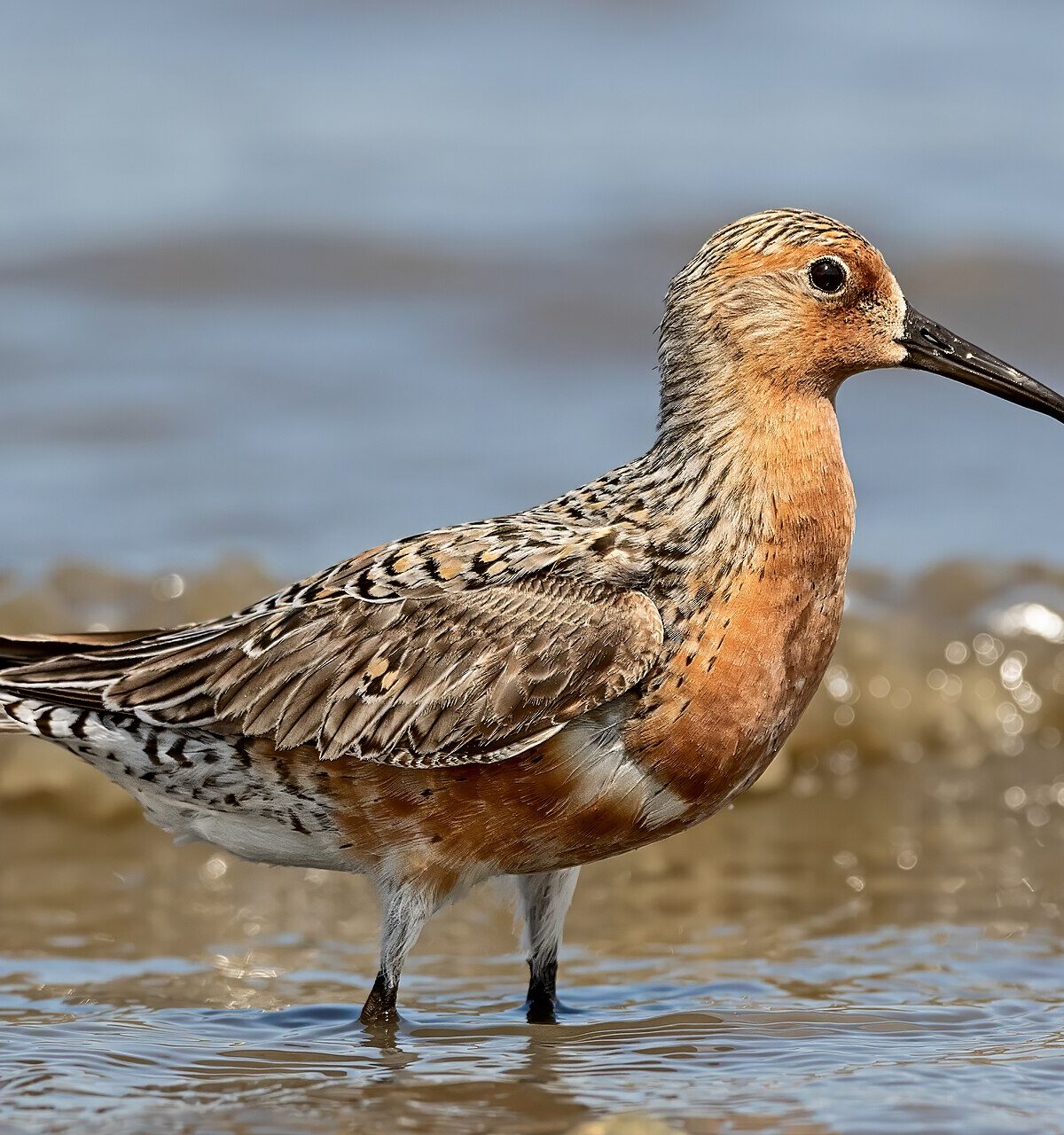
EURASIAN KNOT
Calidris canutus
DESCRIPTION
Eurasian Knot (Calidris canutus) is commonly known as the Red Knot due to its distinctive reddish-brown plumage during the breeding season. This medium-sized shorebird exhibits a stout body, a short neck, and a straight bill, which it uses to probe for food in the sand and mud. During migration, these birds are known for their remarkable long-distance flights, traveling thousands of kilometers between breeding and wintering grounds.
FUN FACTS
- Eurasian Knots are remarkable for their long migratory journeys, with some individuals traveling over 30,000 kilometers round trip between their breeding and wintering grounds
- They are also known for their unique feeding behavior, where they can rapidly switch from foraging on the surface to probing deeper into the substrate, showcasing their adaptability to different feeding conditions
QUICK INFO
Lifespan10-15 years in the wild
Average Weight150-250 g
Average Length23-26 cm
Diet TypeCarnivore
Social Structuregroup — they often gather in large flocks during migration and at feeding sites.
Activity PatternDiurnal
Breeding SeasonSpring (May-June)
- Habitat
- Eurasian Knots inhabit coastal areas, particularly mudflats, sandy beaches, and estuaries during migration and wintering. They prefer habitats that provide abundant food resources and suitable roosting sites.
- Biomes
- Coastal, Wetlands
- Native Range
- Eurasian Knots breed in the Arctic regions of Europe and Asia and migrate to coastal areas of Africa, South America, and southern Europe for the winter.
- Continent
- Europe, Asia, Africa, South America
- Countries
- Norway, Russia, Canada, United Kingdom, United States
- Diet
- Eurasian Knots primarily feed on invertebrates, particularly mollusks and crustaceans, which they find in intertidal zones. They forage by pecking at the surface or probing into the substrate.
- Diet Type
- Carnivore
- Favorite Food
- mollusks, crustaceans
- Social Structure
- group — they often gather in large flocks during migration and at feeding sites.
- Activity Pattern
- Diurnal
- Group Size
- 50-1000
- Territorial
- 0
 LC
LC
 DD
DD
150-250 g
Weight
23-26 cm
Length
- Coloration
- Reddish-brown in summer, grayish-brown in winter with white underparts.
- Sexual Dimorphism
- Males and females are similar in appearance, but males tend to be slightly smaller.
- Lifespan
- 10-15 years in the wild
- Offspring per Birth
- 3-4
- Sexual Maturity
- 2-3 years
- Breeding Season
- Spring (May-June)
LC
Least Concern
IUCN Red List Status
- Population Status
- The population of Eurasian Knots is currently stable, but some migratory populations are experiencing declines due to habitat loss.
- Wild Population Estimate
- 200,000-300,000
- Population Trend
- Stable
- Endangered
- 0
- Threats
- Main threats include habitat destruction due to coastal development and climate change, which affects their breeding and feeding grounds. Additionally, human disturbance during migration can impact their survival.
- Predators
- Gulls, raptors, and foxes are known to prey on Eurasian Knots, particularly during the breeding season when they are more vulnerable.
- Defense Mechanisms
- Eurasian Knots rely on their ability to blend into their surroundings for camouflage and often take flight in large groups to evade predators.
- Found in Zoos
- Uncommon