


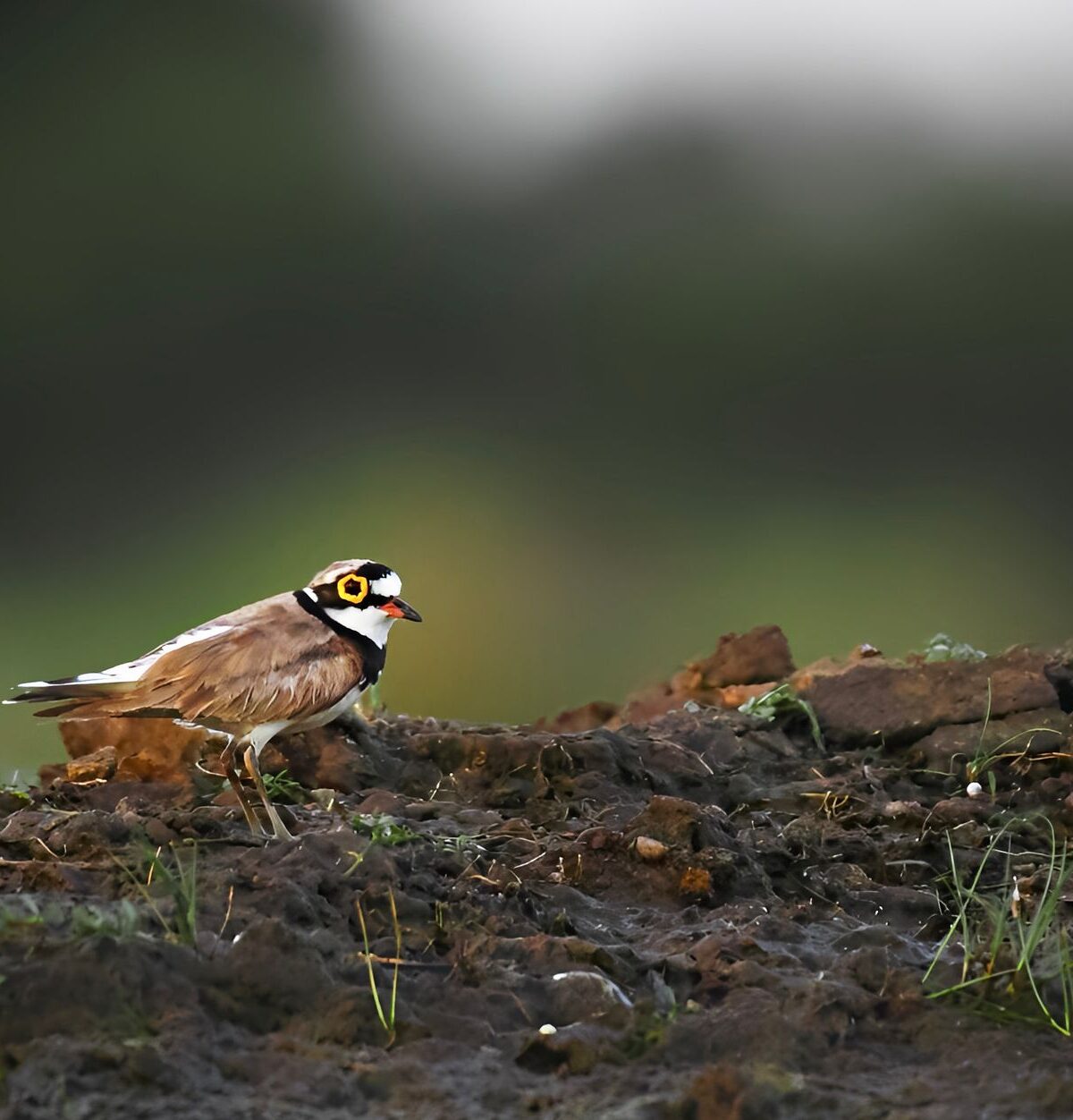
EURASIAN LITTLE RINGED PLOVER
Charadrius dubius
DESCRIPTION
Eurasian Little Ringed Plover (Charadrius dubius) is also known as the Little Ringed Plover. This small shorebird is characterized by its distinctive yellow eye-ring and a short, stubby bill. It typically has a brownish upper body and a white underbelly, making it well-camouflaged against its sandy or pebbly habitats. The species is known for its quick, agile movements as it forages along riverbanks and shorelines.
FUN FACTS
- Eurasian Little Ringed Plovers are known for their unique courtship displays, which include a series of rapid movements and calls to attract mates
- They are also highly adaptable birds, often nesting in human-altered landscapes, which allows them to thrive in various environments.| These plovers are excellent foragers, using their keen eyesight to spot prey while running quickly along the shore
- Their ability to camouflage with their surroundings helps them avoid predators, making them quite elusive in their natural habitats
QUICK INFO
Lifespan3-5 years in the wild
Average Weight50-70 g
Average Length18-20 cm
Diet TypeInsectivore
Social Structurepair
Activity PatternDiurnal
Breeding SeasonSpring (April-June)
- Habitat
- This species prefers open, sandy, or gravelly areas near water bodies such as rivers, lakes, and coastal regions. They are often found in disturbed habitats, including agricultural fields and gravel pits.
- Biomes
- Wetlands, Coastal, Grassland
- Native Range
- The Eurasian Little Ringed Plover is found across Europe and parts of Asia, migrating to southern regions during the winter months.
- Continent
- Europe, Asia
- Countries
- United Kingdom, France, Germany, Russia, China, India
- Diet
- Eurasian Little Ringed Plovers primarily feed on invertebrates, including insects and small crustaceans. They often hunt by sight, running quickly to catch their prey.
- Diet Type
- Insectivore
- Favorite Food
- insects, small crustaceans
- Social Structure
- pair
- Activity Pattern
- Diurnal
- Group Size
- 1-4
- Territorial
- 1

 VU
VU
 LC
LC
50-70 g
Weight
18-20 cm
Length
- Coloration
- brownish upper body with a white underbelly and a distinctive yellow eye-ring
- Lifespan
- 3-5 years in the wild
- Offspring per Birth
- 3-4
- Sexual Maturity
- 1 year
- Breeding Season
- Spring (April-June)
LC
Least Concern
IUCN Red List Status
- Population Status
- The population of Eurasian Little Ringed Plovers is currently stable, although local declines have been noted in some areas due to habitat loss.
- Wild Population Estimate
- 100,000-200,000
- Population Trend
- Stable
- Endangered
- 0
- Threats
- Main threats include habitat destruction due to urban development and agricultural practices. Additionally, predation by domestic animals and human disturbance can impact their nesting success.
- Predators
- foxes, birds of prey, domestic cats
- Defense Mechanisms
- They often use distraction displays to lead potential predators away from their nests.
- Found in Zoos
- Rare