


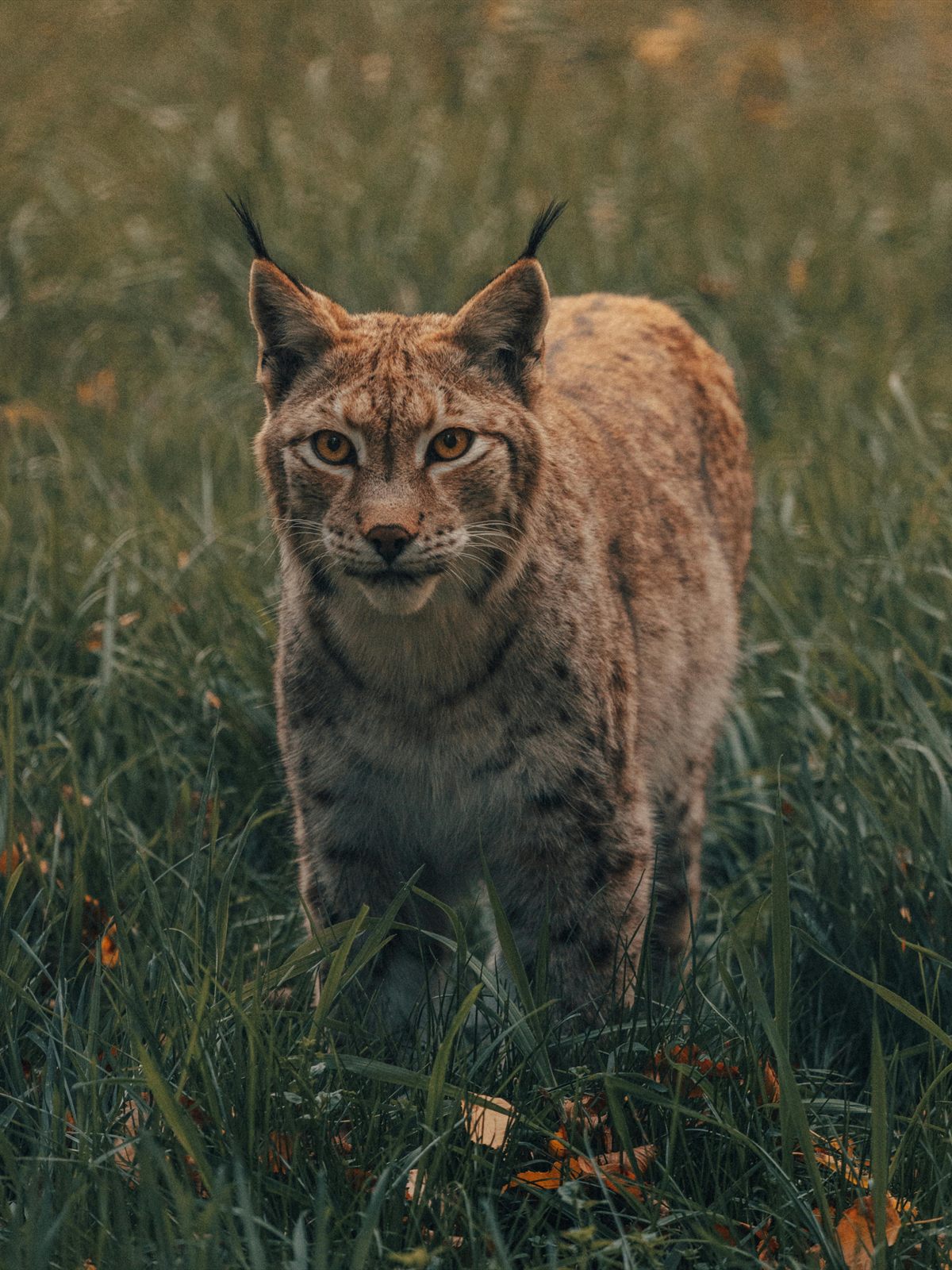
EURASIAN LYNX
Lynx lynx
DESCRIPTION
Eurasian Lynx, also known simply as Lynx, is a medium-sized wild cat characterized by its tufted ears, short tail, and long legs. This species has a thick, soft coat that varies in color from light brown to gray, often with dark spots. They are solitary and elusive, primarily active during twilight hours, and are known for their exceptional hunting skills in forested and mountainous regions.
FUN FACTS
- Eurasian Lynx has an impressive ability to leap up to 3 meters in the air, allowing it to catch birds and other prey
- Additionally, they have a unique vocalization that includes a variety of sounds, such as growls, hisses, and even a distinctive 'meow' that can be heard over long distances
QUICK INFO
Lifespan10-15 years in the wild, up to 20 years in captivi
Average Weight8-30 kg
Average Length80-130 cm
Diet TypeCarnivore
Social StructureSolitary, with individuals maintaining their own territories.
Activity PatternCrepuscular
Breeding SeasonLate winter to early spring (February-April)
- Habitat
- Eurasian Lynx inhabits a variety of forested areas, including boreal forests, mountainous regions, and mixed woodlands. They prefer habitats with dense cover for stalking prey and open areas for hunting.
- Biomes
- Temperate Forest, Boreal Forest, Mountain
- Native Range
- The native range of the Eurasian Lynx extends across Europe, Siberia, and parts of Central Asia.
- Continent
- Europe, Asia
- Countries
- Russia, Finland, Sweden, Norway, Estonia, Latvia, Lithuania, Poland, Slovakia, Romania, Bulgaria
- Diet
- Eurasian Lynx primarily preys on small to medium-sized ungulates, as well as hares and birds. They are skilled hunters, using their keen senses to stalk and ambush their prey.
- Diet Type
- Carnivore
- Favorite Food
- roe deer, hares
- Social Structure
- Solitary, with individuals maintaining their own territories.
- Activity Pattern
- Crepuscular
- Group Size
- 1
- Territorial
- 1
 LC
LC
 LC
LC
8-30 kg
Weight
80-130 cm
Length
60-70 cm at shoulder
Height (Shoulder)
- Coloration
- Light brown to gray with dark spots and stripes.
- Sexual Dimorphism
- Males are generally larger than females.
- Lifespan
- 10-15 years in the wild, up to 20 years in captivi
- Gestation Period
- 70-80 days
- Offspring per Birth
- 1-4
- Sexual Maturity
- 2-3 years
- Breeding Season
- Late winter to early spring (February-April)
LC
Least Concern
IUCN Red List Status
- Population Status
- The population of Eurasian Lynx is considered stable in many areas, although it faces threats in some regions.
- Wild Population Estimate
- 50,000-100,000
- Population Trend
- Stable
- Endangered
- 0
- Threats
- Main threats include habitat loss, poaching, and depletion of prey species. In some areas, they are also affected by vehicle collisions.
- Predators
- Wolves, bears, and large birds of prey can pose threats to young lynx, but adults have few natural predators.
- Defense Mechanisms
- Eurasian Lynx relies on its stealth and camouflage to avoid detection by predators and humans.
- Found in Zoos
- Uncommon