


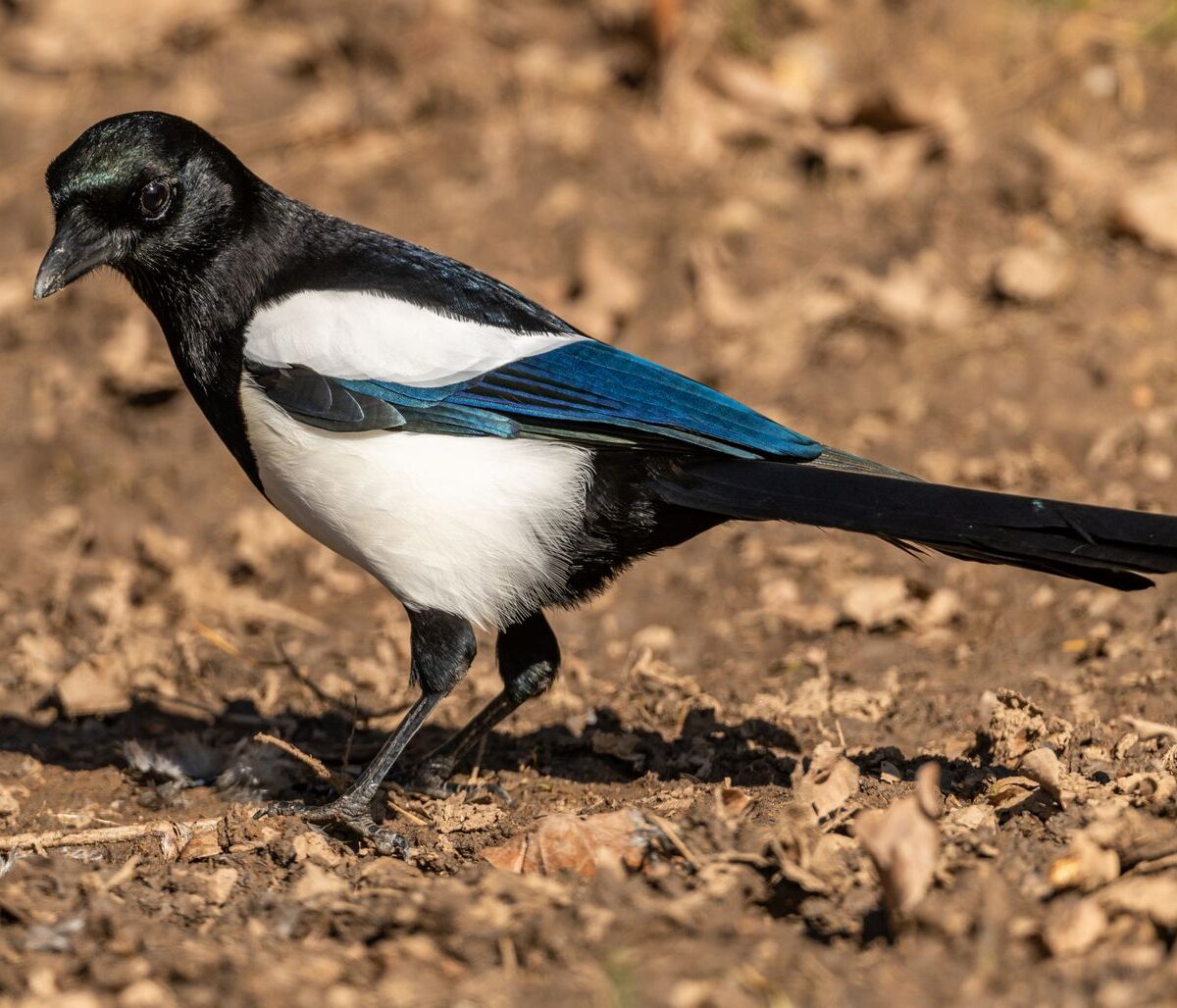
EURASIAN MAGPIE
Pica pica
DESCRIPTION
Eurasian Magpie (Pica pica) is commonly known as the Common Magpie and is a striking bird characterized by its black and white plumage, with iridescent green and blue highlights on its wings and tail. This intelligent bird is known for its complex social behavior, often forming large groups and exhibiting playful antics. In addition to its social nature, the Eurasian Magpie is also recognized for its adaptability to various environments, thriving in both urban and rural settings.
FUN FACTS
- Eurasian Magpies are one of the few non-mammal species known to recognize themselves in mirrors, indicating a high level of intelligence and self-awareness
- They are also known for their complex vocalizations and can mimic the sounds of other birds and even human-made noises, showcasing their adaptability and intelligence
QUICK INFO
Lifespan5-10 years in the wild, up to 15 years in captivit
Average Weight150-250 g
Average Length44-46 cm
Diet TypeOmnivore
Social StructureThey are often seen in pairs or small groups, especially during the breeding season, but can form larger flocks outside of this period.
Activity PatternDiurnal
Breeding SeasonSpring (March-May)
- Habitat
- Eurasian Magpies inhabit a range of environments, including woodlands, farmlands, and urban areas. They prefer areas with trees for nesting and foraging.
- Biomes
- Temperate Forest, Grassland, Urban
- Native Range
- The Eurasian Magpie is native to Europe, Asia, and parts of North Africa.
- Continent
- Europe, Asia
- Countries
- United Kingdom, France, Germany, Russia, China
- Diet
- Eurasian Magpies are omnivorous and have a varied diet that includes insects, small mammals, fruits, and carrion.
- Diet Type
- Omnivore
- Favorite Food
- insects, small mammals, fruits
- Social Structure
- They are often seen in pairs or small groups, especially during the breeding season, but can form larger flocks outside of this period.
- Activity Pattern
- Diurnal
- Group Size
- 2-20
- Territorial
- 1
 LC
LC

150-250 g
Weight
44-46 cm
Length
- Coloration
- Black and white plumage with iridescent green and blue highlights.
- Lifespan
- 5-10 years in the wild, up to 15 years in captivit
- Offspring per Birth
- 5-7
- Sexual Maturity
- 1-2 years
- Breeding Season
- Spring (March-May)
LC
Least Concern
IUCN Red List Status
- Population Status
- The population of Eurasian Magpies is generally stable, with some local increases in urban areas.
- Wild Population Estimate
- 1,000,000-2,000,000
- Population Trend
- Stable
- Endangered
- 0
- Threats
- Main threats include habitat loss due to urbanization and agricultural expansion, as well as persecution in some areas due to their predatory behavior.
- Predators
- Birds of prey such as hawks and eagles, as well as domestic cats and foxes.
- Defense Mechanisms
- Eurasian Magpies are known to mob potential predators and use their intelligence to evade threats.
- Found in Zoos
- Common