


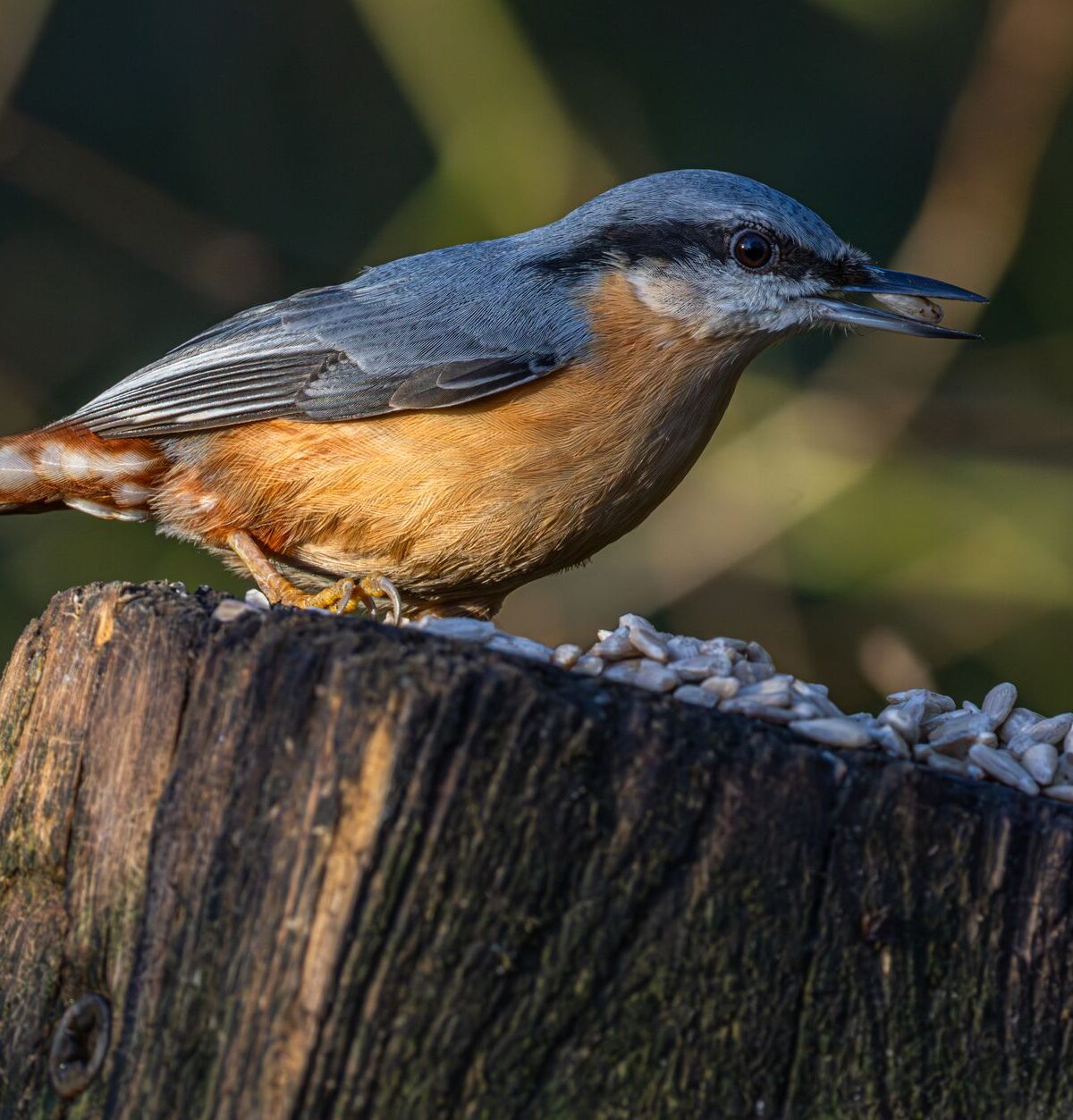
EURASIAN NUTHATCH
Sitta europaea
DESCRIPTION
Eurasian Nuthatch (Sitta europaea) is commonly known as the Nuthatch. This small bird is characterized by its blue-grey upperparts, white underparts, and distinctive black eye stripe. It is known for its unique behavior of climbing down trees headfirst, a trait that sets it apart from other birds, and it often forages for insects and seeds in the bark of trees.
FUN FACTS
- Eurasian Nuthatches are known for their unique ability to store food in tree bark, creating small holes to hide their food for later
- This behavior not only helps them survive during winter months but also plays a role in forest ecology by aiding in seed dispersal
- | They are one of the few bird species that can move headfirst down trees, a skill that allows them to access food sources that are not available to other birds
- This remarkable adaptation showcases their versatility and resourcefulness in foraging
QUICK INFO
Lifespanup to 5 years in the wild
Average Weight18-30 g
Average Length12-14 cm
Diet TypeOmnivore
Social Structurepair, typically monogamous during the breeding season
Activity PatternDiurnal
Breeding SeasonSpring (April-June)
- Habitat
- This species inhabits a variety of wooded areas, including deciduous and mixed forests. It prefers mature trees with plenty of bark crevices for foraging.
- Biomes
- Temperate Forest, Boreal Forest
- Native Range
- Eurasian Nuthatch is found across Europe and parts of Asia, extending from the British Isles to Siberia.
- Continent
- Europe, Asia
- Countries
- United Kingdom, Germany, France, Russia, China
- Diet
- Eurasian Nuthatch primarily feeds on insects, seeds, and nuts, often storing food for later consumption. It has a particular affinity for beech and oak seeds.
- Diet Type
- Omnivore
- Favorite Food
- insects, seeds, nuts
- Social Structure
- pair, typically monogamous during the breeding season
- Activity Pattern
- Diurnal
- Group Size
- 1-2
- Territorial
- 1
 CR
CR
 LC
LC
18-30 g
Weight
12-14 cm
Length
- Coloration
- blue-grey upperparts with white underparts and a black eye stripe
- Lifespan
- up to 5 years in the wild
- Offspring per Birth
- 5-8
- Sexual Maturity
- 1 year
- Breeding Season
- Spring (April-June)
LC
Least Concern
IUCN Red List Status
- Population Status
- The population of Eurasian Nuthatch is generally stable across its range.
- Wild Population Estimate
- unknown
- Population Trend
- Stable
- Endangered
- 0
- Threats
- Habitat loss due to deforestation and urbanization poses a threat to the Eurasian Nuthatch. Additionally, climate change may impact its food sources and breeding success.
- Predators
- hawks, owls, domestic cats
- Defense Mechanisms
- Eurasian Nuthatches will often use alarm calls to warn others of predators and may also engage in aggressive displays.
- Found in Zoos
- Uncommon