


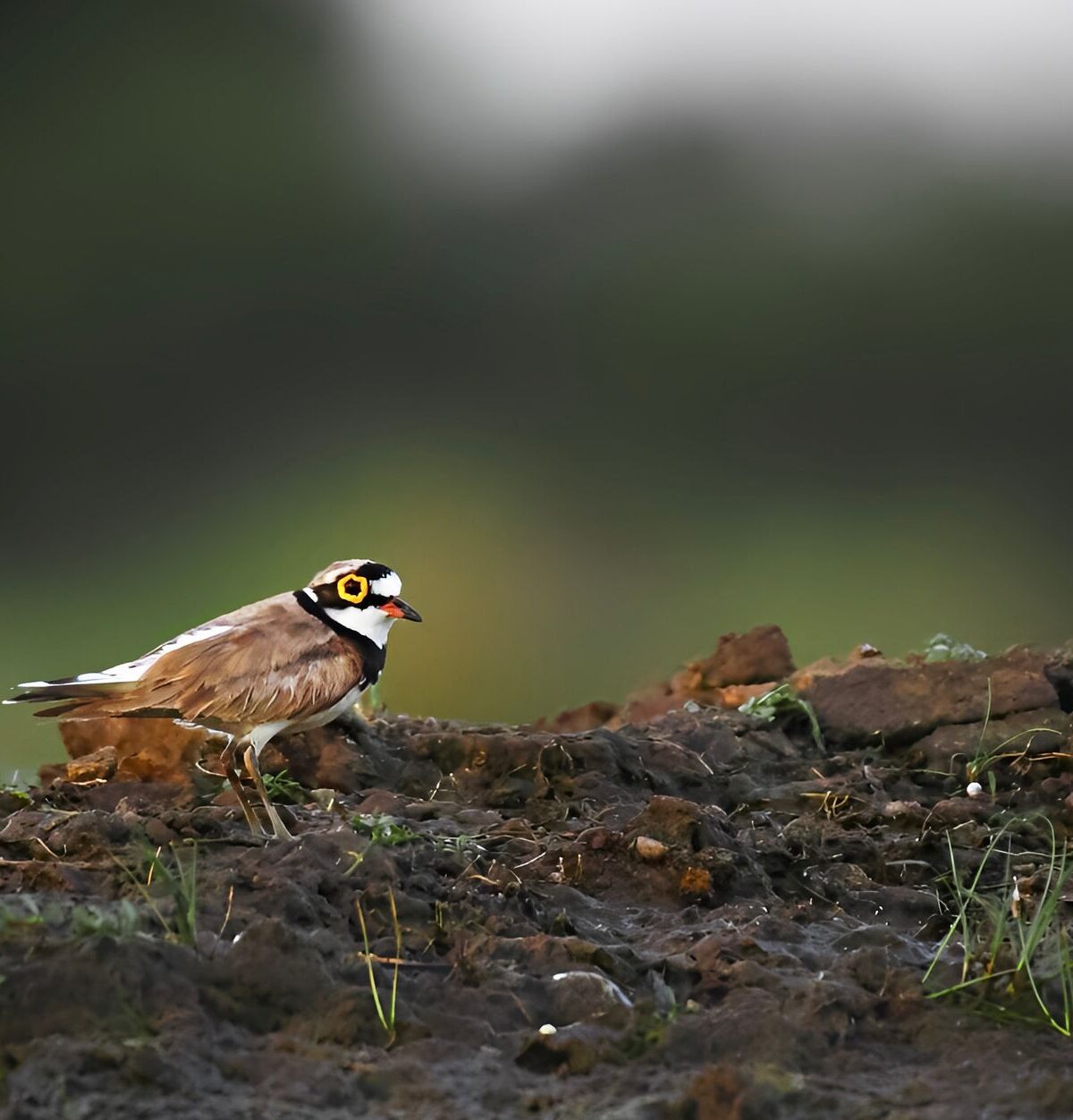
EURASIAN RINGED PLOVER
Charadrius hiaticula
DESCRIPTION
Eurasian Ringed Plover (Charadrius hiaticula) is commonly known as the Ringed Plover. This small shorebird features a distinctive black band around its neck and a white belly, with brownish upperparts that provide excellent camouflage against sandy and pebbly habitats. They are known for their quick, darting movements along the shoreline as they forage for food, often running away from approaching threats before quickly returning to their feeding spots.
FUN FACTS
- Eurasian Ringed Plovers are known for their unique courtship displays, which include elaborate aerial displays and synchronized movements between mates
- They are also capable of nesting in surprisingly harsh environments, including areas with high human activity, showcasing their adaptability to different habitats.|These plovers have a fascinating behavior called 'broken-wing display,' where they pretend to be injured to lure predators away from their nests, ensuring the safety of their eggs and chicks
QUICK INFO
Lifespan3-5 years in the wild
Average Weight50-100 g
Average Length18-20 cm
Diet TypeCarnivore
Social Structurepair, often seen in small groups outside of the breeding season
Activity PatternDiurnal
Breeding SeasonSpring (April-June)
- Habitat
- These plovers inhabit coastal areas, particularly sandy beaches, mudflats, and estuaries. They prefer open habitats where they can easily spot predators and find food.
- Biomes
- Coastal, Wetlands
- Native Range
- The Eurasian Ringed Plover is found across Europe and parts of Asia, breeding in northern regions and migrating to southern coasts during winter.
- Continent
- Europe, Asia
- Countries
- Norway, Sweden, Finland, Russia, United Kingdom, France, Germany, Poland
- Diet
- Eurasian Ringed Plovers primarily feed on invertebrates, including insects and crustaceans, which they find by probing the sand and mud along shorelines. They may also consume small mollusks and other small marine organisms.
- Diet Type
- Carnivore
- Favorite Food
- insects, crustaceans
- Social Structure
- pair, often seen in small groups outside of the breeding season
- Activity Pattern
- Diurnal
- Group Size
- 2-10
- Territorial
- 1
 LC
LC

 LC
LC
50-100 g
Weight
18-20 cm
Length
- Coloration
- brownish upperparts with a white belly and a distinctive black neck band
- Lifespan
- 3-5 years in the wild
- Offspring per Birth
- 3-4
- Sexual Maturity
- 1-2 years
- Breeding Season
- Spring (April-June)
LC
Least Concern
IUCN Red List Status
- Population Status
- The population of Eurasian Ringed Plovers is generally stable, although some local declines have been noted due to habitat loss.
- Wild Population Estimate
- 100,000-200,000
- Population Trend
- Stable
- Endangered
- 0
- Threats
- Main threats include habitat destruction due to coastal development and human disturbance, which can impact nesting success. Climate change also poses a risk by altering their breeding and feeding habitats.
- Predators
- Gulls, foxes, and various raptors are known to prey on Eurasian Ringed Plovers, particularly their eggs and chicks.
- Defense Mechanisms
- They often use distraction displays to lead predators away from their nests, feigning injury to draw attention away from their young.
- Found in Zoos
- Rare