


EURASIAN SISKIN
Spinus spinus
DESCRIPTION
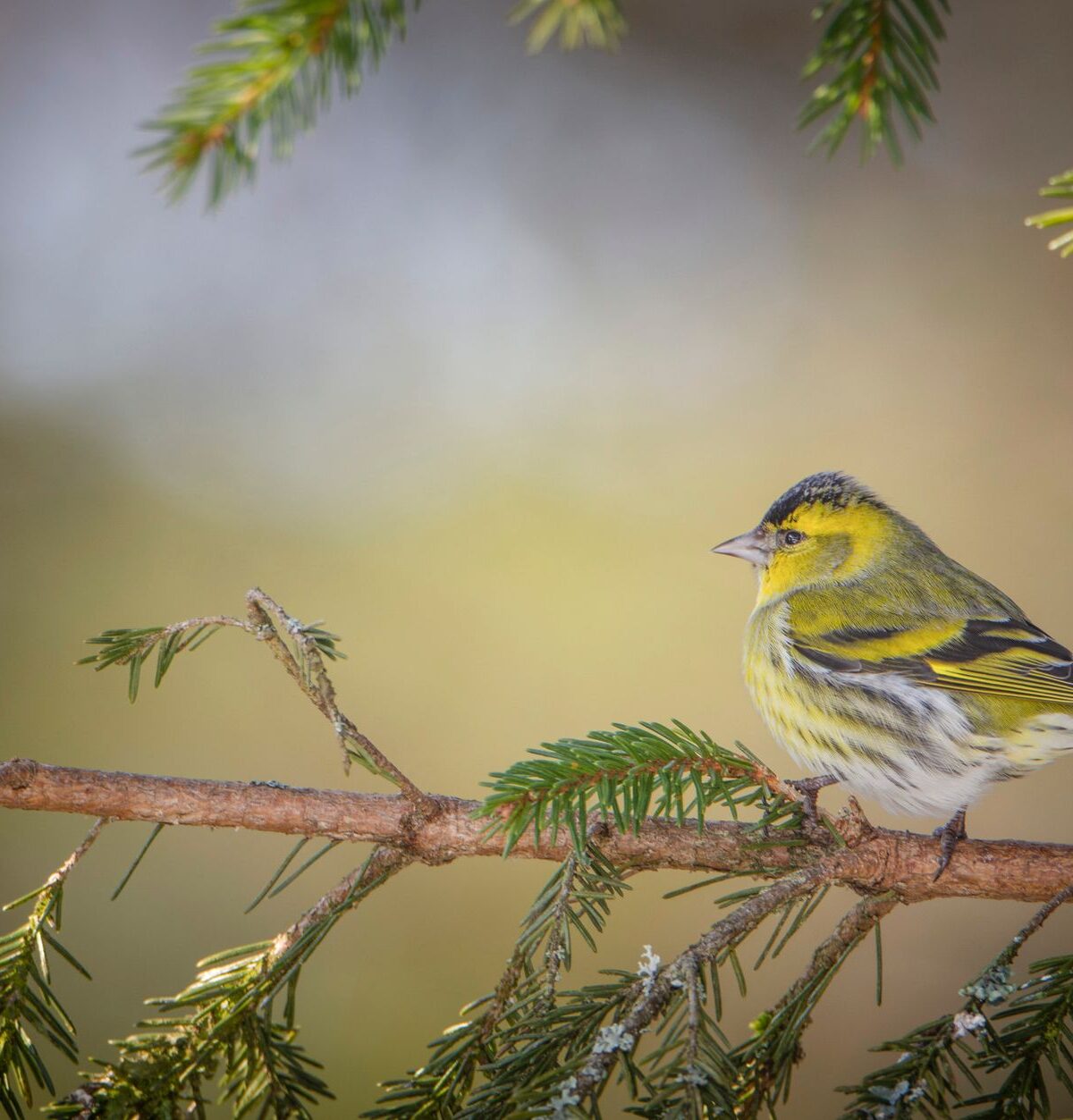
Eurasian Siskin (Spinus spinus) is also known simply as Siskin. This small finch is characterized by its vibrant yellow plumage, with black streaks on the wings and a distinctive black cap on its head. They are social birds, often found in flocks, and are known for their acrobatic feeding behavior, frequently hanging upside down to access seeds in coniferous trees.
FUN FACTS
- Eurasian Siskins are known for their remarkable ability to adapt to urban environments, often seen in city parks and gardens where they can find food sources
- They have a unique feeding behavior, often hanging upside down to reach seeds, which showcases their agility and flexibility
- | During the breeding season, males perform elaborate courtship displays, including singing and fluttering around females to attract their attention
- These displays are not only a way to impress potential mates but also serve to establish territory among competing males
QUICK INFO
Lifespan2-5 years in the wild
Average Weight10-20 g
Average Length11-12 cm
Diet TypeHerbivore
Social StructureThey are typically found in groups, especially outside the breeding season, where they can form flocks of varying sizes.
Activity PatternDiurnal
Breeding SeasonSpring (April-June)
- Habitat
- Eurasian Siskins inhabit a variety of wooded areas, including coniferous and mixed forests. They prefer habitats with abundant seed sources and are often found in parks and gardens.
- Biomes
- Temperate Forest, Boreal Forest
- Native Range
- The Eurasian Siskin is found across Europe and parts of Asia, extending from the British Isles to Siberia.
- Continent
- Europe, Asia
- Countries
- United Kingdom, Germany, Russia, Sweden, Finland
- Diet
- Eurasian Siskins primarily feed on seeds, particularly those from conifers and birches. They also consume small insects and berries during the breeding season.
- Diet Type
- Herbivore
- Favorite Food
- conifer seeds, birch seeds
- Social Structure
- They are typically found in groups, especially outside the breeding season, where they can form flocks of varying sizes.
- Activity Pattern
- Diurnal
- Group Size
- 5-30
- Territorial
- 0

10-20 g
Weight
11-12 cm
Length
- Coloration
- Bright yellow with black streaks and a black cap
- Sexual Dimorphism
- Males are generally brighter and more vibrant in color than females.
- Lifespan
- 2-5 years in the wild
- Offspring per Birth
- 3-6
- Sexual Maturity
- 1 year
- Breeding Season
- Spring (April-June)
LC
Least Concern
IUCN Red List Status
- Population Status
- The population of Eurasian Siskins is currently stable, with no significant declines reported.
- Wild Population Estimate
- 1,000,000-2,000,000
- Population Trend
- Stable
- Endangered
- 0
- Threats
- Main threats include habitat loss due to deforestation and changes in land use. Climate change may also impact their food sources and breeding success.
- Predators
- Common predators include hawks, cats, and various birds of prey.
- Defense Mechanisms
- Eurasian Siskins rely on their agility and flocking behavior to evade predators.
- Found in Zoos
- Uncommon