


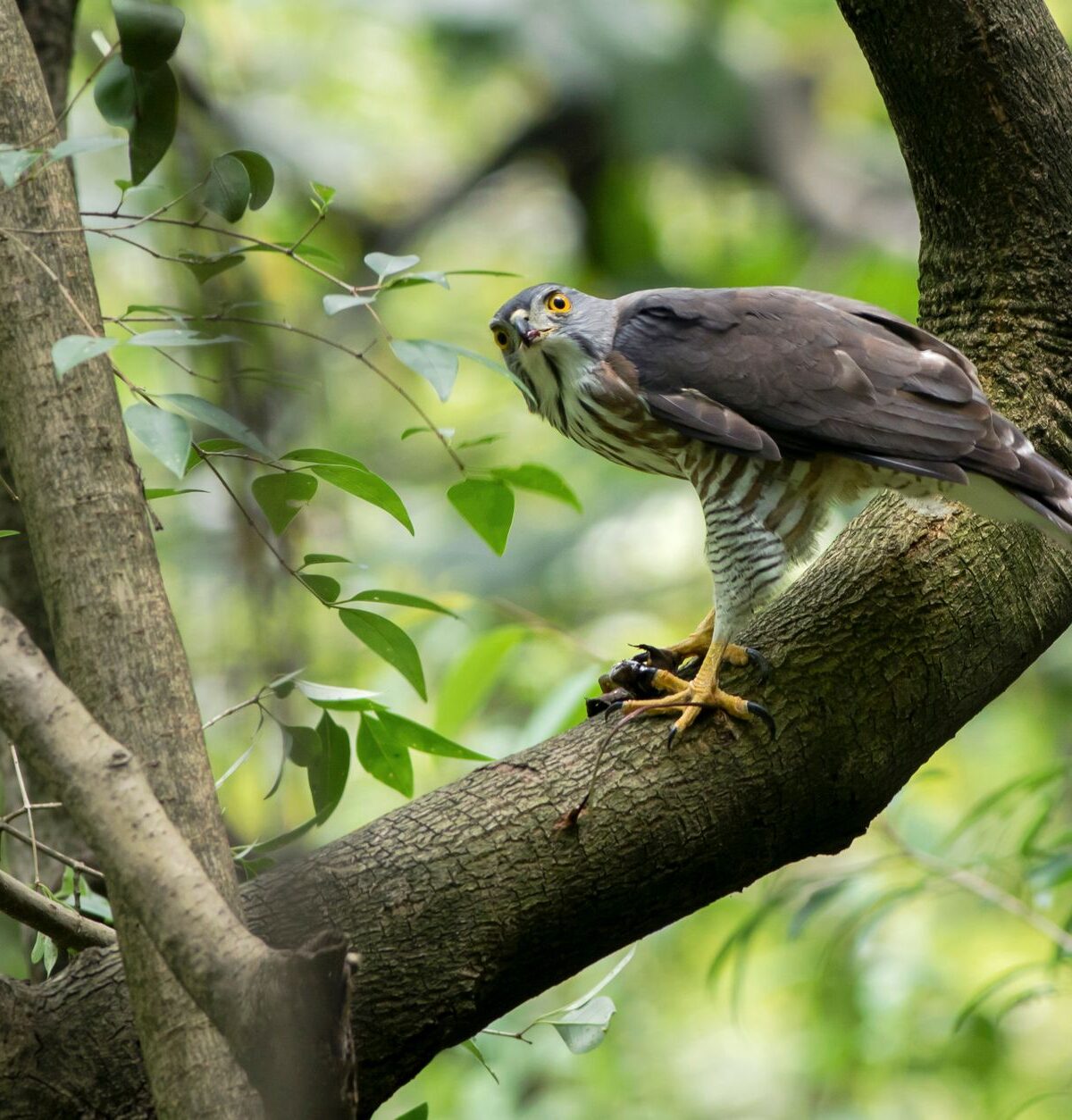
EURASIAN SPARROWHAWK
Accipiter nisus
DESCRIPTION
Eurasian Sparrowhawk (Accipiter nisus) is a small to medium-sized raptor known for its agile flight and distinctive appearance. Males are smaller than females, with a slate-blue back and a white underside marked with reddish-brown streaks, while females are larger and browner. This species is often found in woodlands and urban areas, where it hunts small birds and occasionally small mammals, showcasing remarkable hunting skills and adaptability to various environments.
FUN FACTS
- Eurasian Sparrowhawks are known for their incredible agility in flight, allowing them to navigate through dense foliage while hunting
- They can reach speeds of up to 50 mph when diving to catch their prey
- | These birds have a unique hunting strategy, often surprising their prey by flying low and fast through trees, making them highly effective hunters in their preferred habitats
QUICK INFO
LifespanUp to 5 years in the wild, longer in captivity.
Average Weight150-250 g
Average Length29-38 cm
Diet TypeCarnivore
Social Structuresolitary, typically seen alone except during breeding season
Activity PatternDiurnal
Breeding SeasonSpring (April-June)
- Habitat
- Eurasian Sparrowhawks inhabit a variety of environments, including woodlands, forests, and urban areas. They prefer areas with dense vegetation for nesting and hunting.
- Biomes
- Temperate Forest, Urban
- Native Range
- The species is found across Europe and parts of Asia, extending from the British Isles to Siberia.
- Continent
- Europe, Asia
- Countries
- United Kingdom, Germany, France, Russia, Sweden, Finland
- Diet
- Eurasian Sparrowhawks primarily feed on small birds, but they may also take small mammals when necessary.
- Diet Type
- Carnivore
- Favorite Food
- small birds
- Social Structure
- solitary, typically seen alone except during breeding season
- Activity Pattern
- Diurnal
- Group Size
- 1-2
- Territorial
- 1
150-250 g
Weight
29-38 cm
Length
- Coloration
- Males have a blue-grey back and white underparts with reddish streaks, while females are brown with a more mottled appearance.
- Sexual Dimorphism
- Males are smaller and have different coloration compared to larger females.
- Lifespan
- Up to 5 years in the wild, longer in captivity.
- Offspring per Birth
- 3-6
- Sexual Maturity
- 1-2 years
- Breeding Season
- Spring (April-June)
LC
Least Concern
IUCN Red List Status
- Population Status
- The population is currently stable in many areas, though local declines have been noted in some regions.
- Wild Population Estimate
- 100,000-1,000,000
- Population Trend
- Stable
- Endangered
- 0
- Threats
- Main threats include habitat loss due to deforestation and urbanization, as well as pesticide use that affects their prey. Additionally, they face risks from collisions with vehicles and power lines.
- Predators
- Larger birds of prey, such as eagles, and humans can pose threats to adult Eurasian Sparrowhawks. Nestlings may also be vulnerable to predation by corvids and other opportunistic birds.
- Defense Mechanisms
- Eurasian Sparrowhawks rely on their agility and speed to evade predators, often using dense vegetation for cover.
- Found in Zoos
- Uncommon