


EURASIAN STONECHAT
Saxicola rubicola
DESCRIPTION
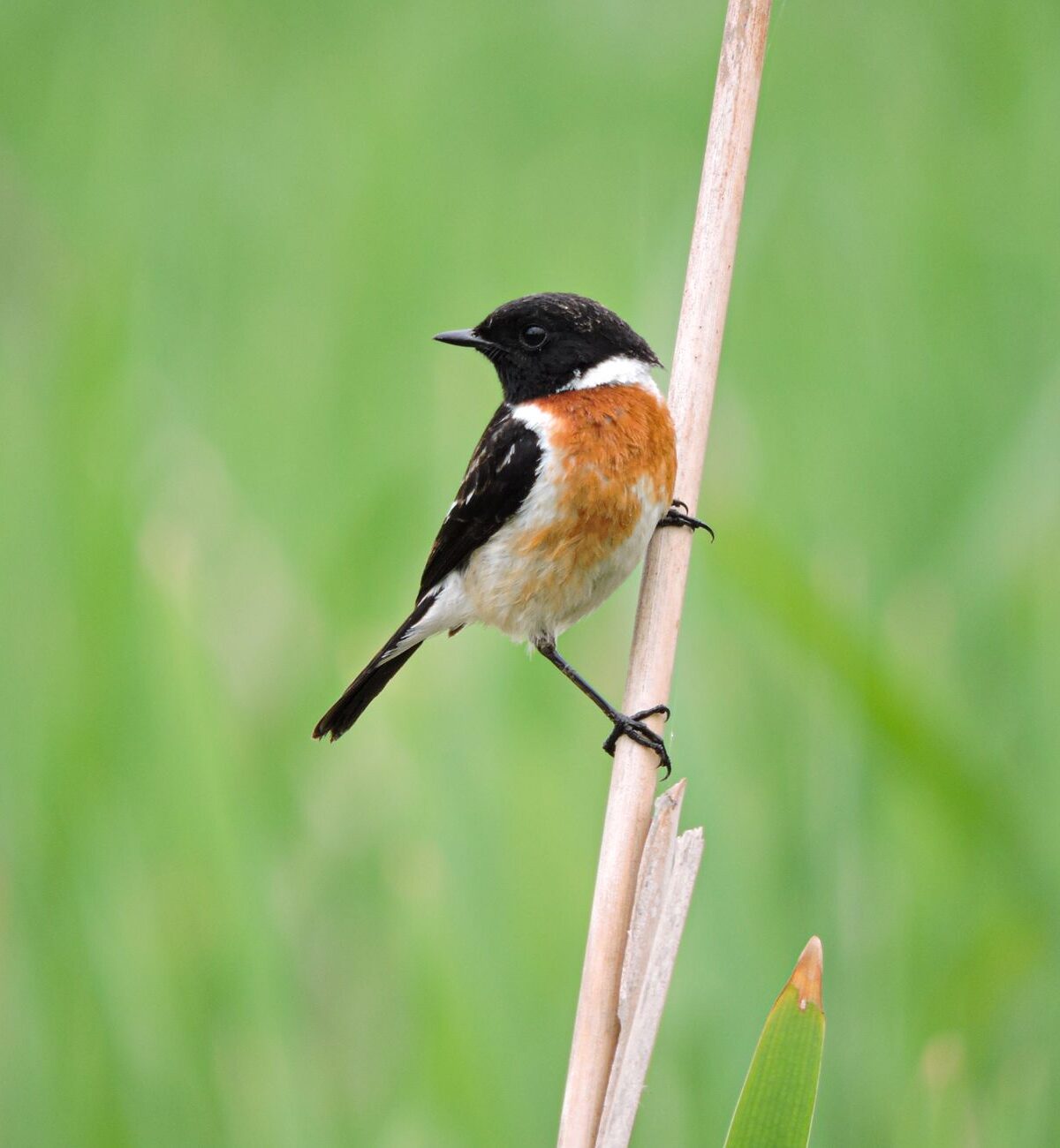
Eurasian Stonechat (Saxicola rubicola) is commonly known as Stonechat and is a small passerine bird characterized by its distinctive black head and orange-brown breast. This bird exhibits a lively behavior, often seen perching on low shrubs or fences, where it frequently calls out with a series of sharp notes. In terms of ecology, it prefers open habitats such as grasslands and heathlands, where it can hunt for insects and other small invertebrates.
FUN FACTS
- Eurasian Stonechat is known for its distinctive call, which sounds like a series of sharp 'chack' notes, often repeated in quick succession
- This bird is also a skilled forager, using its keen eyesight to spot insects from a distance before swooping down to catch them.| During the breeding season, males perform elaborate displays to attract females, including puffing up their feathers and singing loudly from prominent perches
QUICK INFO
Lifespan3-5 years in the wild
Average Weight15-20 g
Average Length12-14 cm
Diet TypeInsectivore
Social Structurepair, typically seen in monogamous pairs during the breeding season
Activity PatternDiurnal
Breeding SeasonSpring to early summer (April-July)
- Habitat
- This species thrives in open, grassy areas, heathlands, and scrublands, often near water sources. It prefers habitats with low vegetation that provide ample foraging opportunities.
- Biomes
- Temperate Grassland, Heathland
- Native Range
- Eurasian Stonechat is found across Europe and parts of Asia, extending from the British Isles to Central Asia.
- Continent
- Europe, Asia
- Countries
- United Kingdom, Germany, France, Russia, China
- Diet
- Eurasian Stonechat primarily feeds on insects and other small invertebrates, which it catches by foraging on the ground or from perches.
- Diet Type
- Insectivore
- Favorite Food
- insects, spiders
- Social Structure
- pair, typically seen in monogamous pairs during the breeding season
- Activity Pattern
- Diurnal
- Group Size
- 1-2
- Territorial
- 1
 LC
LC
15-20 g
Weight
12-14 cm
Length
- Coloration
- The male has a striking black head, white wing patches, and a rusty-orange breast, while the female is more subdued with brown and buff tones.
- Sexual Dimorphism
- Males are more brightly colored than females.
- Lifespan
- 3-5 years in the wild
- Offspring per Birth
- 3-6
- Sexual Maturity
- 1 year
- Breeding Season
- Spring to early summer (April-July)
LC
Least Concern
IUCN Red List Status
- Population Status
- The population of Eurasian Stonechat is currently stable in many areas, although it faces habitat loss in some regions.
- Wild Population Estimate
- 1,000,000-2,000,000
- Population Trend
- Stable
- Endangered
- 0
- Threats
- Main threats include habitat destruction due to agricultural expansion and urban development. Climate change also poses a risk by altering their habitat and food availability.
- Predators
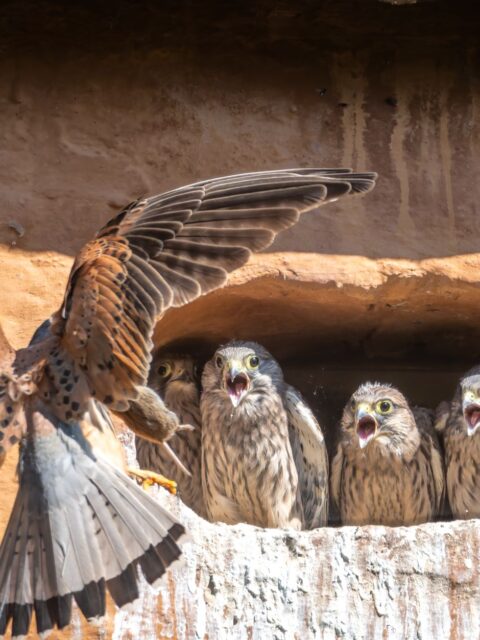
- Common predators include birds of prey such as kestrels and sparrowhawks, as well as domestic cats.
- Defense Mechanisms
- Eurasian Stonechat relies on its camouflage and quick flight to evade predators.
- Found in Zoos
- Uncommon