


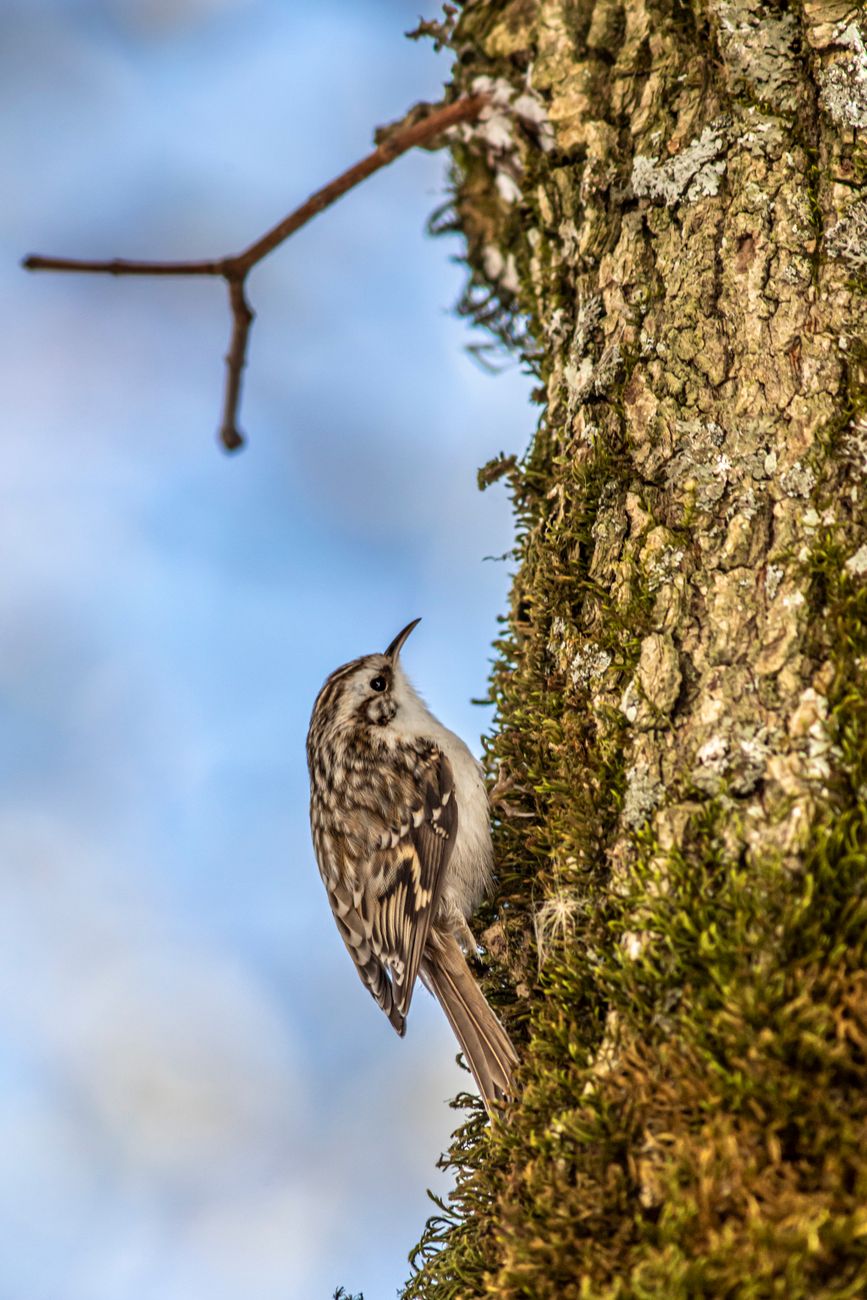
EURASIAN TREECREEPER
Certhia familiaris
DESCRIPTION
Eurasian Treecreeper (Certhia familiaris) is commonly known as the Treecreeper. This small, slender bird is characterized by its brown and white streaked plumage, which provides excellent camouflage against tree bark. It has a long, curved bill that is perfectly adapted for probing into crevices in search of insects and larvae, and its behavior includes a distinctive climbing motion as it spirals up tree trunks.
FUN FACTS
- Eurasian Treecreepers have a unique foraging technique where they spiral up tree trunks, using their stiff tail feathers for support
- This behavior not only helps them find food but also allows them to cover a large area of bark efficiently
- | These birds are known for their distinctive call, which is a series of high-pitched notes that can be heard during their breeding season
- Their vocalizations play a crucial role in establishing territory and attracting mates
QUICK INFO
Lifespanup to 5 years in the wild
Average Weight10-15 g
Average Length13-14 cm
Diet TypeInsectivore
Social Structuresolitary or in pairs, typically seen alone or with a mate
Activity PatternDiurnal
Breeding SeasonSpring (April-June)
- Habitat
- Eurasian Treecreepers inhabit a variety of wooded environments, including deciduous and mixed forests. They prefer areas with mature trees that provide ample foraging opportunities and nesting sites.
- Biomes
- Temperate Forest, Boreal Forest
- Native Range
- The Eurasian Treecreeper is found across Europe and parts of Asia, extending from the British Isles to Siberia.
- Continent
- Europe, Asia
- Countries
- United Kingdom, Germany, France, Russia, Sweden, Norway
- Diet
- Eurasian Treecreepers primarily feed on insects, spiders, and other small invertebrates found on tree bark. They forage by climbing up trees and using their specialized bill to extract food from crevices.
- Diet Type
- Insectivore
- Favorite Food
- insects, larvae
- Social Structure
- solitary or in pairs, typically seen alone or with a mate
- Activity Pattern
- Diurnal
- Group Size
- 1-2
- Territorial
- 1
 LC
LC
10-15 g
Weight
13-14 cm
Length
- Coloration
- brown and white streaked plumage
- Lifespan
- up to 5 years in the wild
- Offspring per Birth
- 5-7
- Sexual Maturity
- 1 year
- Breeding Season
- Spring (April-June)
LC
Least Concern
IUCN Red List Status
- Population Status
- The population of Eurasian Treecreepers is generally stable, though local declines may occur due to habitat loss.
- Wild Population Estimate
- unknown
- Population Trend
- Stable
- Endangered
- 0
- Threats
- Main threats include habitat destruction due to logging and urbanization. Additionally, climate change may impact their food sources and nesting sites.
- Predators
- Common predators include birds of prey such as sparrowhawks and various mammals like cats and weasels.
- Defense Mechanisms
- Eurasian Treecreepers rely on their camouflage and ability to hide in tree bark to evade predators.
- Found in Zoos
- Rare