


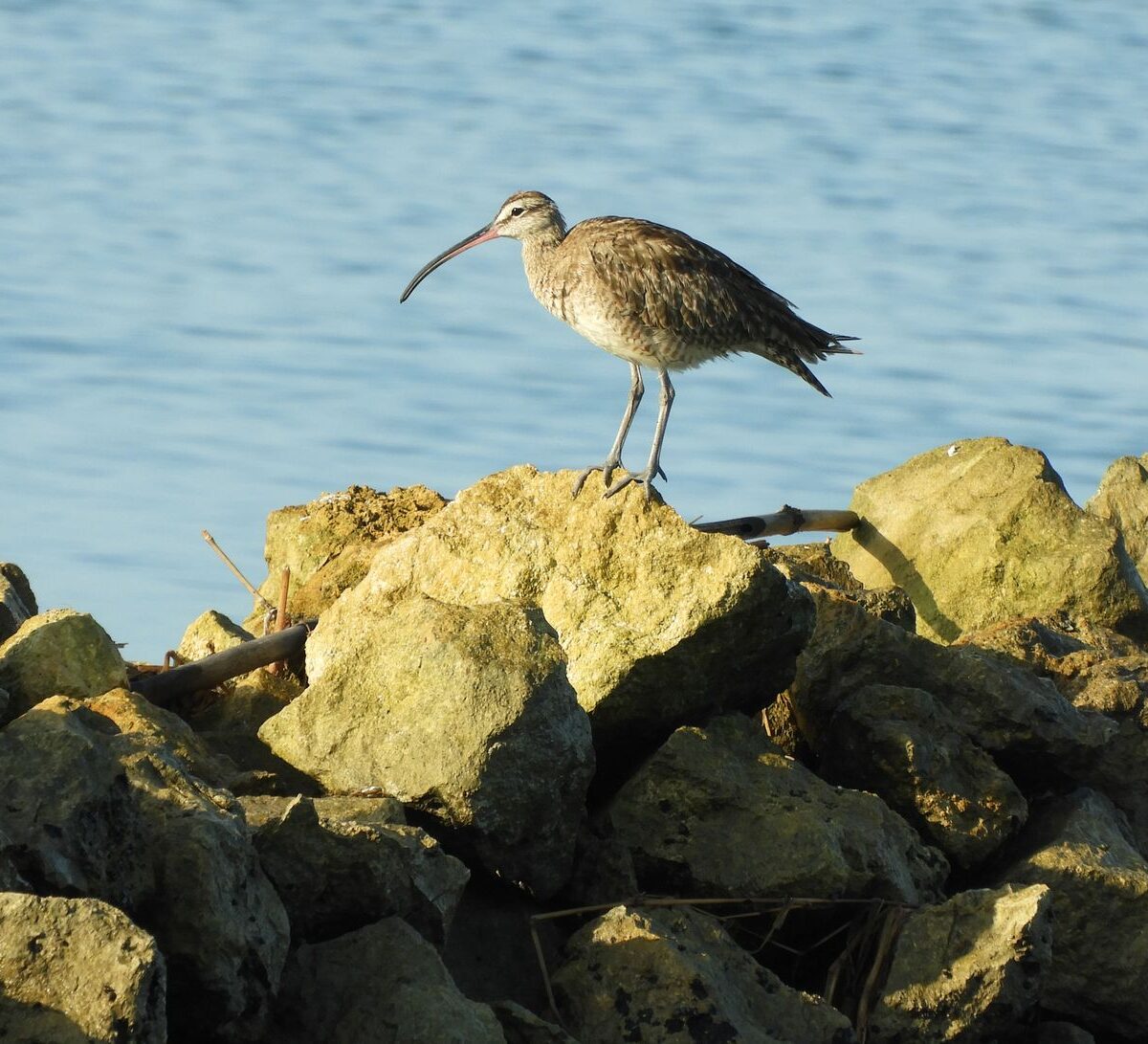
EURASIAN WHIMBREL
Numenius phaeopus
DESCRIPTION
Eurasian Whimbrel (Numenius phaeopus) is commonly known as Whimbrel. This large shorebird features a long, curved bill and a distinctive brown and white plumage, which provides excellent camouflage against its coastal habitat. It is known for its migratory behavior, traveling long distances between breeding grounds in the Arctic and wintering areas in Africa and South Asia.
FUN FACTS
- Eurasian Whimbrels are known for their impressive migratory journeys, traveling up to 6,000 kilometers non-stop during migration
- They have a unique feeding technique where they use their long bills to probe deep into the mud for hidden prey, showcasing their adaptability to different feeding environments.| The species is famous for its distinctive call, which sounds like a series of melodious whistles, often heard during their breeding season
- This call is not only used for communication but also plays a role in attracting mates
QUICK INFO
Lifespan10-15 years in the wild
Average Weight200-400 g
Average Length38-50 cm
Diet TypeOmnivore
Social StructureThey are often seen in small groups, especially during migration, but can also be solitary when foraging.
Activity PatternDiurnal
Breeding SeasonSpring (April-June)
- Habitat
- Eurasian Whimbrels inhabit coastal areas, including mudflats, estuaries, and sandy beaches, as well as grasslands and tundra during the breeding season. They prefer habitats that provide ample food resources and nesting sites.
- Biomes
- Coastal, Tundra, Grassland
- Native Range
- The native range of the Eurasian Whimbrel extends across the Arctic tundra during the breeding season and coastal regions of Europe, Asia, and Africa during migration and wintering.
- Continent
- Europe, Asia, Africa
- Countries
- Norway, Sweden, Finland, Russia, United Kingdom, France, Spain, Portugal, Morocco, India
- Diet
- Eurasian Whimbrels primarily feed on invertebrates, such as crabs, mollusks, and worms, which they probe for in mudflats and sandy shores. They also consume some plant material, particularly during the breeding season.
- Diet Type
- Omnivore
- Favorite Food
- invertebrates, crabs
- Social Structure
- They are often seen in small groups, especially during migration, but can also be solitary when foraging.
- Activity Pattern
- Diurnal
- Group Size
- 5-30
- Territorial
- 0

 VU
VU
 LC
LC
200-400 g
Weight
38-50 cm
Length
- Coloration
- Brown and white with streaked plumage, featuring a long, curved bill.
- Sexual Dimorphism
- Males are generally slightly smaller than females.
- Lifespan
- 10-15 years in the wild
- Offspring per Birth
- 3-4
- Sexual Maturity
- 2-3 years
- Breeding Season
- Spring (April-June)
LC
Least Concern
IUCN Red List Status
- Population Status
- The population of Eurasian Whimbrels is currently stable, although some local declines have been noted.
- Wild Population Estimate
- 200,000-300,000
- Population Trend
- Stable
- Endangered
- 0
- Threats
- Main threats include habitat loss due to coastal development and climate change, which affects their breeding and feeding grounds. Additionally, hunting in some regions poses a risk to their populations.
- Predators
- Foxes, birds of prey, and large gulls are known to prey on Eurasian Whimbrel eggs and chicks.
- Defense Mechanisms
- Eurasian Whimbrels rely on their camouflage to avoid detection by predators and will often use distraction displays to lead threats away from their nests.
- Found in Zoos
- Rare