


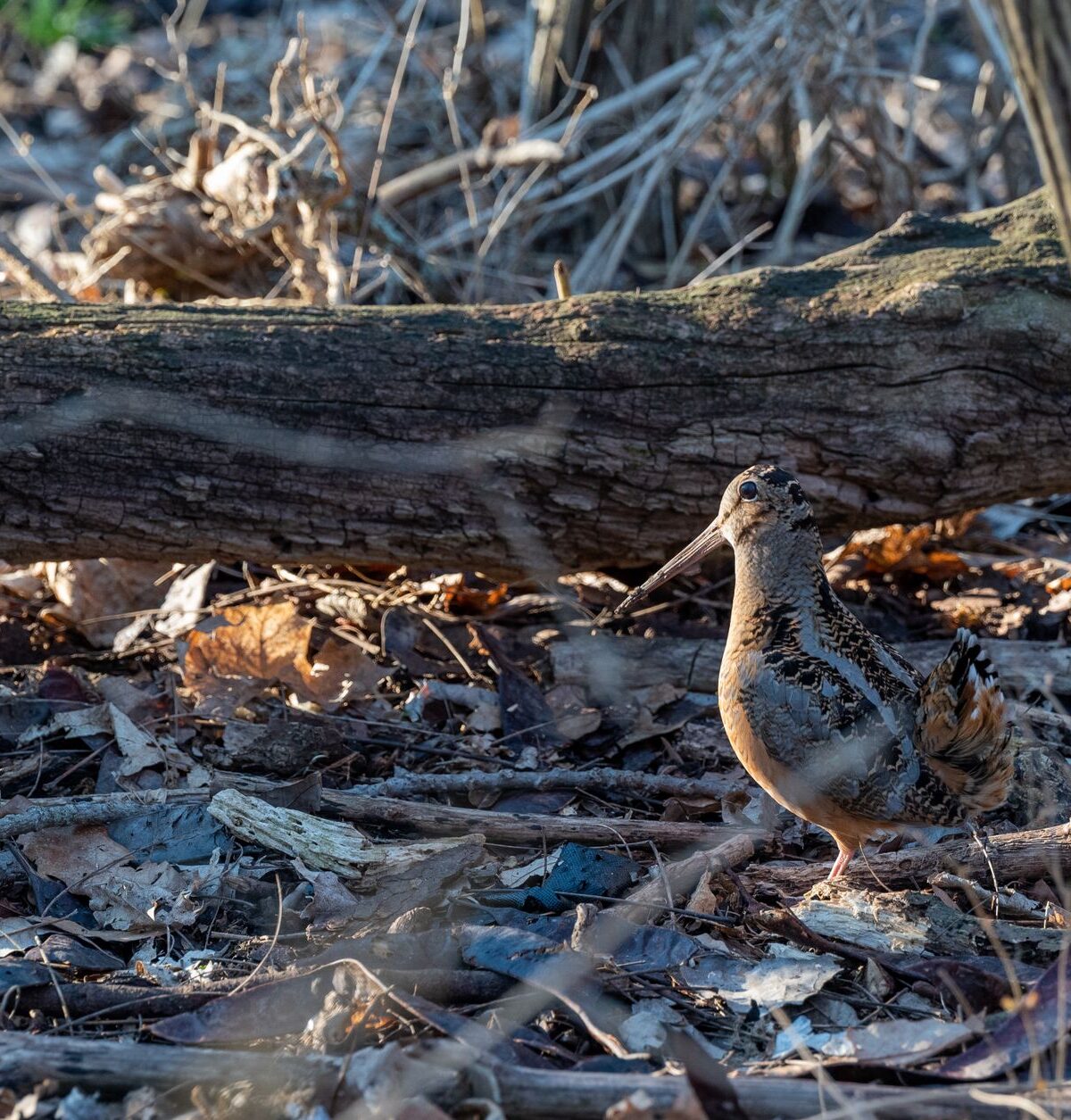
EURASIAN WOODCOCK
Scolopax rusticola
DESCRIPTION
Eurasian Woodcock (Scolopax rusticola) is commonly known as Woodcock. This medium-sized wading bird is characterized by its long bill, large eyes, and a stocky body, which is camouflaged with brown and black plumage that helps it blend into its forest floor habitat. It is primarily a nocturnal feeder, using its sensitive bill to probe the ground for invertebrates, particularly earthworms, and is known for its distinctive display flight during the breeding season.
FUN FACTS
- Eurasian Woodcock has a unique courtship display that involves a series of aerial dives and calls, which can be quite a spectacle during the breeding season
- Additionally, they have an extraordinary sense of smell, which is unusual for birds, allowing them to locate food underground with remarkable accuracy
QUICK INFO
Lifespan5-10 years in the wild
Average Weight200-400 g
Average Length30-35 cm
Diet TypeInsectivore
Social Structuresolitary, pairs during breeding season
Activity PatternNocturnal
Breeding SeasonSpring (March-May)
- Habitat
- Eurasian Woodcock prefers dense, moist woodlands and forests, often with a mix of open areas for feeding. They are also found in scrublands and wetlands, where they can find ample food sources.
- Biomes
- Temperate Forest, Wetland
- Native Range
- The Eurasian Woodcock is found across Europe and parts of Asia, migrating to southern regions during winter.
- Continent
- Europe, Asia
- Countries
- United Kingdom, France, Germany, Russia, Poland
- Diet
- Eurasian Woodcock primarily feeds on earthworms, insects, and other invertebrates found in the soil. It uses its long bill to probe into the ground to locate its food.
- Diet Type
- Insectivore
- Favorite Food
- earthworms
- Social Structure
- solitary, pairs during breeding season
- Activity Pattern
- Nocturnal
- Group Size
- 1-2
- Territorial
- 1

 VU
VU
 LC
LC
200-400 g
Weight
30-35 cm
Length
- Coloration
- brown and black with streaks and spots for camouflage
- Sexual Dimorphism
- males are generally smaller than females
- Lifespan
- 5-10 years in the wild
- Offspring per Birth
- 3-5
- Sexual Maturity
- 1 year
- Breeding Season
- Spring (March-May)
LC
Least Concern
IUCN Red List Status
- Population Status
- The population of Eurasian Woodcock is considered stable in many areas, although local declines have been noted due to habitat loss.
- Wild Population Estimate
- 1,000,000-2,000,000
- Population Trend
- Stable
- Endangered
- 0
- Threats
- Main threats include habitat destruction due to deforestation and agricultural expansion, as well as hunting in some regions. Climate change may also impact their migratory patterns and breeding success.
- Predators
- foxes, birds of prey, domestic cats
- Defense Mechanisms
- Eurasian Woodcock relies on its cryptic coloration to avoid detection by predators, often remaining motionless when threatened.
- Found in Zoos
- Rare