


EUROPEAN BISON
Bison bonasus
DESCRIPTION
The European Bison, also known as the wisent, is a large herbivorous mammal characterized by its massive build, thick fur, and a distinctive hump on its shoulders. Males can weigh up to 1,000 kg and are generally larger than females, which have a more slender appearance. They are social animals that often form small herds, primarily consisting of females and their young, while males tend to be more solitary or form bachelor groups.
FUN FACTS
- European Bison are the heaviest surviving land animals in Europe, and they can run at speeds of up to 40 km/h despite their size
- | They were once on the brink of extinction in the early 20th century, with only a few individuals left in captivity, but successful breeding programs have helped to re-establish wild populations
QUICK INFO
Lifespan15-20 years in the wild, up to 30 in captivity
Average Weight400-1,000 kg
Average Length2.5-3.4 m
Diet TypeHerbivore
Social Structuregroup — typically consists of females and their young, with males being more solitary.
Activity PatternDiurnal
Breeding SeasonSummer (July-August)
- Habitat
- European Bison inhabit temperate forests, grasslands, and open woodlands. They prefer areas with abundant vegetation and access to water sources.
- Biomes
- Temperate Forest, Grassland
- Native Range
- Historically widespread across Europe, now primarily found in isolated populations in Eastern Europe.
- Continent
- Europe
- Countries
- Poland, Belarus, Lithuania, Ukraine, Romania
- Diet
- European Bison are herbivores that primarily graze on grasses, leaves, and shrubs. They play a crucial role in their ecosystem by helping to maintain the structure of the vegetation.
- Diet Type
- Herbivore
- Favorite Food
- grasses, leaves, shrubs
- Social Structure
- group — typically consists of females and their young, with males being more solitary.
- Activity Pattern
- Diurnal
- Group Size
- 5-30
- Territorial
- 0
 LC
LC
 LC
LC
400-1,000 kg
Weight
2.5-3.4 m
Length
1.8-2.0 m at shoulder
Height (Shoulder)
- Coloration
- dark brown with a lighter mane and beard
- Sexual Dimorphism
- males are larger and more robust than females
- Lifespan
- 15-20 years in the wild, up to 30 in captivity
- Gestation Period
- 285 days
- Offspring per Birth
- 1
- Sexual Maturity
- 2-3 years
- Breeding Season
- Summer (July-August)
VU
Vulnerable
IUCN Red List Status
- Population Status
- The population of European Bison has been recovering due to conservation efforts, but they remain vulnerable.
- Wild Population Estimate
- 6,000-7,000
- Population Trend
- Increasing
- Endangered
- 1
- Threats
- Main threats include habitat loss, poaching, and diseases from domestic livestock. Conservation efforts are ongoing to mitigate these threats.
- Conservation Program
- European Bison Conservation Program
- Predators
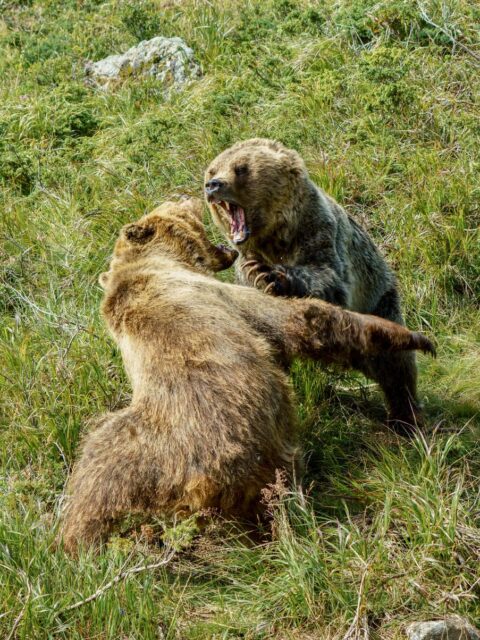
- Wolves, bears, and humans are the primary predators of European Bison.
- Defense Mechanisms
- They can charge at threats and use their size and strength to defend themselves.
- Compatible Animals
- none
- Found in Zoos
- Common