


EUROPEAN EIDER
Somateria mollissima mollissima
DESCRIPTION
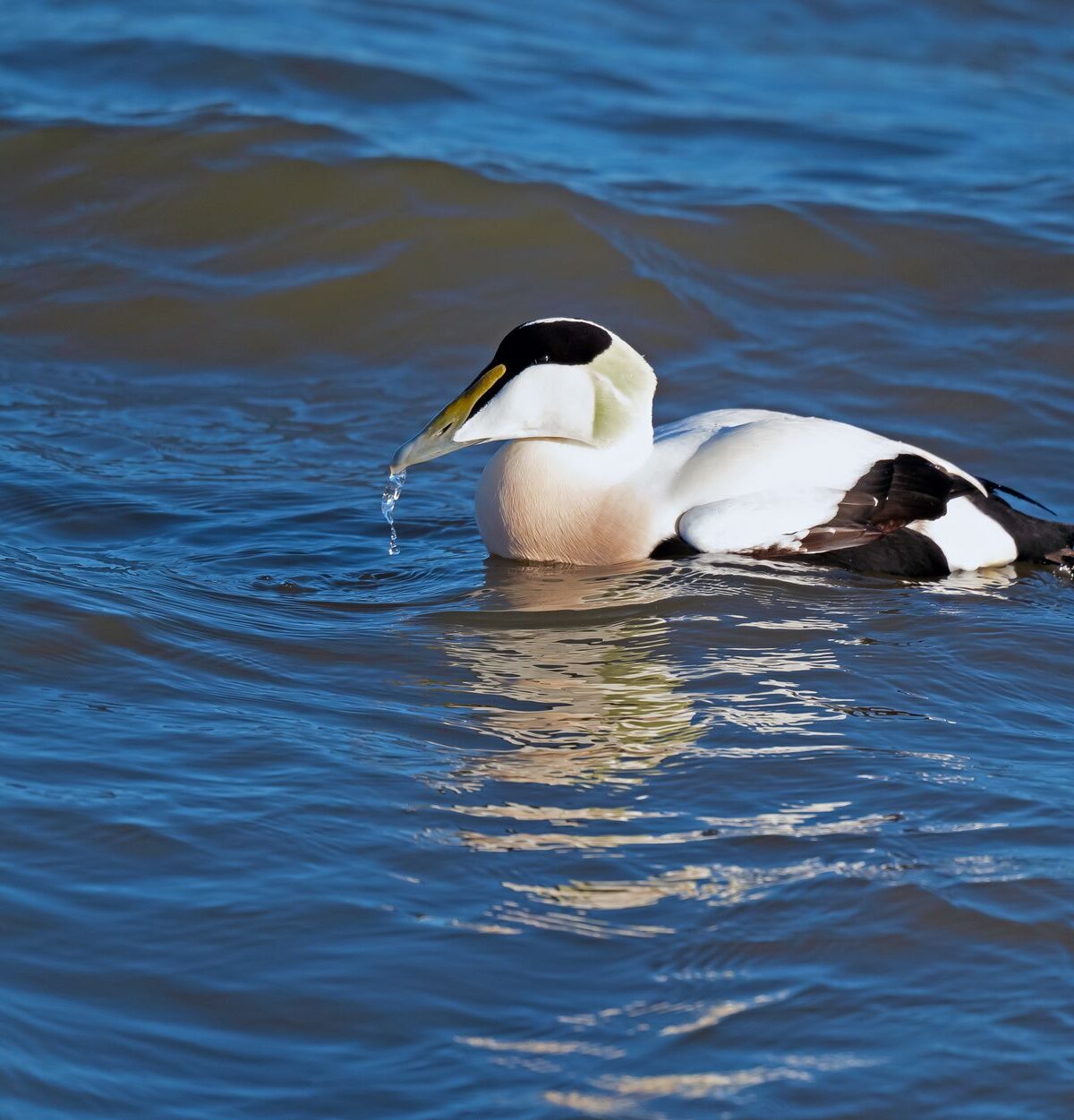
European eider (Somateria mollissima mollissima) is commonly known as the common eider and is a large sea duck characterized by its distinctive plumage. Males are easily recognized by their striking black and white coloration with a green nape, while females are mottled brown, providing excellent camouflage. These ducks are known for their diving abilities, often foraging for mollusks and crustaceans in marine environments, and they exhibit strong pair bonds during the breeding season.
FUN FACTS
- European eiders are known for their unique down feathers, which are highly prized for their insulating properties and are often collected for use in luxury bedding
- | These ducks are also remarkable divers, capable of reaching depths of up to 20 meters while foraging for food, showcasing their impressive adaptation to marine life
QUICK INFO
Lifespan10-15 years in the wild
Average Weight1.5-2.5 kg
Average Length50-65 cm
Diet TypeCarnivore
Social StructureThey are generally found in groups, especially during migration and wintering, but form pairs during the breeding season.
Activity PatternDiurnal
Breeding SeasonSpring (April-June)
- Habitat
- European eiders inhabit coastal marine environments, often found in shallow waters and estuaries. They prefer areas with abundant food sources and suitable nesting sites, such as islands and coastal marshes.
- Biomes
- Coastal, Marine
- Native Range
- The native range of the European eider includes the northern coasts of Europe, particularly around the North Atlantic, from Norway and Iceland to the British Isles and parts of the Baltic Sea.
- Continent
- Europe, Asia
- Countries
- Norway, Sweden, Denmark, Iceland, United Kingdom, Germany, Russia
- Diet
- European eiders primarily feed on marine invertebrates, particularly mollusks and crustaceans, which they dive to find. They are also known to consume some plant material.
- Diet Type
- Carnivore
- Favorite Food
- mollusks, crustaceans
- Social Structure
- They are generally found in groups, especially during migration and wintering, but form pairs during the breeding season.
- Activity Pattern
- Diurnal
- Group Size
- 10-50
- Territorial
- 0

 LC
LC
 LC
LC
1.5-2.5 kg
Weight
50-65 cm
Length
- Coloration
- Males are black and white with a green nape, while females are brown and mottled.
- Sexual Dimorphism
- Males and females have distinctly different plumage.
- Lifespan
- 10-15 years in the wild
- Offspring per Birth
- 4-6
- Sexual Maturity
- 2-3 years
- Breeding Season
- Spring (April-June)
LC
Least Concern
IUCN Red List Status
- Population Status
- The population of European eiders is generally stable, although some local declines have been noted.
- Wild Population Estimate
- 200,000-300,000
- Population Trend
- Stable
- Endangered
- 0
- Threats
- Main threats to European eiders include habitat loss due to coastal development, climate change affecting food availability, and predation by introduced species. Additionally, hunting in some regions poses a risk to their populations.
- Predators
- Foxes, gulls, and other birds of prey can pose threats to eider nests and ducklings.
- Defense Mechanisms
- European eiders rely on their camouflage and nesting behavior to protect their young, often nesting in secluded areas.
- Found in Zoos
- Uncommon