


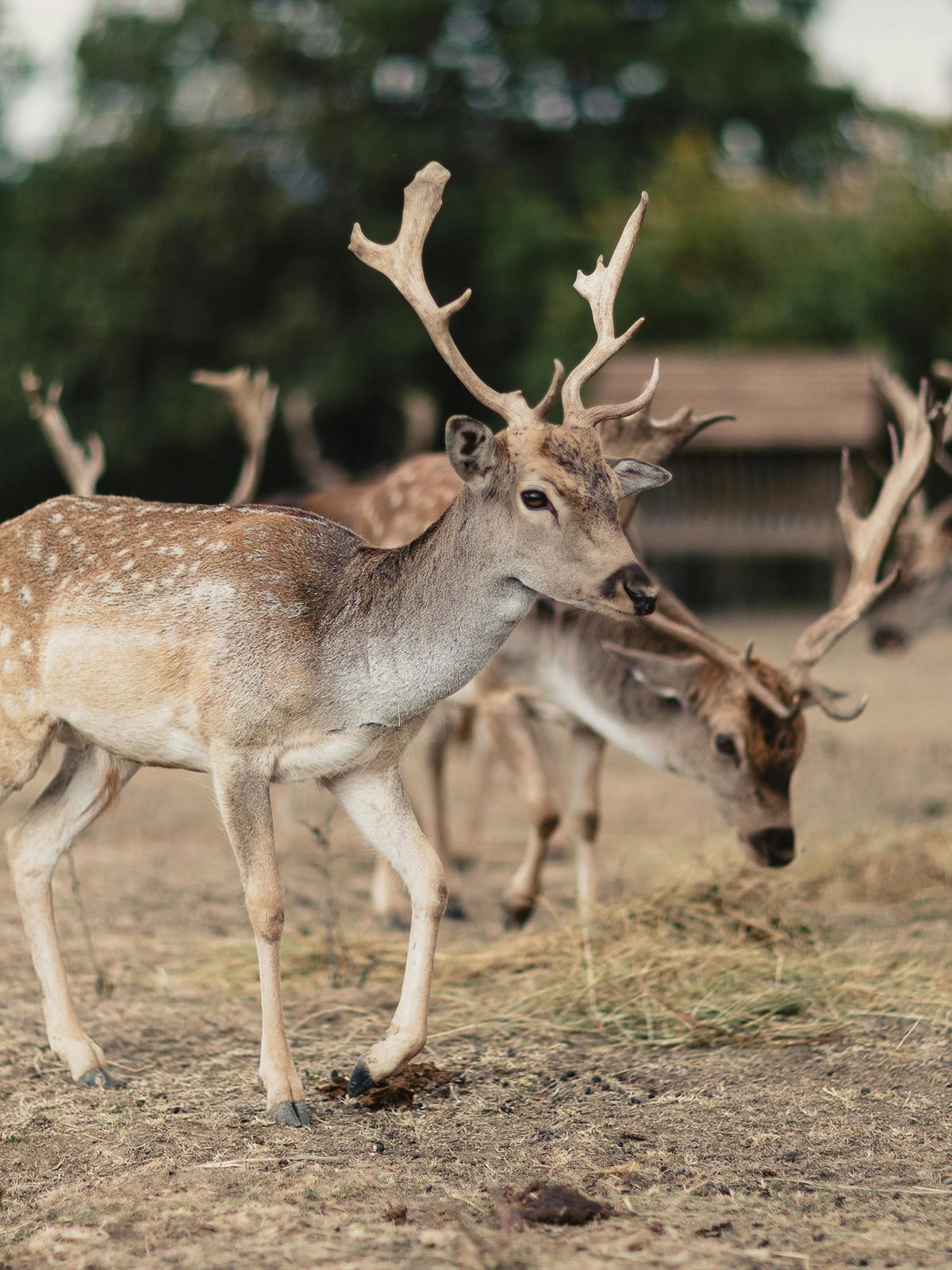
EUROPEAN FALLOW DEER
Dama dama
DESCRIPTION
European Fallow Deer (Dama dama) is commonly known as Fallow Deer. This species is characterized by its distinctive palmate antlers in males and a variety of coat colors, including spotted, chocolate, and white. They are social animals, often found in herds, and are known for their graceful movements and ability to adapt to various habitats.
FUN FACTS
- European Fallow Deer are known for their unique antler shape, which resembles the palm of a hand, making them distinct among deer species
- Additionally, they have a fascinating ability to change their coat color with the seasons, providing them with better camouflage in different environments
QUICK INFO
Lifespan10-15 years in the wild, up to 20 years in captivi
Average Weight50-100 kg
Average Length1.5-2.0 m
Diet TypeHerbivore
Social StructureThey are typically found in groups, especially females and their young, while males may be more solitary outside of the breeding season.
Activity PatternCrepuscular
Breeding SeasonAutumn (September-November)
- Habitat
- They inhabit woodlands, grasslands, and parklands, often favoring areas with a mix of open space and cover. This adaptability allows them to thrive in both wild and managed landscapes.
- Biomes
- Temperate Forest, Grassland
- Native Range
- Originally native to Europe, they have been introduced to various regions around the world.
- Continent
- Europe
- Countries
- United Kingdom, France, Germany, Italy, Spain
- Diet
- European Fallow Deer primarily feed on grasses, leaves, and fruits. They are known to graze on a variety of vegetation, making them adaptable to different environments.
- Diet Type
- Herbivore
- Favorite Food
- grasses, leaves, fruits
- Social Structure
- They are typically found in groups, especially females and their young, while males may be more solitary outside of the breeding season.
- Activity Pattern
- Crepuscular
- Group Size
- 5-30
- Territorial
- 0
 LC
LC
50-100 kg
Weight
1.5-2.0 m
Length
0.9-1.2 m at shoulder
Height (Shoulder)
- Coloration
- Their coloration varies, but they often have a spotted coat that provides camouflage in their natural habitat.
- Sexual Dimorphism
- Males are larger than females and possess antlers, while females do not.
- Lifespan
- 10-15 years in the wild, up to 20 years in captivi
- Gestation Period
- 230 days
- Offspring per Birth
- 1-2
- Sexual Maturity
- 1-2 years
- Breeding Season
- Autumn (September-November)
LC
Least Concern
IUCN Red List Status
- Population Status
- The population of European Fallow Deer is generally stable, though local populations may vary.
- Wild Population Estimate
- 100,000-200,000
- Population Trend
- Stable
- Endangered
- 0
- Threats
- Main threats include habitat loss and hunting. In some areas, they face competition with other herbivores for food resources.
- Predators
- Wolves, lynxes, and humans are the primary predators of European Fallow Deer.
- Defense Mechanisms
- They rely on their speed and agility to escape predators, often using dense cover to hide.
- Compatible Animals
- Red Deer, Roe Deer
- Found in Zoos
- Common