


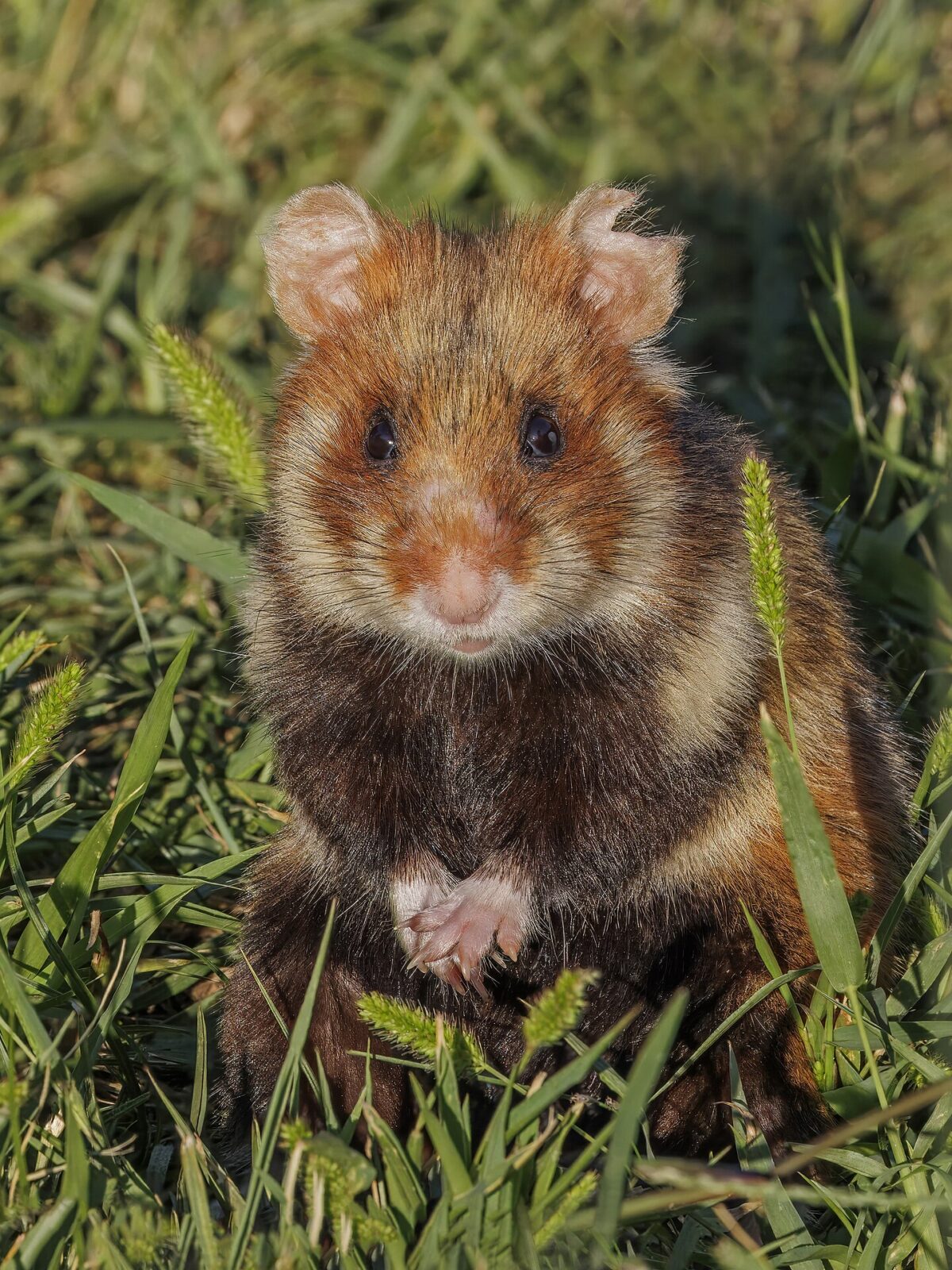
EUROPEAN FIELD HAMSTER
Cricetus cricetus
DESCRIPTION
European Field Hamster (Cricetus cricetus) is also known as the Common Hamster and is characterized by its robust body, short legs, and large cheek pouches that it uses to store food. This species has a distinctive coloration, typically featuring a brownish-yellow fur with a lighter underbelly, and it can grow to a length of about 20-30 cm. European Field Hamsters are primarily nocturnal and are known for their burrowing behavior, creating extensive tunnel systems in agricultural fields and grasslands.
FUN FACTS
- European Field Hamsters are known for their impressive ability to store food in their cheek pouches, allowing them to hoard supplies for the winter months
- This behavior is crucial for their survival, as they rely on these stored resources during the colder seasons
- | Interestingly, these hamsters have a unique way of communicating with each other through a series of vocalizations and scent markings, which help them establish territory and attract mates
- Their social interactions are primarily limited to the breeding season, after which they return to their solitary lifestyles
QUICK INFO
Lifespan2-3 years in the wild, up to 4 years in captivity
Average Weight120-200 g
Average Length20-30 cm
Diet TypeHerbivore
Social Structuresolitary, with individuals maintaining their own territories
Activity PatternNocturnal
Breeding SeasonSpring (March-May)
- Habitat
- European Field Hamsters inhabit grasslands, agricultural fields, and open areas where they can dig burrows. They prefer well-drained soils that facilitate burrowing.
- Biomes
- Temperate Grassland, Agricultural Land
- Native Range
- They are native to parts of Europe and Asia, particularly in regions such as Eastern Europe and parts of Western Europe.
- Continent
- Europe, Asia
- Countries
- Germany, France, Poland, Czech Republic, Hungary
- Diet
- They primarily feed on seeds, grains, and various plant materials, foraging extensively during their active hours.
- Diet Type
- Herbivore
- Favorite Food
- seeds and grains
- Social Structure
- solitary, with individuals maintaining their own territories
- Activity Pattern
- Nocturnal
- Group Size
- 1
- Territorial
- 1

 VU
VU
 LC
LC
 LC
LC
120-200 g
Weight
20-30 cm
Length
- Coloration
- brownish-yellow with a lighter underbelly
- Sexual Dimorphism
- males are generally larger than females
- Lifespan
- 2-3 years in the wild, up to 4 years in captivity
- Gestation Period
- 16-18 days
- Offspring per Birth
- 4-10
- Sexual Maturity
- 2-3 months
- Breeding Season
- Spring (March-May)
VU
Vulnerable
IUCN Red List Status
- Population Status
- The population of European Field Hamsters has been declining due to habitat loss and agricultural practices.
- Wild Population Estimate
- unknown
- Population Trend
- Decreasing
- Endangered
- 1
- Threats
- Main threats include habitat destruction due to agricultural expansion and urbanization, as well as predation by domestic animals. These factors have significantly impacted their populations across Europe.
- Predators
- Foxes, birds of prey, domestic cats, and weasels
- Defense Mechanisms
- They rely on their burrows for protection and can also use their speed to escape from predators.
- Found in Zoos
- Uncommon