


EUROPEAN GLASS LIZARD
Ophisaurus apodus
DESCRIPTION
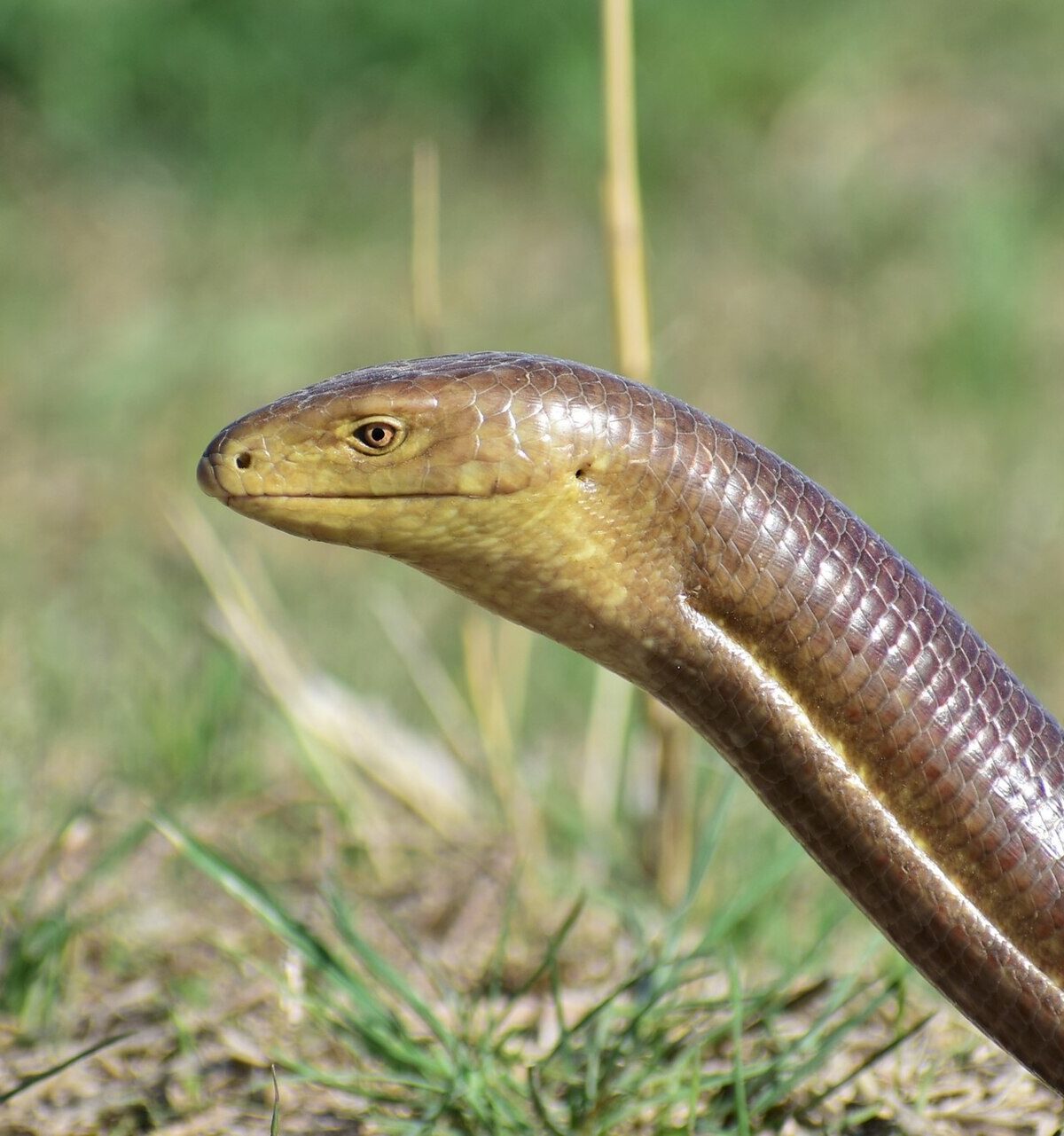
European Glass Lizard (Ophisaurus apodus) is commonly known as the Glass Lizard due to its elongated, limbless body that resembles a snake. This species can reach lengths of up to 1.5 meters and is characterized by its smooth, shiny scales that can appear greenish or brownish, providing excellent camouflage in its natural habitat. Unlike snakes, Glass Lizards have eyelids and external ear openings, which are distinctive features that set them apart from true serpents.
FUN FACTS
- European Glass Lizards are often mistaken for snakes due to their elongated bodies and lack of limbs, but they are actually lizards and possess unique features like eyelids and external ears
- Another interesting fact is that they can regenerate their tails after losing them, although the new tail may not have the same appearance as the original.|These lizards are also known for their ability to move quickly and can often be seen darting through grass or underbrush when startled
- Their smooth scales not only help with camouflage but also allow them to glide through their environment with ease
QUICK INFO
Lifespanup to 15 years in the wild
Average Length1-1.5 m
Diet TypeInsectivore
Social Structuresolitary, typically found alone except during mating season
Activity PatternDiurnal
Breeding SeasonSpring (April-June)
- Habitat
- This species typically inhabits dry grasslands, scrublands, and open woodlands, where it can easily blend into the environment. They prefer sandy or loose soil that allows for burrowing and hiding from predators.
- Biomes
- Temperate Forest, Grassland
- Native Range
- The European Glass Lizard is native to parts of southeastern Europe, including regions of the Balkans and extending into parts of Italy and Greece.
- Continent
- Europe
- Countries
- Italy, Greece, Albania, Croatia, Serbia
- Diet
- European Glass Lizards primarily feed on insects and small invertebrates, showcasing their insectivorous diet. They are known to hunt actively, using their keen eyesight to spot prey.
- Diet Type
- Insectivore
- Favorite Food
- insects, small invertebrates
- Social Structure
- solitary, typically found alone except during mating season
- Activity Pattern
- Diurnal
- Group Size
- 1
- Territorial
- 0
 VU
VU
 LC
LC
1-1.5 m
Length
- Coloration
- smooth, shiny scales that can be greenish or brownish
- Sexual Dimorphism
- males may be slightly larger than females
- Lifespan
- up to 15 years in the wild
- Offspring per Birth
- 5-15
- Sexual Maturity
- 2-3 years
- Breeding Season
- Spring (April-June)
LC
Least Concern
IUCN Red List Status
- Population Status
- The population of European Glass Lizards is currently stable, but they face habitat loss in some areas.
- Wild Population Estimate
- unknown
- Population Trend
- Stable
- Endangered
- 0
- Threats
- Main threats include habitat destruction due to agricultural expansion and urban development. Additionally, they are sometimes collected for the pet trade, which can impact local populations.
- Predators
- birds of prey, snakes, and larger mammals
- Defense Mechanisms
- European Glass Lizards can shed their tails when threatened, allowing them to escape while the tail continues to move, distracting predators.
- Found in Zoos
- Uncommon