


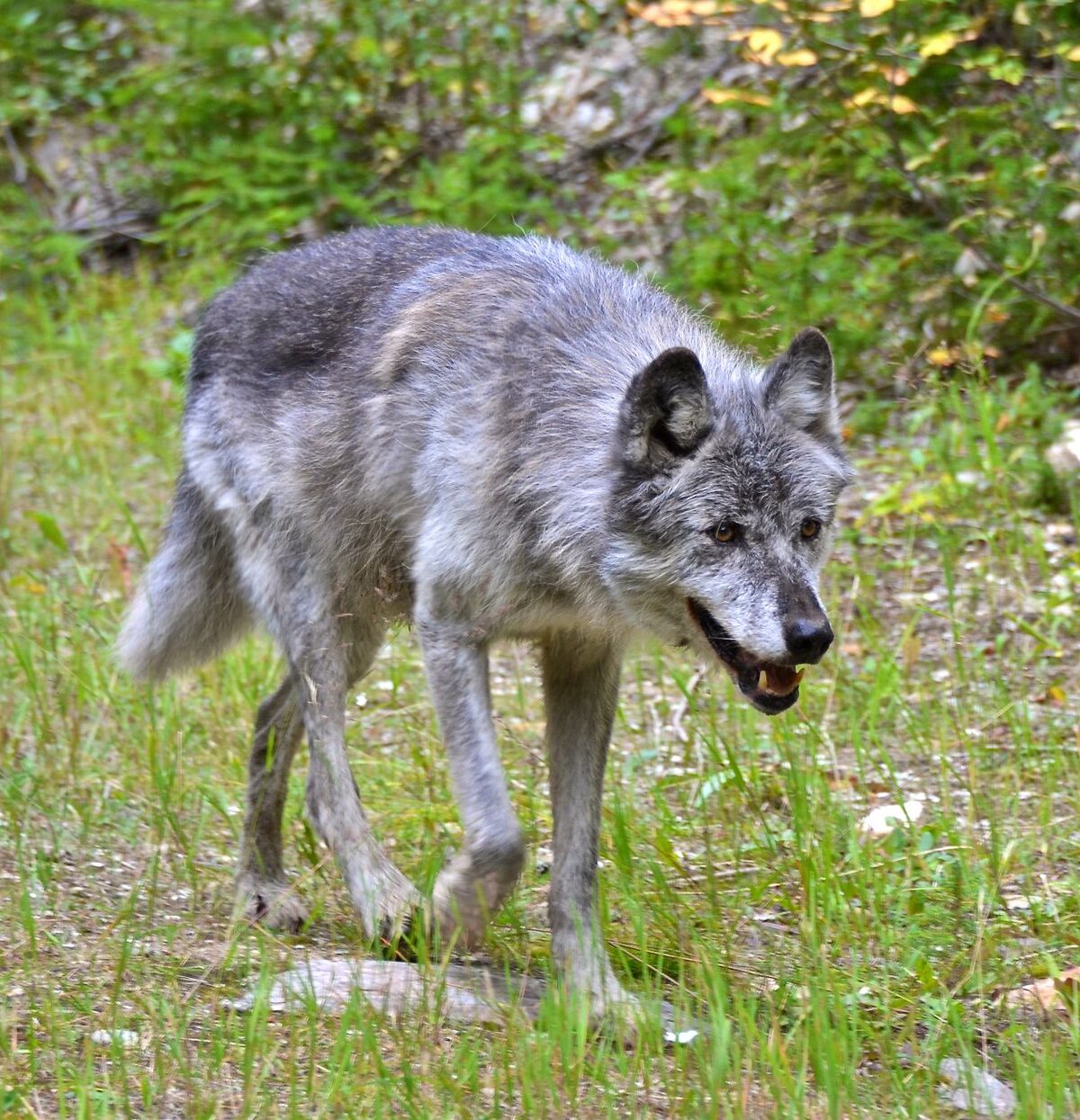
EUROPEAN GREY WOLF
DESCRIPTION
Also called Timber Wolf and Gray Wolf, the European Grey Wolf is a large canid known for its striking appearance and social behavior. It typically has a thick fur coat that varies in color from gray to brown, with a bushy tail and long legs that aid in its hunting prowess. These wolves are highly social animals, often living in packs that exhibit complex social structures and cooperative hunting strategies.
FUN FACTS
- Wolves have a highly developed sense of smell, which is about 100 times more acute than that of humans, allowing them to detect prey from great distances
- They also have a unique social structure, with a dominant breeding pair leading the pack, and they often engage in playful behaviors that strengthen social bonds within the group
QUICK INFO
Lifespan10-14 years in the wild, up to 16 years in captivi
Average Weight25-50 kg
Average Length1.2-2 m
Diet TypeCarnivore
Social StructurePack, typically consisting of a breeding pair and their offspring, which work together to hunt and protect their territory.
Activity PatternCrepuscular
Breeding SeasonWinter (January-March)
- Habitat
- They inhabit a variety of environments, including forests, tundras, and grasslands. Their adaptability allows them to thrive in both remote wilderness areas and regions close to human settlements.
- Biomes
- Temperate Forest, Tundra, Grassland
- Native Range
- The native range of the European Grey Wolf extends across Europe, from Scandinavia to the Balkans, and into parts of Asia.
- Continent
- Europe, Asia
- Countries
- Germany, Poland, Romania, Italy, France, Spain
- Diet
- European Grey Wolves primarily hunt large ungulates, but they also consume smaller mammals and carrion when necessary. Their hunting strategies are often coordinated within their packs, showcasing their intelligence and teamwork.
- Diet Type
- Carnivore
- Favorite Food
- deer, elk, and wild boar
- Social Structure
- Pack, typically consisting of a breeding pair and their offspring, which work together to hunt and protect their territory.
- Activity Pattern
- Crepuscular
- Group Size
- 5-15
- Territorial
- 1
25-50 kg
Weight
1.2-2 m
Length
0.6-0.9 m at shoulder
Height (Shoulder)
- Coloration
- Gray to brown with variations depending on the region
- Sexual Dimorphism
- Males are generally larger than females
- Lifespan
- 10-14 years in the wild, up to 16 years in captivi
- Gestation Period
- 63 days
- Offspring per Birth
- 4-7
- Sexual Maturity
- 2-3 years
- Breeding Season
- Winter (January-March)
LC
Least Concern
IUCN Red List Status
- Population Status
- The population of European Grey Wolves is recovering in some areas due to conservation efforts, but they still face threats in others.
- Wild Population Estimate
- 10,000-20,000
- Population Trend
- Stable
- Endangered
- 0
- Threats
- Main threats include habitat loss, hunting, and conflicts with livestock. These factors can lead to localized declines in populations despite overall stability.
- Conservation Program
- Various national and regional conservation programs aimed at habitat protection and reducing human-wolf conflicts.
- Predators
- Humans are the primary threat, but young wolves may be vulnerable to bears and large felids.
- Defense Mechanisms
- Wolves use pack coordination and vocalizations to defend their territory and deter potential threats.
- Compatible Animals
- None
- Found in Zoos
- Common