


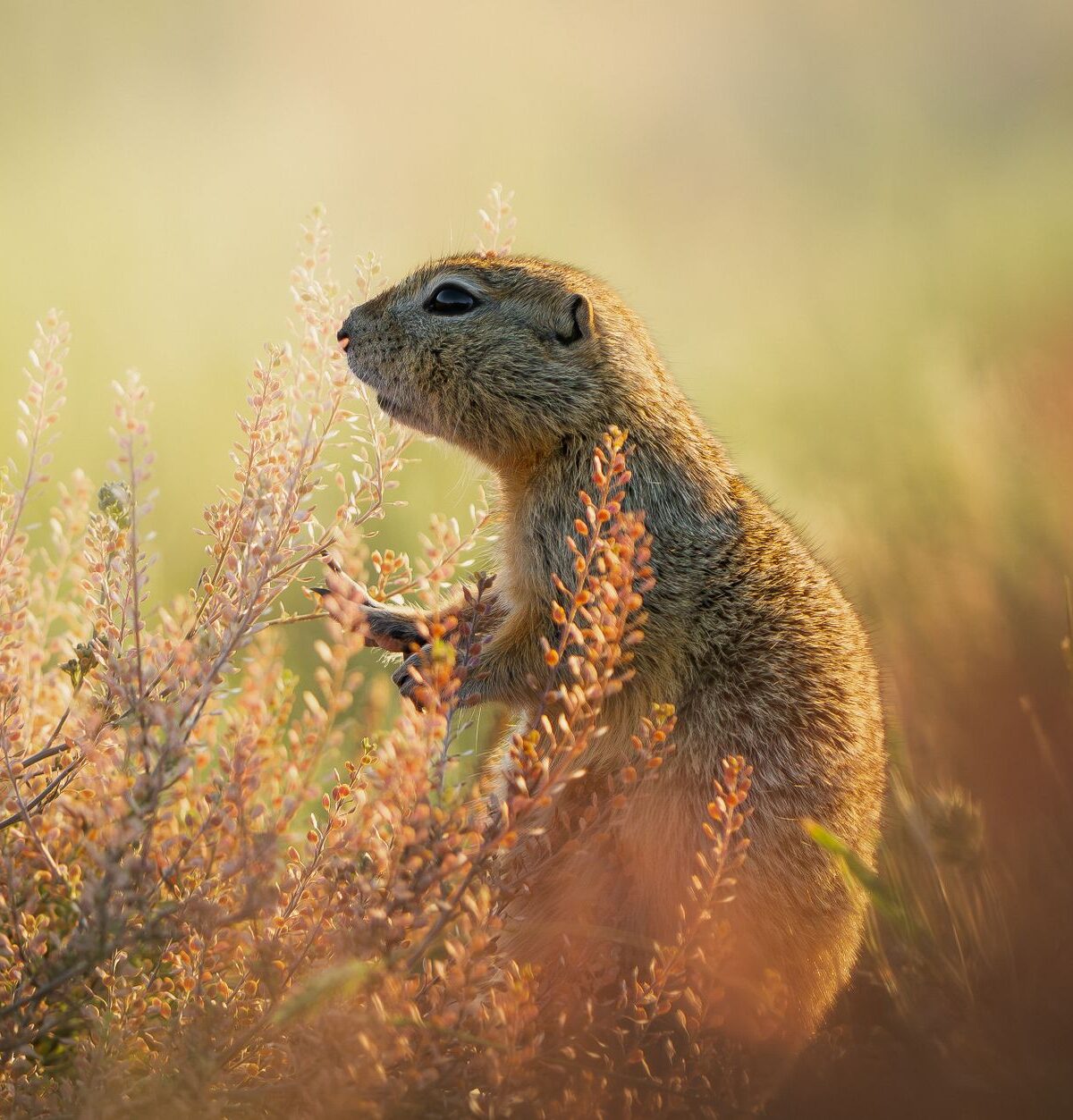
EUROPEAN GROUND SQUIRREL
Spermophilus citellus
DESCRIPTION
European Ground Squirrel (Spermophilus citellus) is also known as Citellus and the Eurasian Ground Squirrel. This small rodent typically has a stout body, short legs, and a bushy tail, with a coloration that ranges from light brown to grayish with darker spots. They are social animals that live in colonies, often seen foraging for food during the day and retreating to their burrows for shelter.
FUN FACTS
- European Ground Squirrels are known for their impressive burrowing skills, creating extensive tunnel systems that can be several meters deep
- These burrows not only provide shelter from predators but also help regulate their body temperature during extreme weather conditions.| They have a unique social structure, often engaging in cooperative behaviors such as grooming and alarm calling, which enhances their survival in the wild
QUICK INFO
Lifespan3-5 years in the wild, up to 10 years in captivity
Average Weight150-300 g
Average Length20-30 cm
Diet TypeHerbivore
Social Structuregroup — they live in colonies that can consist of several individuals, often forming complex social structures.
Activity PatternDiurnal
Breeding SeasonSpring (April-June)
- Habitat
- European Ground Squirrels inhabit open grasslands, steppes, and agricultural fields, where they can dig extensive burrow systems. They prefer areas with sparse vegetation that allows for easy foraging and visibility of predators.
- Biomes
- Grassland, Temperate Forest
- Native Range
- They are native to parts of Eastern and Central Europe, including countries like Hungary, Romania, and the Czech Republic.
- Continent
- Europe
- Countries
- Hungary, Romania, Czech Republic, Austria, Slovakia
- Diet
- They primarily feed on a variety of grasses, seeds, and herbs, occasionally consuming insects.
- Diet Type
- Herbivore
- Favorite Food
- grasses, seeds, herbs
- Social Structure
- group — they live in colonies that can consist of several individuals, often forming complex social structures.
- Activity Pattern
- Diurnal
- Group Size
- 5-30
- Territorial
- 0

 VU
VU
 LC
LC
150-300 g
Weight
20-30 cm
Length
- Coloration
- light brown to grayish with darker spots
- Sexual Dimorphism
- males are generally larger than females
- Lifespan
- 3-5 years in the wild, up to 10 years in captivity
- Gestation Period
- 28-30 days
- Offspring per Birth
- 4-8
- Sexual Maturity
- 1 year
- Breeding Season
- Spring (April-June)
VU
Vulnerable
IUCN Red List Status
- Population Status
- The population of European Ground Squirrels has been declining due to habitat loss and agricultural practices.
- Wild Population Estimate
- unknown
- Population Trend
- Decreasing
- Endangered
- 1
- Threats
- Main threats include habitat destruction due to agricultural expansion and urbanization, as well as predation by domestic animals. Conservation efforts are needed to protect their habitats and populations.
- Predators
- foxes, birds of prey, domestic cats, and dogs
- Defense Mechanisms
- They use burrows for protection and can quickly retreat underground when threatened.
- Found in Zoos
- Uncommon