


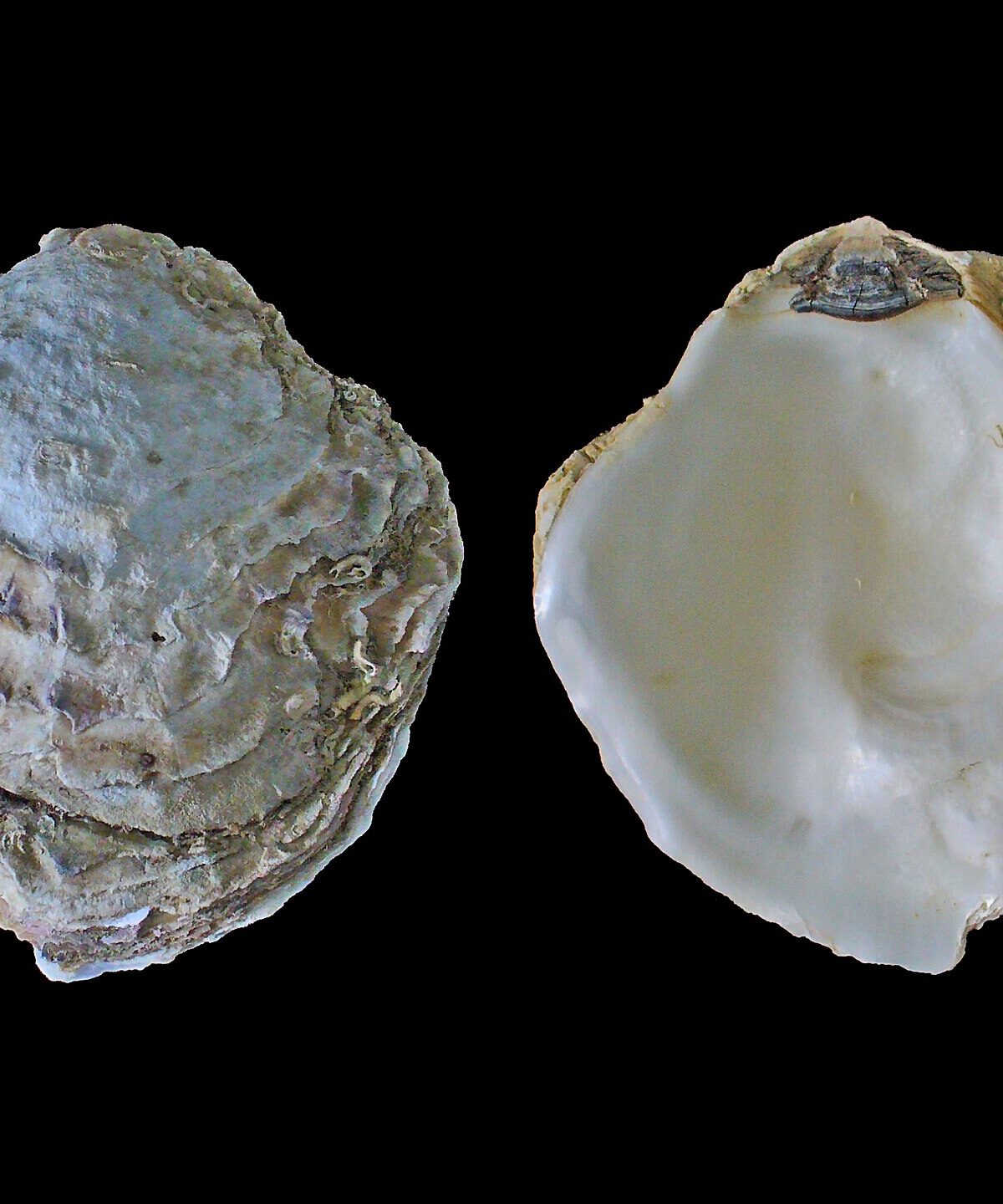
EUROPEAN OYSTER
Ostrea edulis
DESCRIPTION
European Oyster (Ostrea edulis) is commonly known as the flat oyster or native oyster. This bivalve mollusk has a distinctive irregularly shaped shell that is typically grayish to brown in color, with a rough texture. They are primarily found in shallow coastal waters and estuaries, where they attach themselves to hard substrates, often forming reefs that provide habitat for various marine species.
FUN FACTS
- European Oysters are known for their ability to change sex during their lifetime, often starting as male and later becoming female
- This adaptability helps maintain their populations in varying environmental conditions
- | They are also famous for their role in culinary traditions, particularly in gourmet dishes, and are often served raw on the half shell, highlighting their delicate flavor and texture
QUICK INFO
Lifespan5-10 years in the wild, up to 20 years in captivit
Average Weight100-200 grams
Average Length8-15 cm
Diet TypeOmnivore
Social Structuregroup — they often form dense beds or reefs, providing habitat for other marine organisms.
Activity PatternDiurnal
Breeding SeasonSummer (June-August)
- Habitat
- European Oysters inhabit shallow coastal waters, estuaries, and intertidal zones. They prefer areas with hard substrates where they can attach and form reefs.
- Biomes
- Coastal, Estuarine
- Native Range
- The native range of the European Oyster includes the coasts of Europe, particularly the North Atlantic, from Norway to the Mediterranean Sea.
- Continent
- Europe
- Countries
- United Kingdom, France, Spain, Italy, Norway
- Diet
- European Oysters are filter feeders, primarily consuming plankton and organic particles suspended in the water. They play a crucial role in their ecosystem by filtering water and improving water quality.
- Diet Type
- Omnivore
- Favorite Food
- plankton, organic particles
- Social Structure
- group — they often form dense beds or reefs, providing habitat for other marine organisms.
- Activity Pattern
- Diurnal
- Group Size
- hundreds to thousands
- Territorial
- 0

 LC
LC
 LC
LC
100-200 grams
Weight
8-15 cm
Length
- Coloration
- grayish to brown with a rough, irregular shell texture
- Lifespan
- 5-10 years in the wild, up to 20 years in captivit
- Offspring per Birth
- up to 100 million larvae
- Sexual Maturity
- 2-3 years
- Breeding Season
- Summer (June-August)
EN
Endangered
IUCN Red List Status
- Population Status
- The population of European Oysters has declined significantly in many areas due to overfishing and habitat loss.
- Wild Population Estimate
- unknown
- Population Trend
- Decreasing
- Endangered
- 1
- Threats
- Main threats to European Oysters include overfishing, habitat destruction, and pollution. These factors have led to significant declines in their populations across their native range.
- Conservation Program
- Various conservation programs are in place to restore oyster populations and habitats, including breeding and reintroduction efforts.
- Predators
- starfish, crabs, fish, sea birds
- Defense Mechanisms
- European Oysters can close their shells tightly to protect themselves from predators and environmental stressors.
- Found in Zoos
- Uncommon