


EUROPEAN POLECAT
Mustela putorius
DESCRIPTION
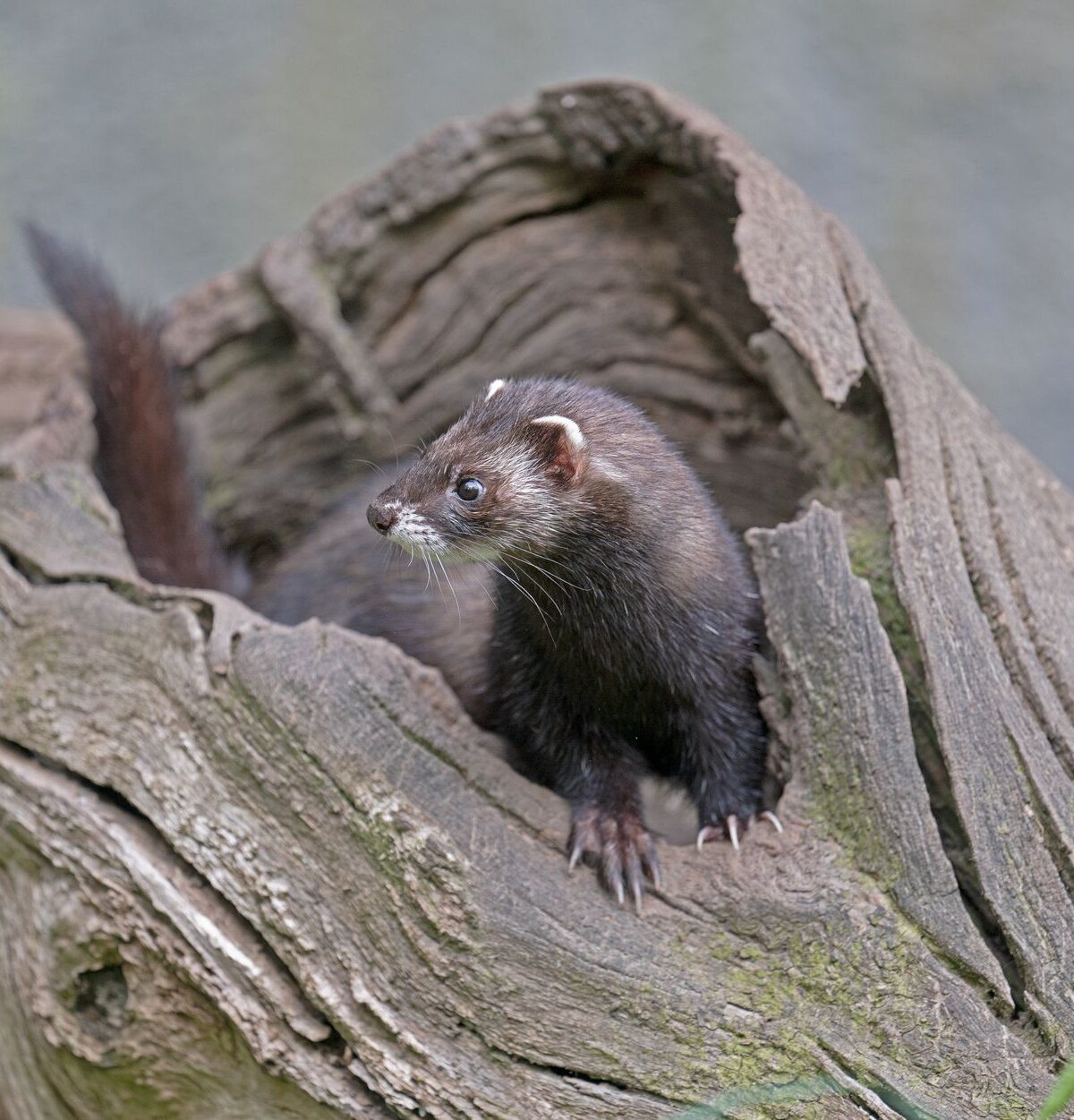
European Polecat (Mustela putorius) is commonly known as the ferret or polecat. This small carnivorous mammal has a slender body, short legs, and a bushy tail, typically exhibiting a dark brown or black coloration with lighter underparts. They are primarily nocturnal and are known for their playful and curious behavior, often seen exploring their surroundings and engaging in social interactions with other polecats.
FUN FACTS
- European Polecats are closely related to domestic ferrets, which are actually a domesticated form of the polecat
- They share many behavioral traits, including a playful nature and a tendency to burrow
- | These animals are known for their agility and can squeeze through very small openings, making them adept at escaping from enclosures or predators
- Their curious nature often leads them to explore their surroundings thoroughly
QUICK INFO
Lifespan5-10 years in the wild, up to 14 years in captivit
Average Weight1-2 kg
Average Length30-50 cm
Diet TypeCarnivore
Social Structuresolitary, occasionally social during breeding season
Activity PatternNocturnal
Breeding SeasonSpring (March-April)
- Habitat
- European Polecats inhabit a variety of environments, including woodlands, grasslands, and wetlands. They prefer areas with dense cover for shelter and hunting.
- Biomes
- Temperate Forest, Grassland, Wetland
- Native Range
- The native range of the European Polecat extends across much of Europe, from the British Isles to Eastern Europe and parts of Scandinavia.
- Continent
- Europe
- Countries
- United Kingdom, France, Germany, Italy, Spain, Poland
- Diet
- European Polecats primarily feed on small mammals, birds, and amphibians. They are opportunistic hunters and will also scavenge when necessary.
- Diet Type
- Carnivore
- Favorite Food
- small mammals, birds
- Social Structure
- solitary, occasionally social during breeding season
- Activity Pattern
- Nocturnal
- Group Size
- 1-2
- Territorial
- 1

 VU
LC
VU
LC
1-2 kg
Weight
30-50 cm
Length
- Coloration
- dark brown or black with lighter underparts
- Sexual Dimorphism
- females are generally smaller than males
- Lifespan
- 5-10 years in the wild, up to 14 years in captivit
- Gestation Period
- 42 days
- Offspring per Birth
- 4-6
- Sexual Maturity
- 6-12 months
- Breeding Season
- Spring (March-April)
LC
Least Concern
IUCN Red List Status
- Population Status
- The population of European Polecats is currently stable in many areas, although they face threats in certain regions.
- Wild Population Estimate
- unknown
- Population Trend
- Stable
- Endangered
- 0
- Threats
- Main threats to European Polecats include habitat loss, road mortality, and persecution by humans. They are sometimes mistaken for pests and are killed as a result.
- Predators
- foxes, birds of prey, domestic dogs
- Defense Mechanisms
- European Polecats can emit a strong-smelling musk as a defense mechanism when threatened.
- Compatible Animals
- none
- Found in Zoos
- Uncommon