


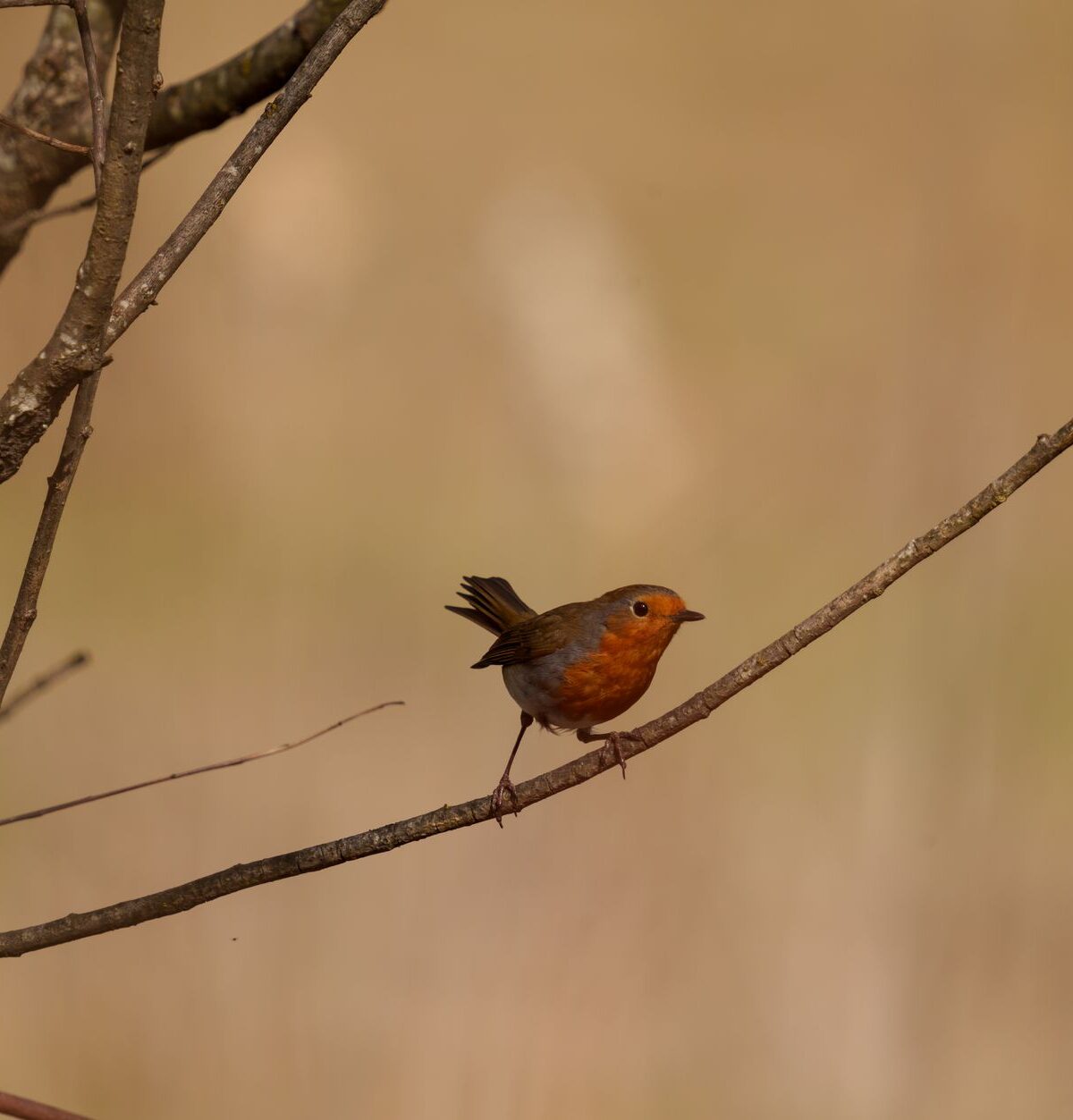
EUROPEAN ROBIN
Erithacus rubecula
DESCRIPTION
European Robin (Erithacus rubecula) is commonly known as the Robin. This small bird is easily recognized by its bright orange-red breast and face, contrasting with its brownish-grey upperparts. It is known for its melodious song and is often found in gardens, parks, and woodlands across Europe, where it displays a curious and bold behavior, often approaching humans closely.
FUN FACTS
- European Robins are often associated with Christmas in many cultures, symbolizing hope and renewal
- They are also known for their unique songs, which vary significantly between individuals, making each bird's song distinct and recognizable
QUICK INFO
Lifespan1-3 years in the wild, up to 5 years in captivity
Average Weight70-100 g
Average Length12.5-14 cm
Diet TypeInsectivore
Social Structuresolitary or in pairs, often seen alone or in mated pairs during the breeding season.
Activity PatternDiurnal
Breeding SeasonSpring (March-June)
- Habitat
- European Robins thrive in a variety of habitats, including woodlands, gardens, and urban areas. They prefer areas with dense undergrowth for nesting and foraging.
- Biomes
- Temperate Forest, Grassland, Urban
- Native Range
- The European Robin is native to Europe, parts of North Africa, and western and central Asia.
- Continent
- Europe, Asia, Africa
- Countries
- United Kingdom, France, Germany, Spain, Italy, Portugal, Belgium, Netherlands, Switzerland, Norway
- Diet
- European Robins primarily feed on insects, worms, and berries, foraging on the ground and in low vegetation. They are known to be opportunistic feeders, adjusting their diet based on seasonal availability.
- Diet Type
- Insectivore
- Favorite Food
- insects, worms, berries
- Social Structure
- solitary or in pairs, often seen alone or in mated pairs during the breeding season.
- Activity Pattern
- Diurnal
- Group Size
- 1-2
- Territorial
- 1

 VU
VU
 LC
LC
70-100 g
Weight
12.5-14 cm
Length
- Coloration
- bright orange-red breast and face, brownish-grey upperparts
- Lifespan
- 1-3 years in the wild, up to 5 years in captivity
- Offspring per Birth
- 3-6
- Sexual Maturity
- 1 year
- Breeding Season
- Spring (March-June)
LC
Least Concern
IUCN Red List Status
- Population Status
- The European Robin has a stable population across its range.
- Wild Population Estimate
- Up to 300 million individuals
- Population Trend
- Stable
- Endangered
- 0
- Threats
- Main threats include habitat loss due to urbanization and agricultural practices. Climate change may also impact their food sources and breeding success.
- Predators
- cats, dogs, foxes, birds of prey, snakes
- Defense Mechanisms
- European Robins use their agility and quick flight to evade predators, often hiding in dense vegetation.
- Found in Zoos
- Uncommon