


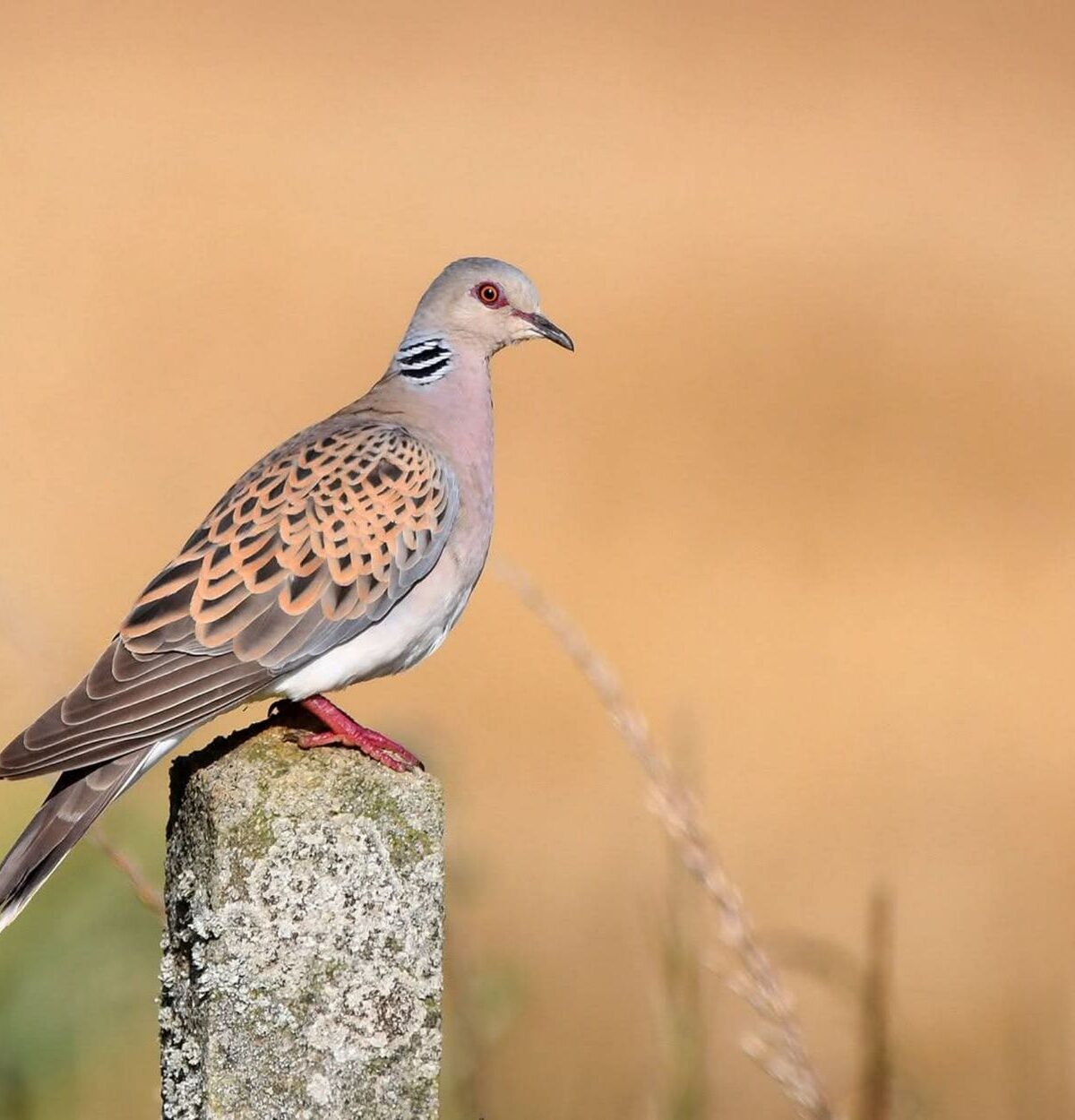
EUROPEAN TURTLE DOVE
Streptopelia turtur
DESCRIPTION
Also called the turtle dove, the European turtle dove is a small, migratory bird known for its distinctive soft cooing sound. It has a slender body with a long tail, and its plumage is predominantly a warm brown color with a slightly scaled appearance on the wings. This species is often found in open woodlands, farmlands, and gardens, where it forages for seeds and grains.
FUN FACTS
- European turtle doves are known for their unique cooing sound, which is often described as a soft, mournful call that can be heard during the breeding season
- They are also famous for their long migrations, traveling thousands of kilometers from their breeding grounds in Europe to wintering areas in Africa, showcasing their remarkable endurance and navigation skills
QUICK INFO
Lifespanup to 5 years in the wild
Average Weight150-200 g
Average Length28-32 cm
Diet TypeHerbivore
Social Structurepair, typically seen in monogamous pairs during the breeding season
Activity PatternDiurnal
Breeding SeasonSpring to early summer (April-July)
- Habitat
- European turtle doves prefer open habitats such as woodlands, farmlands, and gardens. They are often found in areas with abundant food sources and suitable nesting sites.
- Biomes
- Temperate Forest, Grassland
- Native Range
- The native range of the European turtle dove extends across Europe and parts of western Asia, migrating to northern Africa during the winter months.
- Continent
- Europe, Africa
- Countries
- United Kingdom, France, Germany, Italy, Spain
- Diet
- The European turtle dove primarily feeds on seeds, grains, and occasionally fruits. It forages on the ground, often in agricultural fields.
- Diet Type
- Herbivore
- Favorite Food
- seeds, grains
- Social Structure
- pair, typically seen in monogamous pairs during the breeding season
- Activity Pattern
- Diurnal
- Group Size
- 1-2
- Territorial
- 0
 CR
CR
 LC
LC
150-200 g
Weight
28-32 cm
Length
- Coloration
- warm brown with a scaled appearance on wings and a distinctive black crescent on the side of the neck
- Lifespan
- up to 5 years in the wild
- Offspring per Birth
- 1-2
- Sexual Maturity
- 1 year
- Breeding Season
- Spring to early summer (April-July)
VU
Vulnerable
IUCN Red List Status
- Population Status
- The population of European turtle doves has been declining in recent years due to habitat loss and hunting.
- Wild Population Estimate
- approximately 1 million
- Population Trend
- Decreasing
- Endangered
- 1
- Threats
- Main threats include habitat destruction due to agricultural intensification and hunting in some regions. Climate change also poses a risk to their migratory patterns and breeding success.
- Predators
- hawks, cats, foxes, snakes
- Defense Mechanisms
- European turtle doves rely on their ability to fly quickly and evade predators, often taking to the air at the first sign of danger.
- Found in Zoos
- Uncommon