


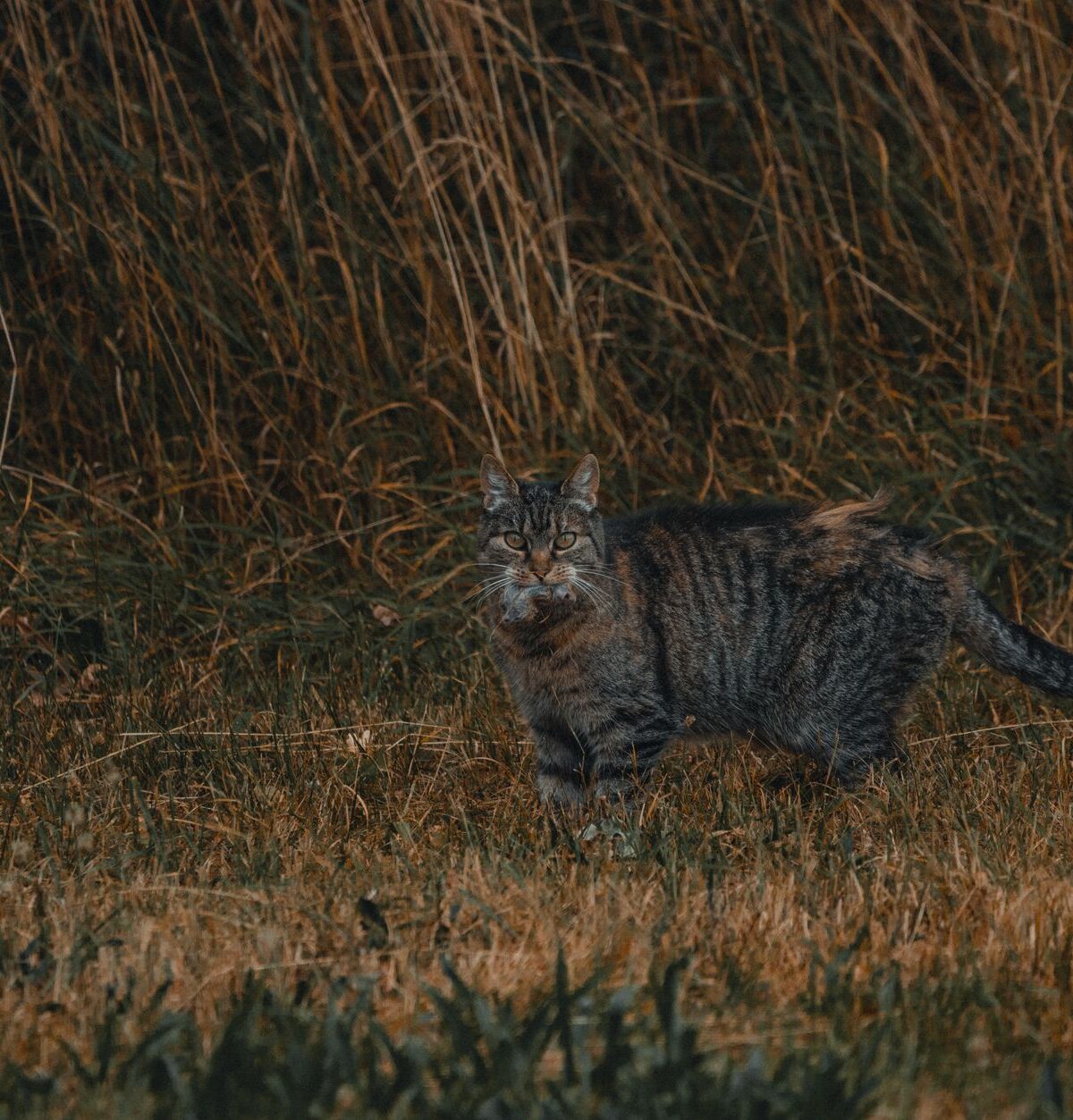
EUROPEAN WILD CAT
Felis silvestris silvestris
DESCRIPTION
European wild cat (Felis silvestris silvestris) is commonly known as the wildcat. This medium-sized feline has a robust build, with a bushy tail and a coat that is typically grayish-brown with dark stripes and spots, providing excellent camouflage in its natural habitat. They are primarily solitary animals, exhibiting elusive behavior and are most active during twilight hours, which aids in their hunting and avoidance of larger predators.
FUN FACTS
- European wild cats are often mistaken for domestic cats due to their similar appearance, but they are much more elusive and adapted to wild environments
- They play a crucial role in their ecosystems as predators, helping to control populations of small mammals and birds, which in turn supports the health of their habitats.| Unlike domestic cats, European wild cats are not social animals and prefer to live alone, marking their territory to avoid conflicts with others
- Their solitary nature and preference for dense cover make them difficult to study in the wild, leading to gaps in knowledge about their behavior and ecology
QUICK INFO
Lifespan12-15 years in the wild, up to 20 years in captivi
Average Weight3.5-6.5 kg
Average Length50-75 cm
Diet TypeCarnivore
Social Structuresolitary, they typically live alone except during mating season or when a mother is raising her young.
Activity PatternCrepuscular
Breeding SeasonSpring (March-May)
- Habitat
- They inhabit a variety of forested areas, grasslands, and scrublands, often preferring regions with dense cover for hunting and shelter. Their habitat is crucial for providing the necessary resources for hunting and breeding.
- Biomes
- Temperate Forest, Grassland
- Native Range
- The native range of the European wild cat extends across Europe, from the Iberian Peninsula in the west to the Carpathian Mountains in the east.
- Continent
- Europe
- Countries
- Germany, France, Spain, Italy, Poland, Romania
- Diet
- European wild cats primarily feed on small mammals, birds, and occasionally reptiles. They are skilled hunters, using stealth and agility to catch their prey.
- Diet Type
- Carnivore
- Favorite Food
- small mammals, birds
- Social Structure
- solitary, they typically live alone except during mating season or when a mother is raising her young.
- Activity Pattern
- Crepuscular
- Group Size
- 1
- Territorial
- 1

3.5-6.5 kg
Weight
50-75 cm
Length
- Coloration
- grayish-brown with dark stripes and spots
- Sexual Dimorphism
- males are generally larger than females
- Lifespan
- 12-15 years in the wild, up to 20 years in captivi
- Gestation Period
- 63-68 days
- Offspring per Birth
- 1-5
- Sexual Maturity
- 1-2 years
- Breeding Season
- Spring (March-May)
LC
Least Concern
IUCN Red List Status
- Population Status
- The population of European wild cats is currently stable in some areas but declining in others due to habitat loss and hybridization with domestic cats.
- Wild Population Estimate
- unknown
- Population Trend
- Stable
- Endangered
- 0
- Threats
- Main threats include habitat destruction, road mortality, and hybridization with domestic cats, which can dilute the genetic integrity of wild populations. Conservation efforts are needed to maintain their habitats and reduce human-wildlife conflict.
- Predators
- larger carnivores such as wolves and lynxes, as well as humans
- Defense Mechanisms
- They rely on their camouflage and stealth to avoid detection, and when threatened, they can be aggressive and use their sharp claws and teeth to defend themselves.
- Found in Zoos
- Uncommon