


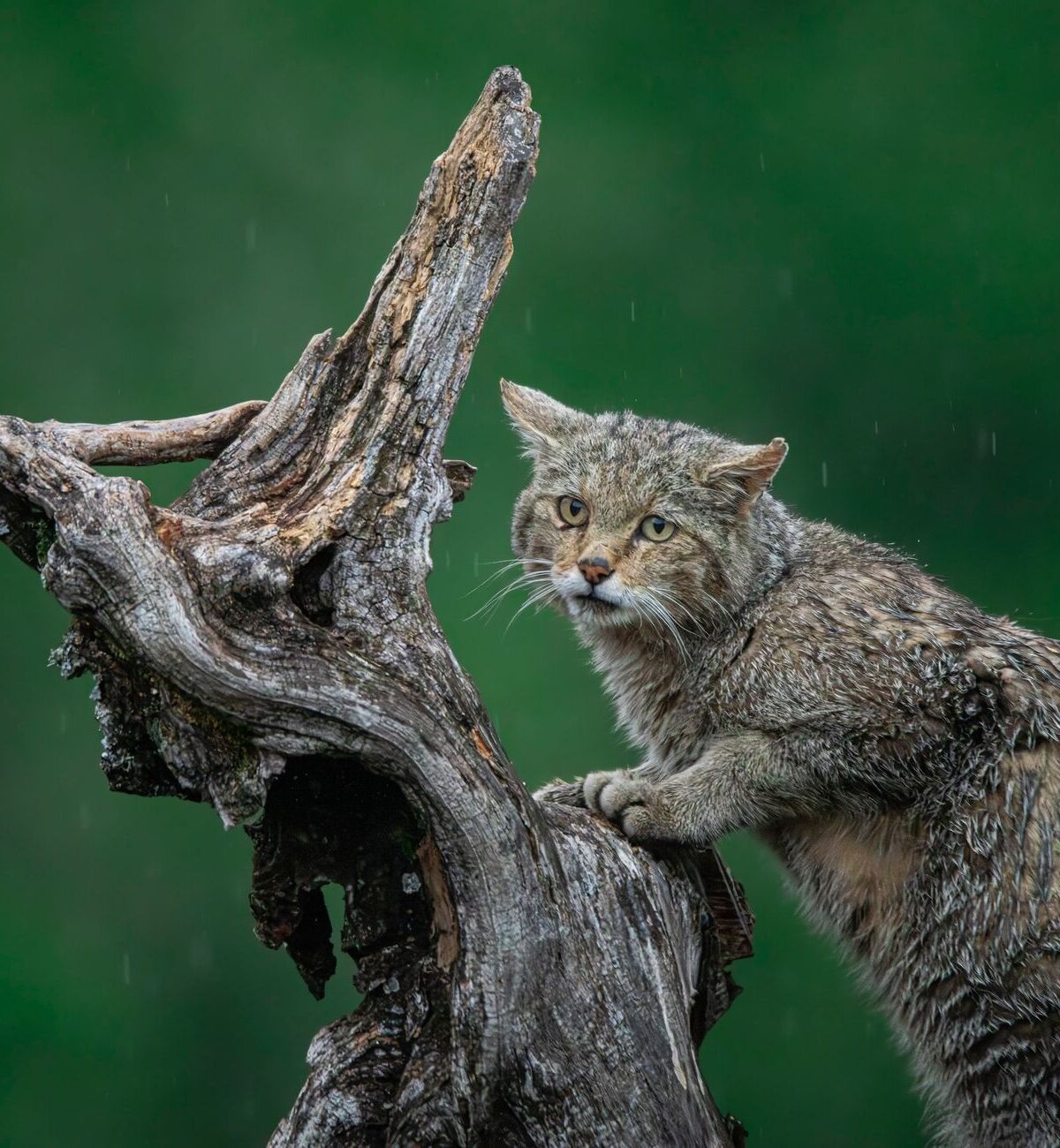
EUROPEAN WILDCAT
Felis silvestris
DESCRIPTION
Also called the Wildcat, the European Wildcat is a small, elusive feline that resembles a domestic cat but is larger and more robust. It has a distinctive coat with a grayish-brown color, marked with dark stripes and spots, which provides excellent camouflage in its natural habitat. This solitary animal is primarily nocturnal and is known for its stealthy hunting techniques, often stalking small mammals and birds in forested areas.
FUN FACTS
- European Wildcats are often mistaken for domestic cats due to their similar appearance, but they are a distinct species with unique behaviors and adaptations
- They are excellent climbers and can often be found resting in trees, which helps them avoid ground predators and gives them a vantage point for spotting prey.| Unlike domestic cats, European Wildcats are more reclusive and have a more complex social structure, often marking their territory with scent markings and vocalizations to communicate with other wildcats
QUICK INFO
Lifespan12-15 years in the wild, up to 20 years in captivi
Average Weight3.5-6.5 kg
Average Length60-90 cm
Diet TypeCarnivore
Social Structuresolitary, typically territorial
Activity PatternNocturnal
Breeding SeasonSpring (March-May)
- Habitat
- European Wildcats inhabit a variety of environments, including forests, grasslands, and scrublands. They prefer areas with dense vegetation that provide cover for hunting and resting.
- Biomes
- Temperate Forest, Grassland, Scrubland
- Native Range
- The native range of the European Wildcat extends across Europe, from the Iberian Peninsula in the west to the Balkans and parts of Asia Minor in the east.
- Continent
- Europe, Asia
- Countries
- Germany, France, Spain, Italy, Greece, Romania
- Diet
- The European Wildcat primarily preys on small mammals, birds, and occasionally reptiles. It uses its keen senses to hunt at night, relying on stealth and agility.
- Diet Type
- Carnivore
- Favorite Food
- small mammals, birds
- Social Structure
- solitary, typically territorial
- Activity Pattern
- Nocturnal
- Group Size
- 1
- Territorial
- 1
3.5-6.5 kg
Weight
60-90 cm
Length
- Coloration
- grayish-brown with dark stripes and spots
- Sexual Dimorphism
- males are generally larger than females
- Lifespan
- 12-15 years in the wild, up to 20 years in captivi
- Gestation Period
- 63-68 days
- Offspring per Birth
- 1-5
- Sexual Maturity
- 1-2 years
- Breeding Season
- Spring (March-May)
LC
Least Concern
IUCN Red List Status
- Population Status
- The population of European Wildcats is currently stable in some areas but declining in others due to habitat loss and hybridization with domestic cats.
- Wild Population Estimate
- 50,000-100,000
- Population Trend
- Stable
- Endangered
- 0
- Threats
- Main threats to the European Wildcat include habitat destruction, road mortality, and hybridization with domestic cats, which can dilute the genetic integrity of the wild population.
- Conservation Program
- Various conservation programs are in place across Europe to protect habitats and reduce hybridization with domestic cats.
- Predators
- Humans, larger carnivores such as wolves and lynxes may pose threats, especially to young or injured individuals.
- Defense Mechanisms
- European Wildcats rely on their camouflage and stealth to avoid detection by predators and humans.
- Found in Zoos
- Uncommon