


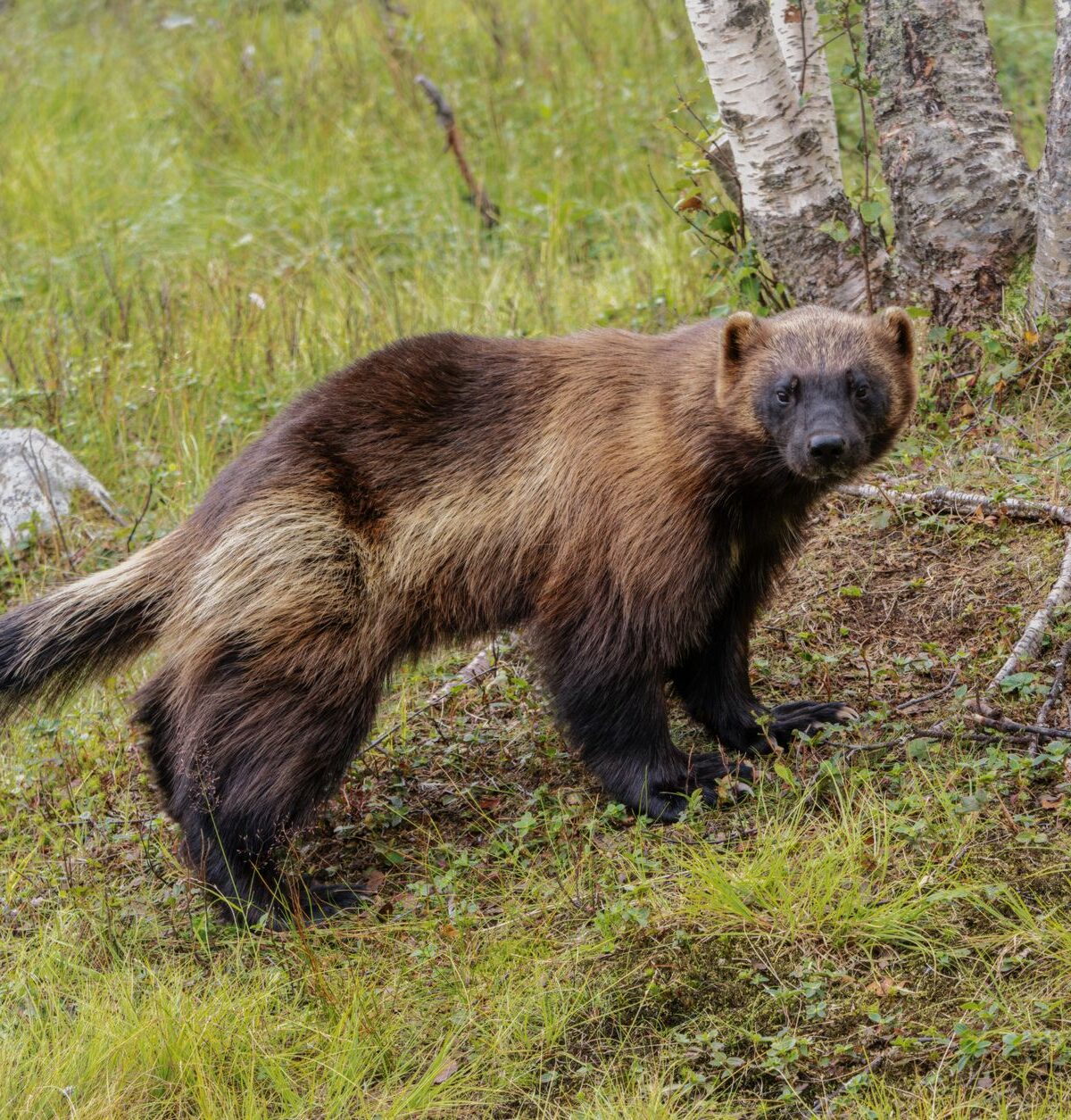
EUROPEAN WOLVERINE
Gulo gulo
DESCRIPTION
European Wolverine (Gulo gulo), commonly known simply as the Wolverine, is a robust and muscular carnivore with a stocky build and short legs. It has a thick, dark brown fur coat with lighter stripes along its sides, which helps it blend into its forested and tundra habitats. This solitary animal is known for its strength and tenacity, often scavenging and hunting for food in harsh environments, showcasing remarkable adaptability in its behavior and ecology.
FUN FACTS
- Wolverines are known for their incredible strength relative to their size, capable of taking down prey much larger than themselves, such as deer
- They have a unique ability to travel long distances in search of food, often covering up to 15 miles in a single day while foraging for carrion or hunting.|Despite their fierce reputation, European Wolverines are elusive and rarely seen in the wild, making them a subject of fascination for wildlife enthusiasts and researchers alike
- Their thick fur not only provides insulation against cold temperatures but also helps them navigate through deep snow
QUICK INFO
Lifespan10-15 years in the wild, up to 20 years in captivi
Average Weight11-25 kg
Average Length65-86 cm
Diet TypeCarnivore
Social Structuresolitary, typically living alone except during mating season or when a mother is raising her young
Activity PatternNocturnal
Breeding SeasonLate winter to early spring (February-April)
- Habitat
- European Wolverines inhabit remote, cold regions, including boreal forests and tundra. They prefer areas with low human disturbance and ample cover for hunting and denning.
- Biomes
- Boreal Forest, Tundra
- Native Range
- The species is found across northern Europe, including Scandinavia and parts of Russia.
- Continent
- Europe, Asia
- Countries
- Norway, Sweden, Finland, Russia
- Diet
- The European Wolverine primarily feeds on small to medium-sized mammals, carrion, and occasionally fruits and berries. It is an opportunistic feeder, often scavenging from larger predators.
- Diet Type
- Carnivore
- Favorite Food
- small mammals, carrion
- Social Structure
- solitary, typically living alone except during mating season or when a mother is raising her young
- Activity Pattern
- Nocturnal
- Group Size
- 1
- Territorial
- 1
 LC
LC
11-25 kg
Weight
65-86 cm
Length
- Coloration
- dark brown fur with lighter stripes on the sides
- Sexual Dimorphism
- males are generally larger than females
- Lifespan
- 10-15 years in the wild, up to 20 years in captivi
- Gestation Period
- 30-34 days
- Offspring per Birth
- 2-4
- Sexual Maturity
- 2-3 years
- Breeding Season
- Late winter to early spring (February-April)
LC
Least Concern
IUCN Red List Status
- Population Status
- The population of European Wolverines is currently considered to be stable in some regions, but it faces threats from habitat loss and hunting.
- Wild Population Estimate
- 6,000-10,000
- Population Trend
- Stable
- Endangered
- 0
- Threats
- Main threats include habitat destruction, climate change, and hunting. These factors can lead to localized declines in populations.
- Predators
- Humans are the primary threat, but young wolverines may be preyed upon by larger carnivores such as wolves and bears.
- Defense Mechanisms
- Wolverines have strong jaws and sharp claws, allowing them to defend themselves effectively against predators.
- Found in Zoos
- Uncommon