


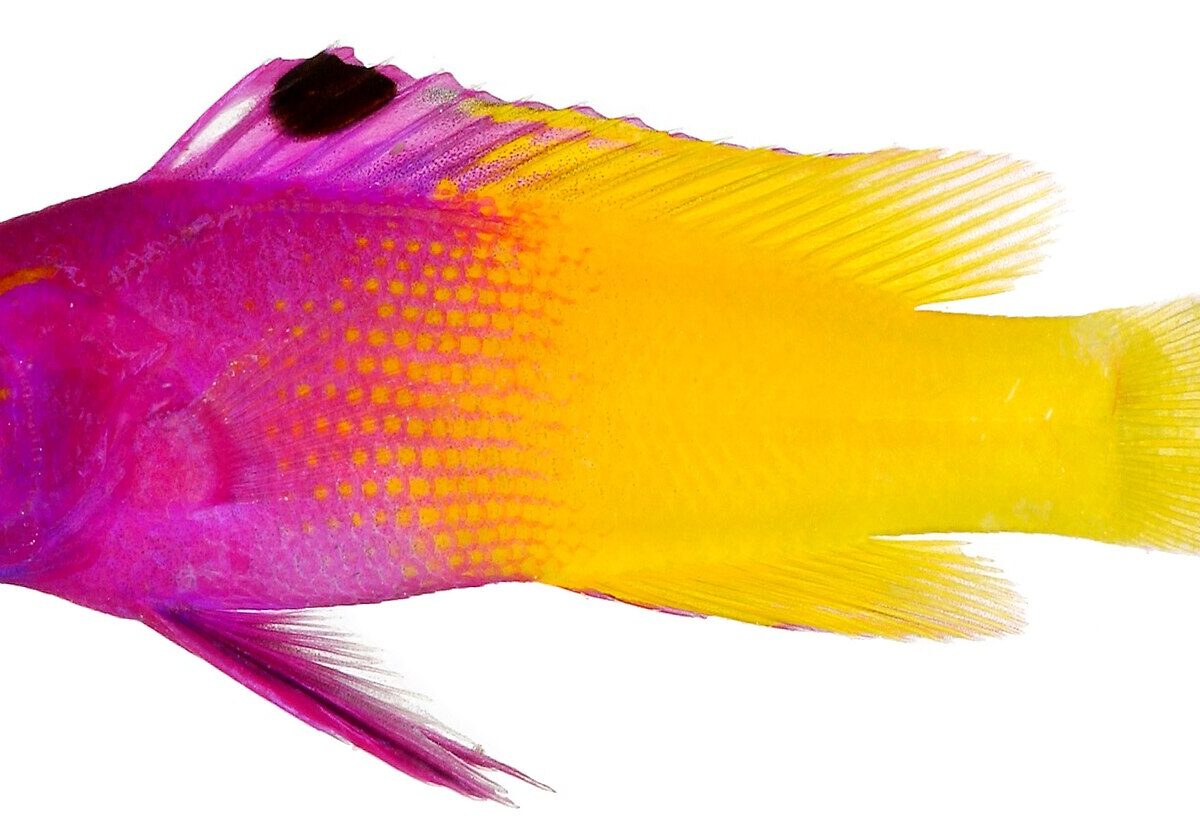
FAIRY BASSLET
DESCRIPTION
Fairy Basslet is a small, vibrantly colored fish known for its striking purple and yellow hues. It typically inhabits coral reefs, where it can be found in crevices and among coral formations. This species is known for its territorial behavior, often defending its chosen space from intruders.
FUN FACTS
- Fairy Basslets are often referred to as the 'jewels of the reef' due to their stunning coloration and small size
- They play a crucial role in the reef ecosystem by helping to control the populations of small invertebrates, contributing to the overall health of their habitat.|These fish are known for their unique courtship displays, where males will perform elaborate dances to attract females
- This behavior not only showcases their vibrant colors but also helps establish their territory among other males
QUICK INFO
Lifespan5-10 years in the wild
Average Length5-7 cm
Diet TypeCarnivore
Social Structuregroup — they often form small groups or pairs, especially during breeding.
Activity PatternDiurnal
- Habitat
- Fairy Basslets are commonly found in warm, shallow waters of coral reefs. They prefer areas with plenty of hiding spots and complex structures.
- Biomes
- Coral Reef
- Native Range
- The species is native to the Caribbean Sea and the western Atlantic Ocean.
- Continent
- North America, South America
- Countries
- United States, Bahamas, Cuba, Jamaica, Dominican Republic
- Diet
- Fairy Basslets primarily feed on small zooplankton and tiny invertebrates. They are adept at picking food from the water column and the reef substrate.
- Diet Type
- Carnivore
- Favorite Food
- zooplankton, small invertebrates
- Social Structure
- group — they often form small groups or pairs, especially during breeding.
- Activity Pattern
- Diurnal
- Group Size
- 2-10
- Territorial
- 1
 LC
LC
5-7 cm
Length
- Coloration
- vibrant purple body with bright yellow accents
- Sexual Dimorphism
- males are typically larger and more colorful than females
- Lifespan
- 5-10 years in the wild
- Sexual Maturity
- 1-2 years
LC
Least Concern
IUCN Red List Status
- Population Status
- The population is currently stable, but habitat degradation poses a potential threat.
- Population Trend
- Stable
- Endangered
- 0
- Threats
- Main threats include habitat loss due to coral reef degradation and climate change. Overfishing in some areas also poses a risk to their populations.
- Predators
- larger fish, such as groupers and snappers, as well as some species of moray eels.
- Defense Mechanisms
- They use their vibrant colors to blend into the coral and can quickly retreat into crevices when threatened.
- Found in Zoos
- Uncommon