


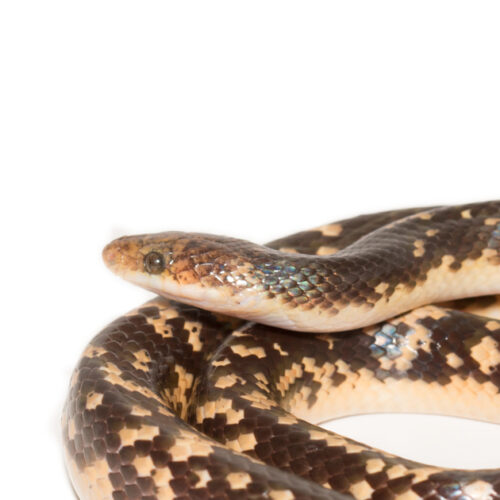
FALSE CORAL SNAKE
Erythrolamprus aesculapii
DESCRIPTION
The False Coral Snake (Erythrolamprus aesculapii) is a non-venomous snake that mimics the appearance of the venomous coral snake, featuring bright red, yellow, and black banding. This coloration serves as a warning to potential predators, despite the snake being harmless. Typically found in a variety of habitats, it is known for its secretive nature and is often active during the day, although it can also be found at night.
FUN FACTS
- The False Coral Snake is often confused with the true coral snake due to its similar coloration, which is a classic example of Batesian mimicry
- This mimicry helps it avoid predation, as many animals learn to associate the bright colors with danger
- | Despite being non-venomous, the False Coral Snake can still deliver a painful bite if threatened, using its sharp teeth to grasp onto its attacker
- This behavior is a last resort, as the snake prefers to rely on its camouflage and mimicry to avoid confrontation
QUICK INFO
Average Length0.6-1.2 m
Diet TypeCarnivore
Social Structuresolitary
Activity PatternDiurnal
- Habitat
- This species inhabits a range of environments, including forests, grasslands, and shrublands. It prefers areas with ample cover, such as leaf litter or dense vegetation, which provide protection from predators.
- Biomes
- Tropical Rainforest, Temperate Forest, Grassland
- Native Range
- The False Coral Snake is native to parts of Central and South America, particularly in regions such as the Amazon Basin.
- Continent
- South America
- Countries
- Brazil, Colombia, Venezuela, Ecuador, Peru
- Diet
- The False Coral Snake primarily feeds on small reptiles and amphibians, including lizards and frogs. It uses its keen sense of smell to locate prey, often ambushing them.
- Diet Type
- Carnivore
- Favorite Food
- small reptiles, amphibians
- Social Structure
- solitary
- Activity Pattern
- Diurnal
- Group Size
- 1
- Territorial
- 0
 VU
VU
0.6-1.2 m
Length
- Coloration
- Bright red, yellow, and black banding
LC
Least Concern
IUCN Red List Status
- Population Status
- The population status of the False Coral Snake is not well-documented, but it is not currently considered endangered.
- Population Trend
- Stable
- Endangered
- 0
- Threats
- Habitat loss due to deforestation and human encroachment poses a threat to the False Coral Snake. Additionally, road mortality can impact local populations.
- Predators
- Birds of prey, larger snakes, and mammals such as raccoons may prey on the False Coral Snake.
- Defense Mechanisms
- The False Coral Snake relies on its mimicry of venomous species to deter predators, as well as its ability to hide in its environment.
- Found in Zoos
- Uncommon