


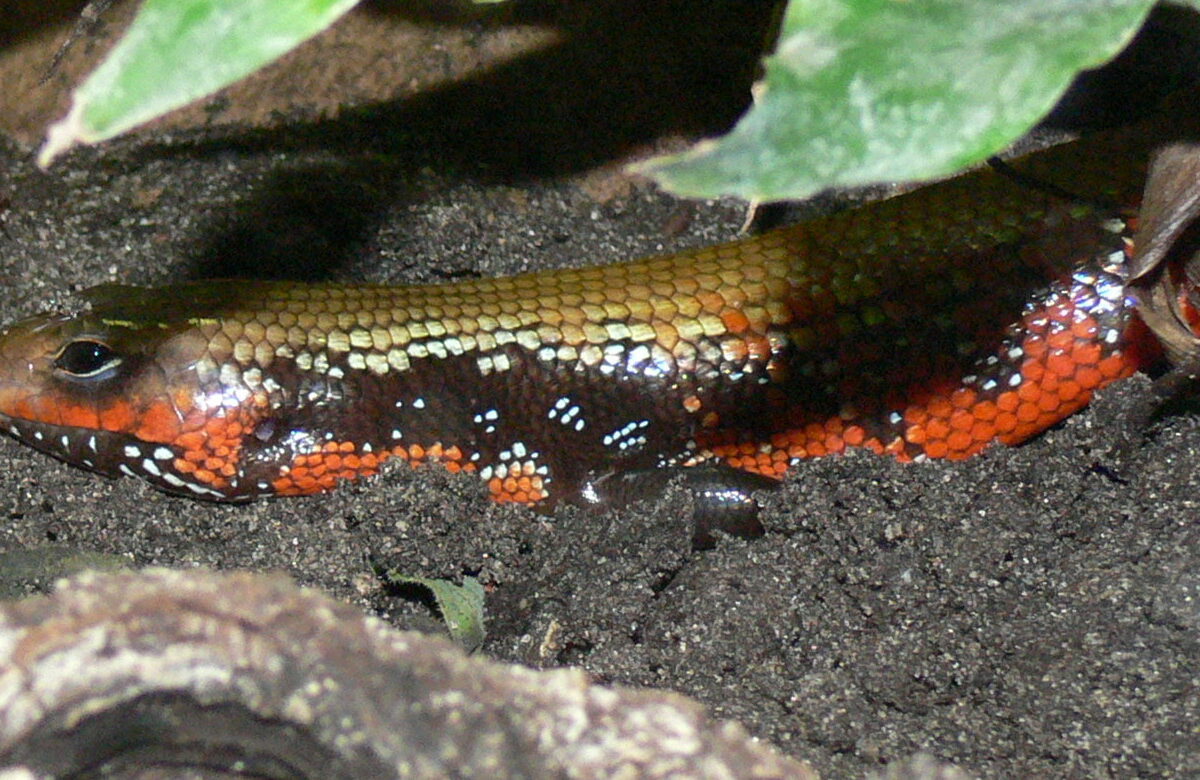
FERNAND'S SKINK
Plestiodon fernandi
DESCRIPTION
Fernand's Skink (Plestiodon fernandi) is a small, slender lizard characterized by its smooth, shiny scales and elongated body. It typically exhibits a coloration that ranges from brown to gray, often with lighter stripes running along its sides. This species is known for its burrowing behavior, spending much of its time underground in leaf litter or sandy soils, which helps it avoid predators and maintain moisture in its habitat.
FUN FACTS
- Fernand's Skink is known for its ability to regenerate its tail if lost, a common trait among many lizard species
- This regeneration process can take several weeks, and the new tail may differ in appearance from the original
- | This species is often overlooked due to its small size and secretive nature, making it a lesser-known member of the skink family
- Despite this, it plays an important role in its ecosystem by helping to control insect populations
QUICK INFO
Lifespan5-10 years in the wild
Average Length15-20 cm
Diet TypeInsectivore
Social Structuresolitary
Activity PatternDiurnal
Breeding SeasonSpring (April-June)
- Habitat
- This skink prefers forested areas and shrublands where it can find ample cover and food sources. It is often found in moist environments that provide suitable conditions for burrowing.
- Biomes
- Temperate Forest, Mediterranean Forest
- Native Range
- Fernand's Skink is native to the southeastern United States, particularly in regions of Florida.
- Continent
- North America
- Countries
- United States
- Diet
- Fernand's Skink primarily feeds on small invertebrates, including insects and worms. Its diet is crucial for its growth and energy needs.
- Diet Type
- Insectivore
- Favorite Food
- insects, worms
- Social Structure
- solitary
- Activity Pattern
- Diurnal
- Group Size
- 1
- Territorial
- 0
 LC
LC
15-20 cm
Length
- Coloration
- brown to gray with lighter stripes
- Lifespan
- 5-10 years in the wild
- Offspring per Birth
- 2-6
- Sexual Maturity
- 1-2 years
- Breeding Season
- Spring (April-June)
LC
Least Concern
IUCN Red List Status
- Population Status
- The population of Fernand's Skink is currently stable, but habitat loss poses a potential threat.
- Population Trend
- Stable
- Endangered
- 0
- Threats
- Main threats include habitat destruction due to urban development and agricultural expansion. These activities reduce the available natural habitats necessary for their survival.
- Predators
- Common predators include birds of prey, snakes, and larger mammals that may hunt small reptiles.
- Defense Mechanisms
- Fernand's Skink can escape quickly into burrows or under leaf litter to avoid predators.
- Found in Zoos
- Uncommon