


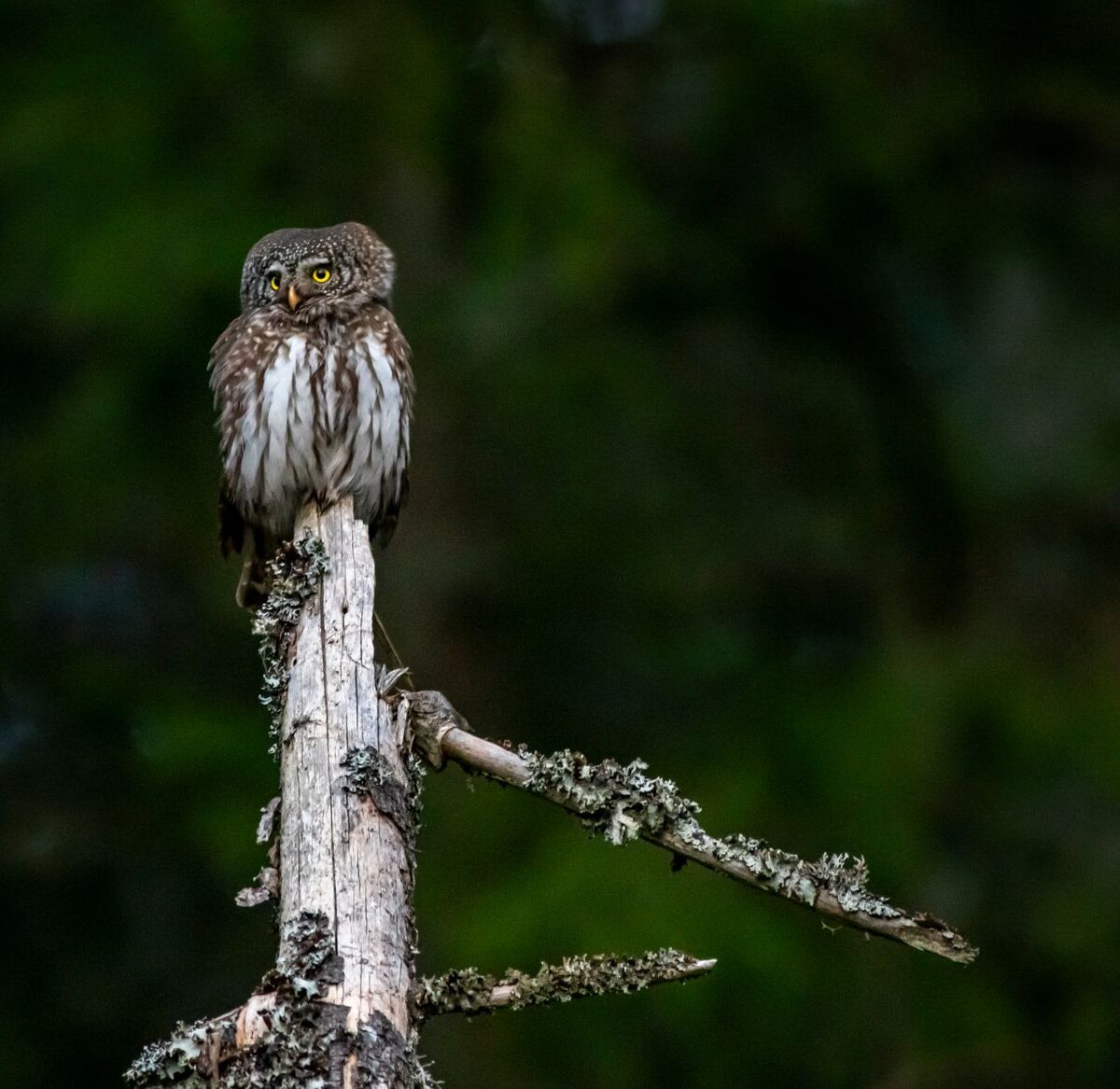
FERRUGINOUS PYGMY OWL
Glaucidium brasilianum
DESCRIPTION
Ferruginous Pygmy Owl (Glaucidium brasilianum) is a small, stocky owl characterized by its distinctive rusty-brown plumage and bright yellow eyes. This species exhibits a unique behavior of being active during the day, which is uncommon among owls, allowing it to hunt small birds and insects effectively. It typically resides in open woodlands and scrub areas, where it can be seen perched prominently, scanning for prey.
FUN FACTS
- Ferruginous Pygmy Owls are known for their unique vocalizations, which can sound like a series of whistles or trills, making them easily identifiable in the wild
- They have a remarkable ability to hunt during the day, which is rare for owls, allowing them to take advantage of the activity of small birds and insects that are also active during daylight hours
QUICK INFO
Lifespanup to 10 years in the wild
Average Weight70-100 g
Average Length15-20 cm
Diet TypeCarnivore
Social Structuresolitary or in pairs, especially during breeding season
Activity PatternDiurnal
Breeding SeasonSpring (March-May)
- Habitat
- This owl prefers open woodlands, savannas, and scrublands, often near water sources. It can adapt to various habitats as long as there are suitable perches and hunting grounds.
- Biomes
- Tropical Rainforest, Savanna, Woodland
- Native Range
- Ferruginous Pygmy Owls are found across parts of Central and South America, from the southern United States to Argentina.
- Continent
- North America, South America
- Countries
- United States, Mexico, Guatemala, Honduras, Nicaragua, Costa Rica, Panama, Colombia, Venezuela, Ecuador, Peru, Brazil, Bolivia, Paraguay, Argentina
- Diet
- Ferruginous Pygmy Owls primarily feed on small birds, insects, and occasionally small mammals. Their hunting strategy involves short flights and quick dives to capture their prey.
- Diet Type
- Carnivore
- Favorite Food
- small birds, insects
- Social Structure
- solitary or in pairs, especially during breeding season
- Activity Pattern
- Diurnal
- Group Size
- 1-2
- Territorial
- 1
 LC
LC
 LC
LC
70-100 g
Weight
15-20 cm
Length
- Coloration
- rusty-brown with white spots and streaks
- Sexual Dimorphism
- males are slightly smaller than females
- Lifespan
- up to 10 years in the wild
- Offspring per Birth
- 2-4
- Sexual Maturity
- 1 year
- Breeding Season
- Spring (March-May)
LC
Least Concern
IUCN Red List Status
- Population Status
- The population of Ferruginous Pygmy Owls is currently stable, but habitat loss poses a potential threat.
- Wild Population Estimate
- unknown
- Population Trend
- Stable
- Endangered
- 0
- Threats
- Main threats include habitat destruction due to agriculture and urban development. Additionally, climate change may impact their habitat and food sources.
- Predators
- larger birds of prey, snakes, and domestic cats
- Defense Mechanisms
- Ferruginous Pygmy Owls rely on their camouflage and ability to remain still to avoid detection by predators.
- Found in Zoos
- Uncommon