


FIRE-BELLIED TOAD
Bombina orientalis
DESCRIPTION
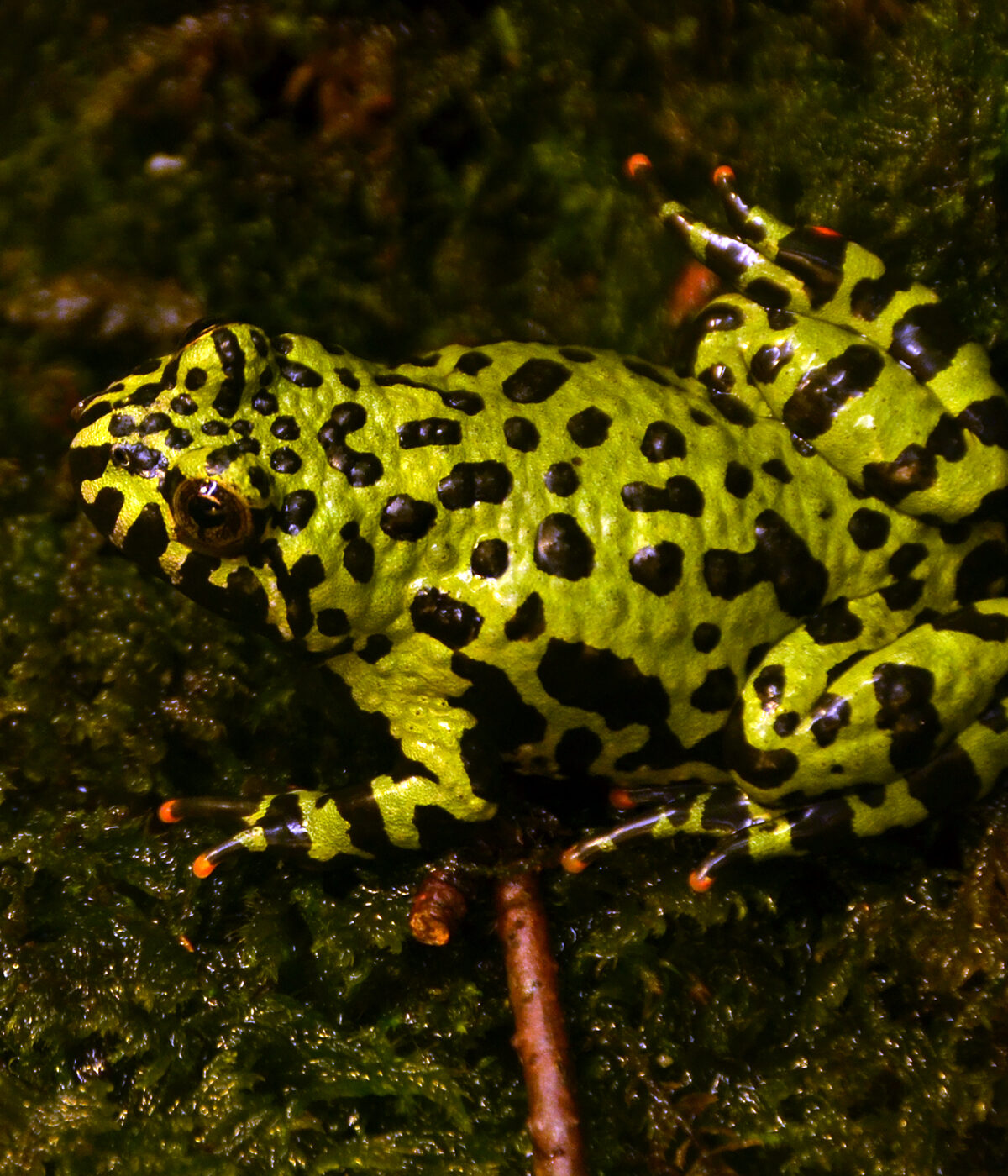
Fire-Bellied Toad (Bombina orientalis) is commonly known as the Oriental Fire-Bellied Toad. This small amphibian is characterized by its vibrant green or brown dorsal coloration, which contrasts sharply with its bright orange or red ventral surface, serving as a warning to potential predators. They are semi-aquatic and are often found in slow-moving water bodies, where they exhibit a unique behavior of inflating their bodies to appear larger when threatened.
FUN FACTS
- Fire-Bellied Toads are known for their unique mating rituals, where males will call to attract females, often resulting in a chorus of croaks that can be quite loud
- Additionally, these toads have a fascinating ability to change their skin color slightly based on their environment, helping them blend in and avoid predators.|These toads are also popular in the pet trade due to their striking appearance and relatively easy care requirements
- However, potential owners should be aware of their specific habitat needs and the importance of maintaining clean water to ensure their health
QUICK INFO
Lifespan5-10 years in the wild, up to 15 years in captivit
Average Weight10-30 g
Average Length5-7 cm
Diet TypeInsectivore
Social StructureThey are typically solitary outside of the breeding season, but can be found in groups during mating.
Activity PatternNocturnal
Breeding SeasonSpring (April-June)
- Habitat
- These toads inhabit freshwater environments such as ponds, marshes, and slow-moving streams. They prefer areas with abundant vegetation that provides cover and breeding sites.
- Biomes
- Temperate Forest, Freshwater
- Native Range
- Fire-Bellied Toads are native to East Asia, particularly found in regions of China, Korea, and parts of Russia.
- Continent
- Asia
- Countries
- China, South Korea, North Korea, Russia
- Diet
- Fire-Bellied Toads primarily consume small invertebrates, including insects and worms. They are opportunistic feeders and will eat whatever small prey is available in their habitat.
- Diet Type
- Insectivore
- Favorite Food
- insects, worms
- Social Structure
- They are typically solitary outside of the breeding season, but can be found in groups during mating.
- Activity Pattern
- Nocturnal
- Group Size
- 5-15
- Territorial
- 0
 VU
VU
 LC
LC
10-30 g
Weight
5-7 cm
Length
- Coloration
- Dorsally green or brown with bright orange or red on the underside.
- Sexual Dimorphism
- Males are usually smaller and have more vibrant coloration compared to females.
- Lifespan
- 5-10 years in the wild, up to 15 years in captivit
- Offspring per Birth
- 100-200 eggs
- Sexual Maturity
- 1-2 years
- Breeding Season
- Spring (April-June)
LC
Least Concern
IUCN Red List Status
- Population Status
- The population is currently stable, but habitat loss poses a potential threat.
- Wild Population Estimate
- Unknown
- Population Trend
- Stable
- Endangered
- 0
- Threats
- Main threats include habitat destruction due to urbanization and pollution of water bodies. Additionally, they are susceptible to diseases such as chytridiomycosis.
- Predators
- Birds, snakes, and larger amphibians are known predators of Fire-Bellied Toads.
- Defense Mechanisms
- They exhibit aposematic coloration, which warns predators of their toxicity, and can also secrete toxins from their skin.
- Compatible Animals
- Other small amphibians, certain fish species
- Found in Zoos
- Common