


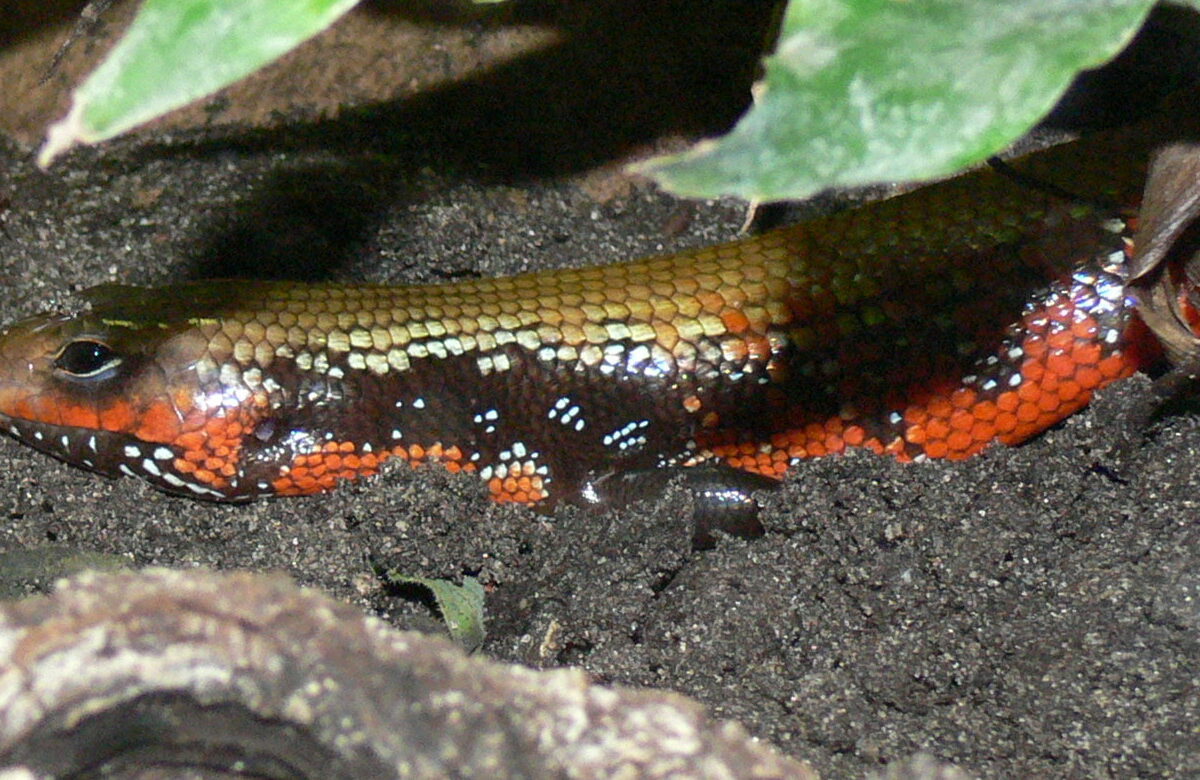
FIRE SKINK
Zonurus rubricaudatus
DESCRIPTION
Fire Skink (Zonurus rubricaudatus) is commonly known as the Red-tailed Skink due to its distinctive bright red or orange tail. This species exhibits a striking coloration with a dark brown or black body adorned with yellow or white stripes, making it visually appealing. Fire Skinks are primarily terrestrial and are known for their burrowing behavior, often seeking refuge in leaf litter or under rocks in their natural habitat.
FUN FACTS
- Fire Skinks are known for their vibrant coloration, which serves as a warning to potential predators about their ability to escape quickly
- They are also popular in the pet trade due to their striking appearance and relatively easy care requirements.|These skinks have a unique ability to shed their tails when threatened, a defense mechanism that allows them to escape while the predator is distracted by the detached tail
- This ability is common among many lizard species and helps them survive in the wild
QUICK INFO
Lifespan5-10 years in the wild, up to 15 years in captivit
Average Length20-30 cm
Diet TypeInsectivore
Social Structuresolitary, typically found alone except during mating season
Activity PatternDiurnal
- Habitat
- Fire Skinks inhabit tropical forests and savannas, often found in areas with ample ground cover. They prefer humid environments where they can easily hide from predators.
- Biomes
- Tropical Rainforest, Savanna
- Native Range
- Fire Skinks are native to the tropical regions of West Africa.
- Continent
- Africa
- Countries
- Ghana, Ivory Coast, Nigeria, Cameroon
- Diet
- Fire Skinks are insectivorous, primarily feeding on a variety of insects and other small invertebrates. They may also consume small fruits and plant matter occasionally.
- Diet Type
- Insectivore
- Favorite Food
- insects, small invertebrates
- Social Structure
- solitary, typically found alone except during mating season
- Activity Pattern
- Diurnal
- Group Size
- 1
- Territorial
- 0
 VU
VU
 LC
LC
20-30 cm
Length
- Coloration
- dark brown or black body with yellow or white stripes and a bright red or orange tail
- Sexual Dimorphism
- males may have slightly larger bodies and more vibrant coloration than females
- Lifespan
- 5-10 years in the wild, up to 15 years in captivit
- Sexual Maturity
- 1-2 years
LC
Least Concern
IUCN Red List Status
- Population Status
- The population status of Fire Skinks is currently stable, but habitat loss poses a potential threat.
- Wild Population Estimate
- unknown
- Population Trend
- Stable
- Endangered
- 0
- Threats
- Main threats include habitat destruction due to deforestation and human encroachment. Additionally, they may be affected by the pet trade.
- Predators
- birds of prey, snakes, larger mammals
- Defense Mechanisms
- Fire Skinks can escape quickly into burrows or under cover when threatened, relying on their speed and agility.
- Found in Zoos
- Uncommon