


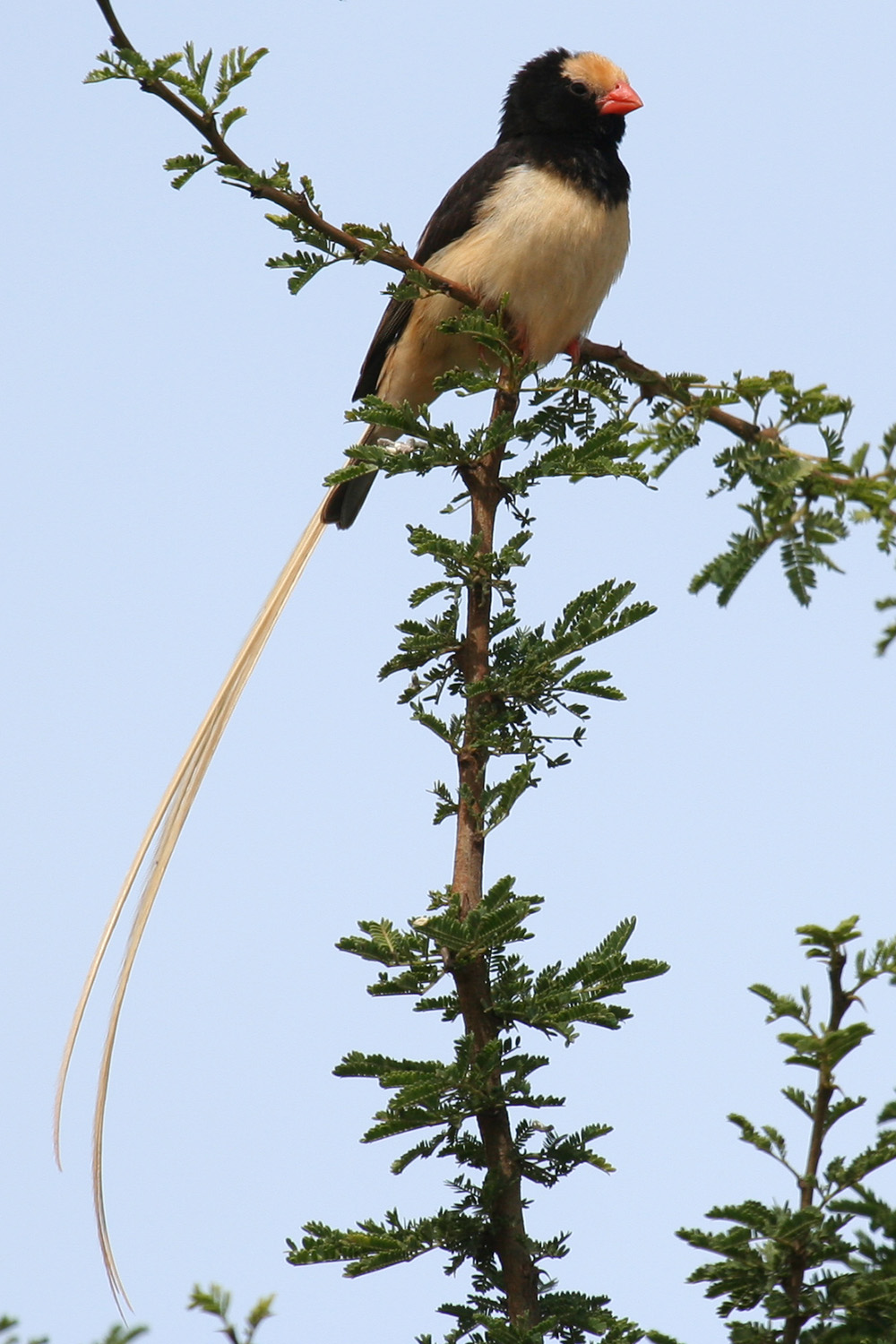
FISCHER'S STRAW-TAILED WHYDAH
Vidua fischeri
DESCRIPTION
Fischer's Straw-tailed Whydah (Vidua fischeri) is commonly known as Fischer's Whydah. This small, striking bird is characterized by its long, flowing tail feathers and vibrant plumage, particularly in males during the breeding season, which display bright black and yellow colors. They are known for their unique behavior of brood parasitism, laying their eggs in the nests of other finch species, which raises their young.
FUN FACTS
- Fischer's Straw-tailed Whydah is known for its unique breeding strategy, where it lays its eggs in the nests of other finch species, such as the African Firefinch
- This behavior allows them to save energy on raising their young, as the host parents take care of the chicks
- | The males' long tail feathers are not just for show; they play a crucial role in attracting females during the breeding season
- The longer and more vibrant the tail, the more likely a male is to attract a mate, showcasing the importance of sexual selection in their evolution
QUICK INFO
Lifespan3-5 years in the wild, up to 10 years in captivity
Average Weight10-15 g
Average Length12-14 cm
Diet TypeGranivore
Social StructureThey are typically found in small groups, often consisting of pairs or family units.
Activity PatternDiurnal
Breeding SeasonSpring to early summer
- Habitat
- This species inhabits open grasslands and savannas, often near water sources. They prefer areas with scattered shrubs and trees for perching and nesting.
- Biomes
- Savanna, Grassland
- Native Range
- Fischer's Straw-tailed Whydah is native to parts of East Africa, particularly found in regions of Tanzania and Kenya.
- Continent
- Africa
- Countries
- Tanzania, Kenya
- Diet
- Fischer's Straw-tailed Whydah primarily feeds on seeds and grains, often foraging on the ground. They are particularly fond of the seeds of grasses and other herbaceous plants.
- Diet Type
- Granivore
- Favorite Food
- grass seeds
- Social Structure
- They are typically found in small groups, often consisting of pairs or family units.
- Activity Pattern
- Diurnal
- Group Size
- 5-15
- Territorial
- 0
 LC
LC
10-15 g
Weight
12-14 cm
Length
- Coloration
- Males have a striking black head and bright yellow underparts, while females are more subdued with brown and streaked plumage.
- Sexual Dimorphism
- Males are more colorful and have longer tails than females.
- Lifespan
- 3-5 years in the wild, up to 10 years in captivity
- Offspring per Birth
- 2-5
- Sexual Maturity
- 1 year
- Breeding Season
- Spring to early summer
LC
Least Concern
IUCN Red List Status
- Population Status
- The population of Fischer's Straw-tailed Whydah is currently stable, but habitat loss poses a potential threat.
- Wild Population Estimate
- Unknown
- Population Trend
- Stable
- Endangered
- 0
- Threats
- Main threats include habitat destruction due to agricultural expansion and urbanization. Additionally, climate change may impact their habitat availability.
- Predators
- Predators include birds of prey, snakes, and small mammals that may prey on their eggs or young.
- Defense Mechanisms
- They often rely on their camouflage and quick flight to evade predators.
- Found in Zoos
- Uncommon