


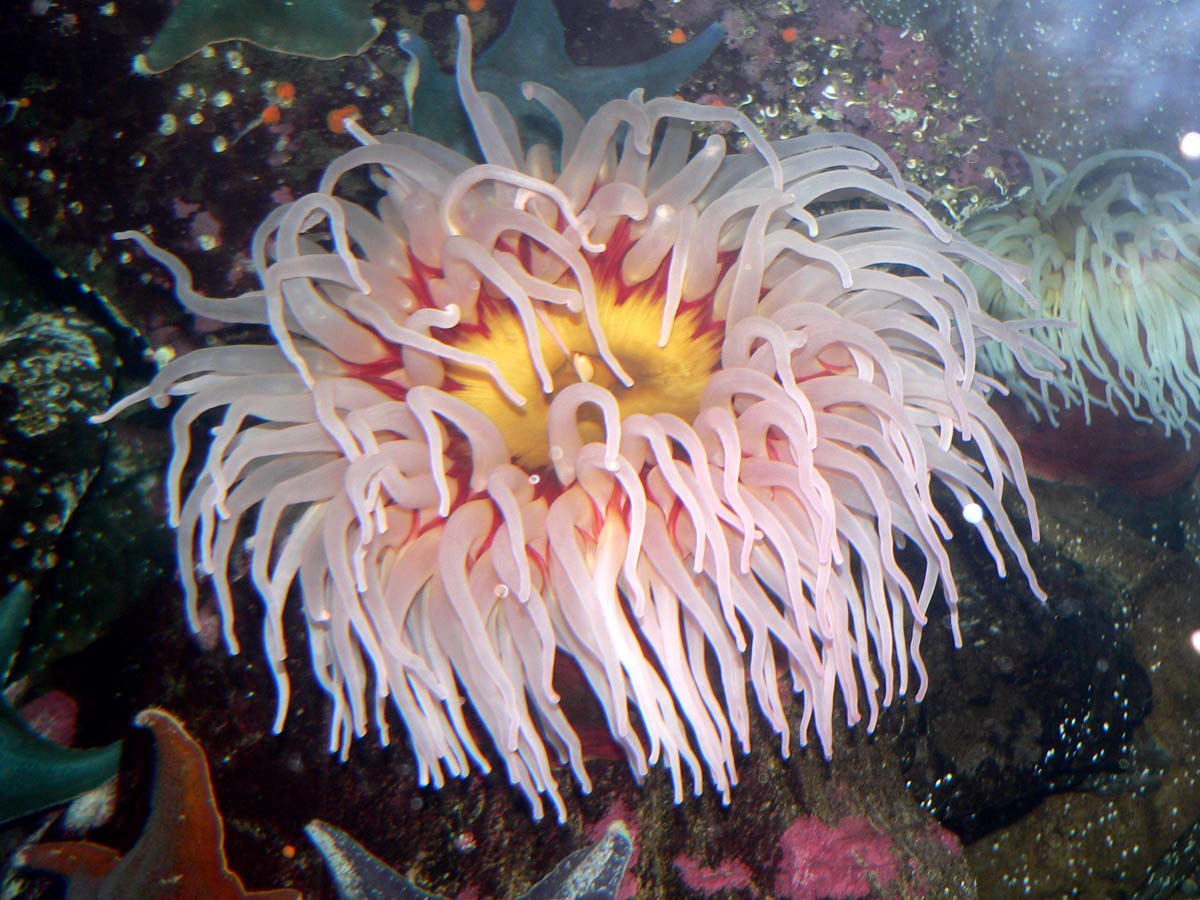
FISH EATING ANEMONE
DESCRIPTION
Fish Eating Anemone is a fascinating marine invertebrate known for its unique predatory behavior. It features a cylindrical body with a crown of tentacles that are equipped with specialized stinging cells called nematocysts, which it uses to capture prey. This anemone typically resides in shallow coastal waters, where it can be found attached to rocks or coral, often in symbiotic relationships with certain fish species.
FUN FACTS
- Fish Eating Anemones have a remarkable ability to regenerate lost tentacles, allowing them to recover from predation or environmental damage
- Additionally, they can form symbiotic relationships with clownfish, providing a safe haven for the fish while benefiting from the nutrients the fish excrete.| These anemones can also reproduce both sexually and asexually, allowing them to adapt to changing environmental conditions and maintain their populations effectively
QUICK INFO
Lifespanup to 50 years in the wild
Average Length10-30 cm
Diet TypeCarnivore
Social Structuresolitary, typically found alone but can be seen in small groups in favorable conditions
Activity PatternDiurnal
Breeding SeasonVariable, often linked to environmental conditions
- Habitat
- Fish Eating Anemone thrives in rocky substrates and coral reefs, where it can anchor itself and access a steady flow of water for feeding. It prefers warm, shallow waters that provide ample sunlight.
- Biomes
- Coral Reef, Coastal
- Native Range
- Found in the tropical and subtropical waters of the Indo-Pacific region.
- Continent
- Asia, Australia
- Countries
- Indonesia, Australia, Philippines, Thailand
- Diet
- It primarily feeds on small fish and invertebrates, using its tentacles to immobilize prey before consumption. The anemone's stinging cells are crucial for subduing its catch.
- Diet Type
- Carnivore
- Favorite Food
- small fish, invertebrates
- Social Structure
- solitary, typically found alone but can be seen in small groups in favorable conditions
- Activity Pattern
- Diurnal
- Group Size
- 1-5
- Territorial
- 0

10-30 cm
Length
- Coloration
- varies from bright colors like green and orange to more muted tones, often with patterns
- Lifespan
- up to 50 years in the wild
- Offspring per Birth
- hundreds to thousands of larvae
- Sexual Maturity
- 1-2 years
- Breeding Season
- Variable, often linked to environmental conditions
LC
Least Concern
IUCN Red List Status
- Population Status
- Population status is generally stable, but local conditions can affect numbers.
- Population Trend
- Stable
- Endangered
- 0
- Threats
- Main threats include habitat destruction due to coral reef degradation and climate change. Pollution and overfishing can also impact local populations.
- Predators
- Sea turtles, certain fish species, and larger invertebrates.
- Defense Mechanisms
- The anemone's stinging tentacles serve as a primary defense mechanism against predators.
- Compatible Animals
- clownfish, certain damselfish
- Found in Zoos
- Uncommon