


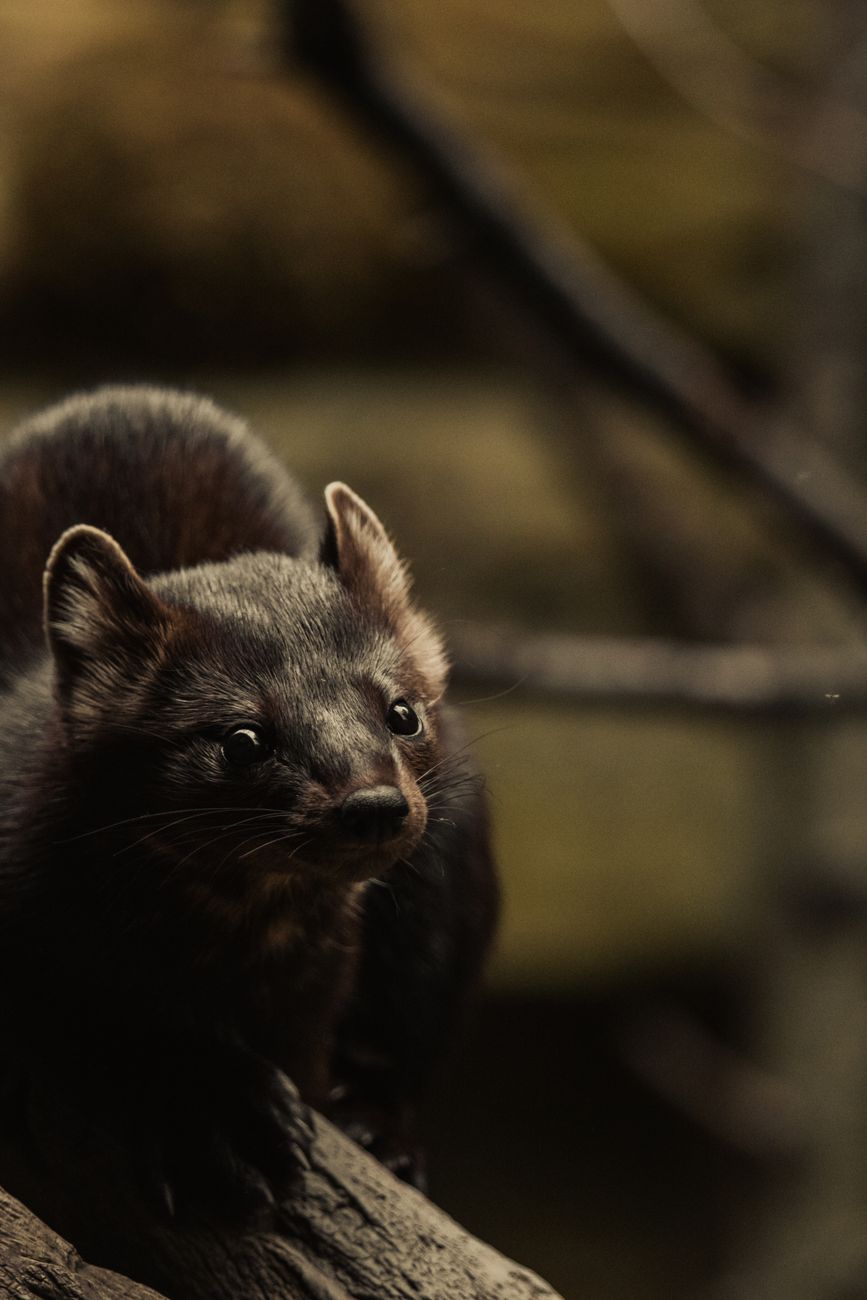
FISHER
Pekania pennanti
DESCRIPTION
Fisher (Pekania pennanti) is a medium-sized carnivorous mammal known for its slender body and long, bushy tail. It has a dark brown to black fur coat, with lighter fur on the underside, and is characterized by its sharp facial features and large, rounded ears. Fisher is primarily a solitary animal, known for its agility and climbing ability, often preying on small mammals and birds in forested habitats.
FUN FACTS
- Fisher is known for its unique hunting technique, where it can chase down and catch porcupines, a feat not many predators can accomplish
- This ability is due to their agility and thick fur, which protects them from quills
- | Fisher has a distinctive vocalization that sounds like a high-pitched scream, which can be heard during mating season and is often mistaken for a human cry
- This vocalization is part of their communication repertoire, used to establish territory and attract mates
QUICK INFO
Lifespan10-12 years in the wild, up to 15 years in captivi
Average Weight3-5 kg
Average Length70-100 cm
Diet TypeCarnivore
Social Structuresolitary, Fisher typically lives alone except during mating season or when a mother is raising her young.
Activity PatternNocturnal
Breeding SeasonLate winter to early spring (March-April)
- Habitat
- Fisher inhabits mature forests, particularly those with a mix of coniferous and deciduous trees. They prefer areas with dense understory cover for hunting and denning.
- Biomes
- Temperate Forest, Boreal Forest
- Native Range
- Fisher is native to North America, ranging from southern Canada to the northeastern and western United States.
- Continent
- North America
- Countries
- Canada, United States
- Diet
- Fisher primarily feeds on small to medium-sized mammals, including squirrels, rabbits, and rodents, as well as birds and carrion. They are also known to consume fruits and nuts when available.
- Diet Type
- Carnivore
- Favorite Food
- squirrels, rabbits
- Social Structure
- solitary, Fisher typically lives alone except during mating season or when a mother is raising her young.
- Activity Pattern
- Nocturnal
- Group Size
- 1
- Territorial
- 1

 LC
LC
3-5 kg
Weight
70-100 cm
Length
- Coloration
- dark brown to black fur with lighter underparts
- Sexual Dimorphism
- males are generally larger than females
- Lifespan
- 10-12 years in the wild, up to 15 years in captivi
- Gestation Period
- 50-60 days
- Offspring per Birth
- 1-6
- Sexual Maturity
- 1-2 years
- Breeding Season
- Late winter to early spring (March-April)
LC
Least Concern
IUCN Red List Status
- Population Status
- Fisher populations are generally stable, but they can be affected by habitat loss and hunting.
- Wild Population Estimate
- unknown
- Population Trend
- Stable
- Endangered
- 0
- Threats
- Main threats to Fisher include habitat destruction due to logging and urban development, as well as trapping and hunting. They are also vulnerable to diseases that can affect their prey populations.
- Predators
- Coyotes, bobcats, and large birds of prey can pose threats to juvenile Fishers, while adult Fishers have few natural predators.
- Defense Mechanisms
- Fisher can defend itself with its sharp teeth and claws, and it is known to be aggressive when threatened.
- Found in Zoos
- Uncommon