


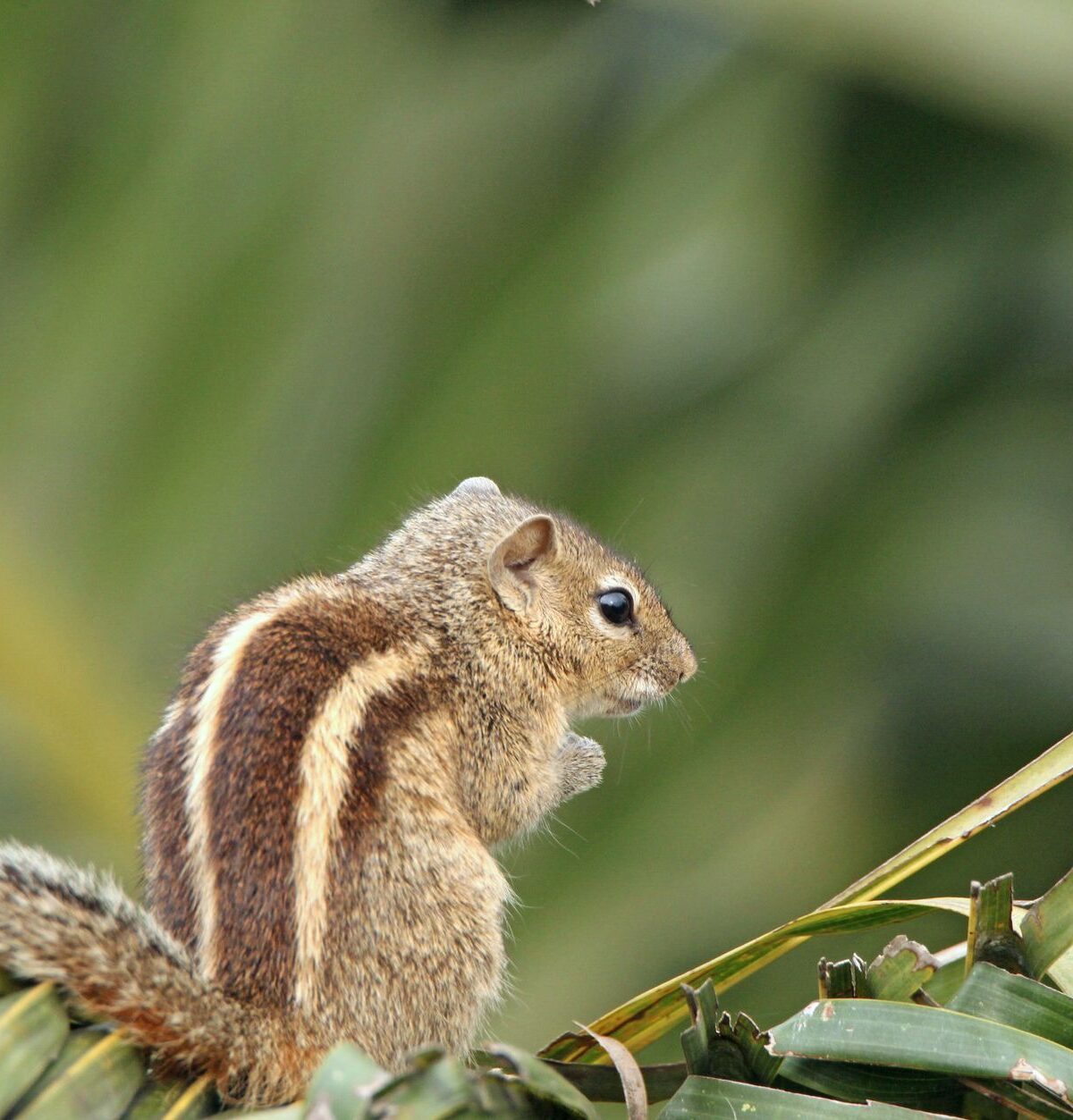
FIVE-STRIPED PALM SQUIRREL
Funambulus pennantii
DESCRIPTION
Five-Striped Palm Squirrel (Funambulus pennantii) is commonly known as the Indian Palm Squirrel and Pennant's Squirrel. This small rodent is characterized by its distinctive five stripes running down its back, which are a mix of brown and gray fur. They are agile climbers and are often seen foraging in trees or on the ground, displaying a curious and social behavior, often in groups.
FUN FACTS
- Five-Striped Palm Squirrels are known for their remarkable ability to leap between branches, showcasing their agility and strength
- They have a unique social structure, often seen grooming each other and engaging in playful behavior, which helps strengthen their social bonds.| These squirrels are also known for their vocalizations, which include a variety of chirps and whistles that they use to communicate with one another, especially when warning of potential threats
QUICK INFO
Lifespan3-5 years in the wild, up to 10 years in captivity
Average Weight100-200 g
Average Length25-30 cm
Diet TypeOmnivore
Social StructureThey are often found in small groups, which can consist of a few individuals foraging together.
Activity PatternDiurnal
Breeding SeasonSpring to early summer
- Habitat
- Five-Striped Palm Squirrels inhabit a variety of environments, including urban areas, gardens, and forests. They prefer areas with plenty of trees for climbing and foraging.
- Biomes
- Tropical Rainforest, Savanna, Urban
- Native Range
- They are native to the Indian subcontinent, particularly in India, Nepal, and Sri Lanka.
- Continent
- Asia
- Countries
- India, Nepal, Sri Lanka
- Diet
- They primarily feed on seeds, fruits, and nuts, but will also consume insects and small invertebrates when available.
- Diet Type
- Omnivore
- Favorite Food
- seeds, fruits, nuts
- Social Structure
- They are often found in small groups, which can consist of a few individuals foraging together.
- Activity Pattern
- Diurnal
- Group Size
- 2-10
- Territorial
- 0
 VU
VU
 LC
LC
 LC
LC
100-200 g
Weight
25-30 cm
Length
- Coloration
- Brownish-gray with five distinct white or cream stripes along the back.
- Lifespan
- 3-5 years in the wild, up to 10 years in captivity
- Gestation Period
- 44 days
- Offspring per Birth
- 2-4
- Sexual Maturity
- 6-12 months
- Breeding Season
- Spring to early summer
LC
Least Concern
IUCN Red List Status
- Population Status
- The population is currently stable and widespread across its native range.
- Wild Population Estimate
- Not specifically estimated, but considered common in many areas.
- Population Trend
- Stable
- Endangered
- 0
- Threats
- Main threats include habitat loss due to urbanization and deforestation. They are also sometimes hunted for their fur.
- Predators
- Birds of prey, domestic cats, snakes, and larger mammals.
- Defense Mechanisms
- They use agility and speed to escape predators, often climbing trees or darting into burrows.
- Found in Zoos
- Common