


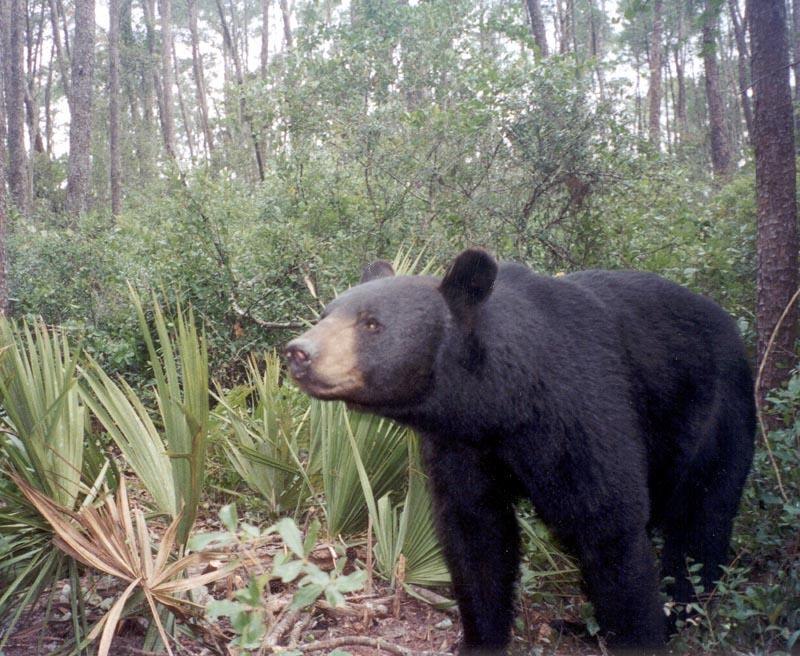
FLORIDA BLACK BEAR
Ursus americanus floridanus
DESCRIPTION
Florida Black Bear (Ursus americanus floridanus) is a subspecies of the American black bear, characterized by its smaller size and lighter coloration compared to other black bears. They typically have a stocky build with a broad head, short snout, and rounded ears, and their fur can range from black to light brown. These bears are primarily solitary and are known for their adaptability to various habitats, including swamps, forests, and suburban areas.
FUN FACTS
- Florida Black Bears have a unique ability to swim long distances, which they often do to find food or escape danger
- They can also run at speeds of up to 30 miles per hour, making them surprisingly fast for their size.|These bears play a crucial role in their ecosystem by helping to disperse seeds through their diet, which contributes to forest regeneration
- Their foraging behavior also helps to aerate the soil, promoting healthy plant growth
QUICK INFO
Lifespan15-20 years in the wild, up to 30 in captivity
Average Weight45-250 kg
Average Length1.5-2.1 m
Diet TypeOmnivore
Social Structuresolitary, with occasional pairings during mating season
Activity PatternCrepuscular
Breeding SeasonSpring (April-June)
- Habitat
- They inhabit a range of environments, including hardwood swamps, pine forests, and wetlands. Their adaptability allows them to thrive in both wild and suburban areas.
- Biomes
- Temperate Forest, Wetland
- Native Range
- The native range of the Florida Black Bear is primarily within the state of Florida, particularly in forested and swampy regions.
- Continent
- North America
- Countries
- United States
- Diet
- Florida Black Bears are omnivorous, feeding on a variety of plant materials, fruits, nuts, and occasionally small animals. They are known to forage for food in both natural and human-altered environments.
- Diet Type
- Omnivore
- Favorite Food
- berries, acorns, and insects
- Social Structure
- solitary, with occasional pairings during mating season
- Activity Pattern
- Crepuscular
- Group Size
- 1-2
- Territorial
- 1
45-250 kg
Weight
1.5-2.1 m
Length
1.2 m at shoulder
Height (Shoulder)
- Coloration
- typically black with some individuals exhibiting brown or cinnamon coloration
- Sexual Dimorphism
- males are generally larger than females
- Lifespan
- 15-20 years in the wild, up to 30 in captivity
- Gestation Period
- approximately 63-70 days
- Offspring per Birth
- 1-4
- Sexual Maturity
- 3-4 years
- Breeding Season
- Spring (April-June)
LC
Least Concern
IUCN Red List Status
- Population Status
- The population of Florida Black Bears is currently recovering due to conservation efforts, but they remain vulnerable to habitat loss.
- Wild Population Estimate
- 4,000-5,000
- Population Trend
- Increasing
- Endangered
- 0
- Threats
- Main threats include habitat destruction due to urban development and vehicle collisions. Additionally, they face risks from poaching and human-wildlife conflict.
- Conservation Program
- Florida Black Bear Management Plan
- Predators
- humans, large male bears, and occasionally alligators when cubs are involved
- Defense Mechanisms
- They can climb trees to escape threats and will often use their size and strength to defend themselves if cornered.
- Found in Zoos
- Uncommon